
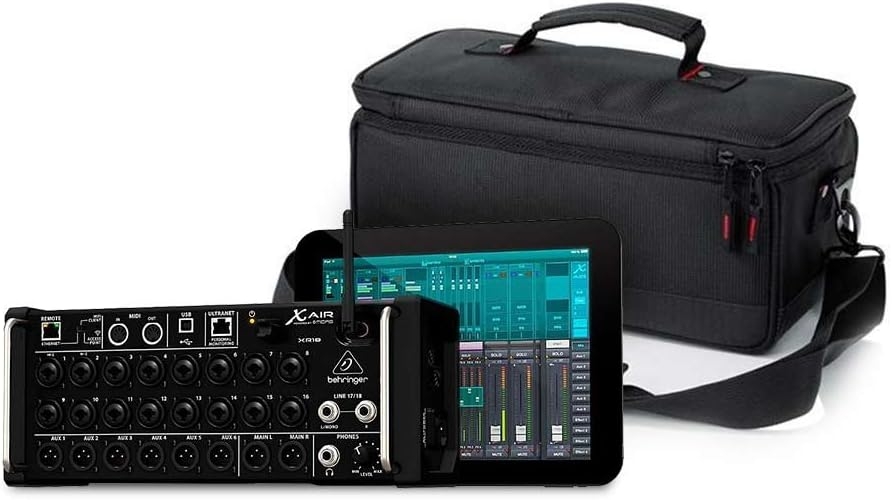
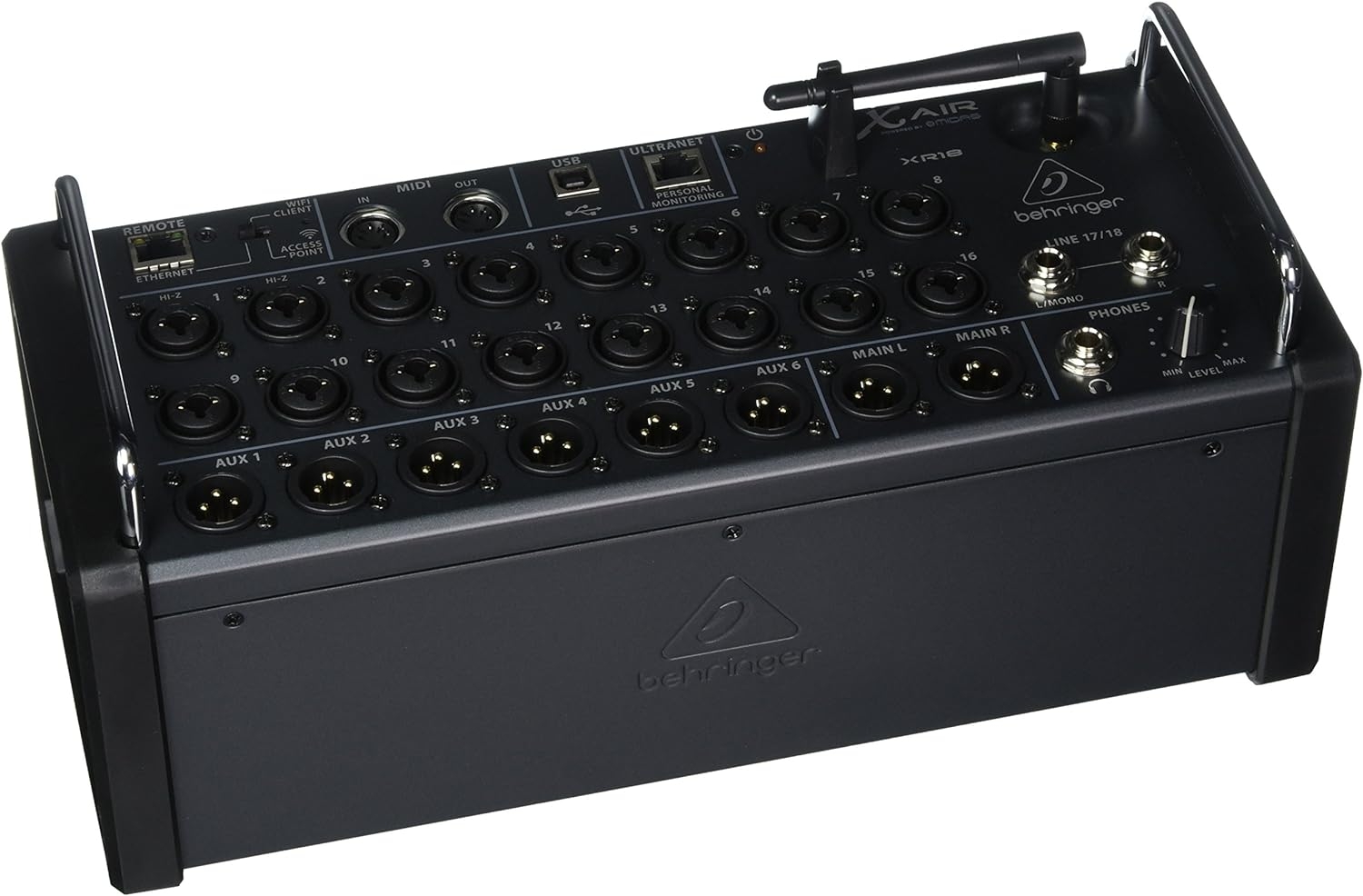
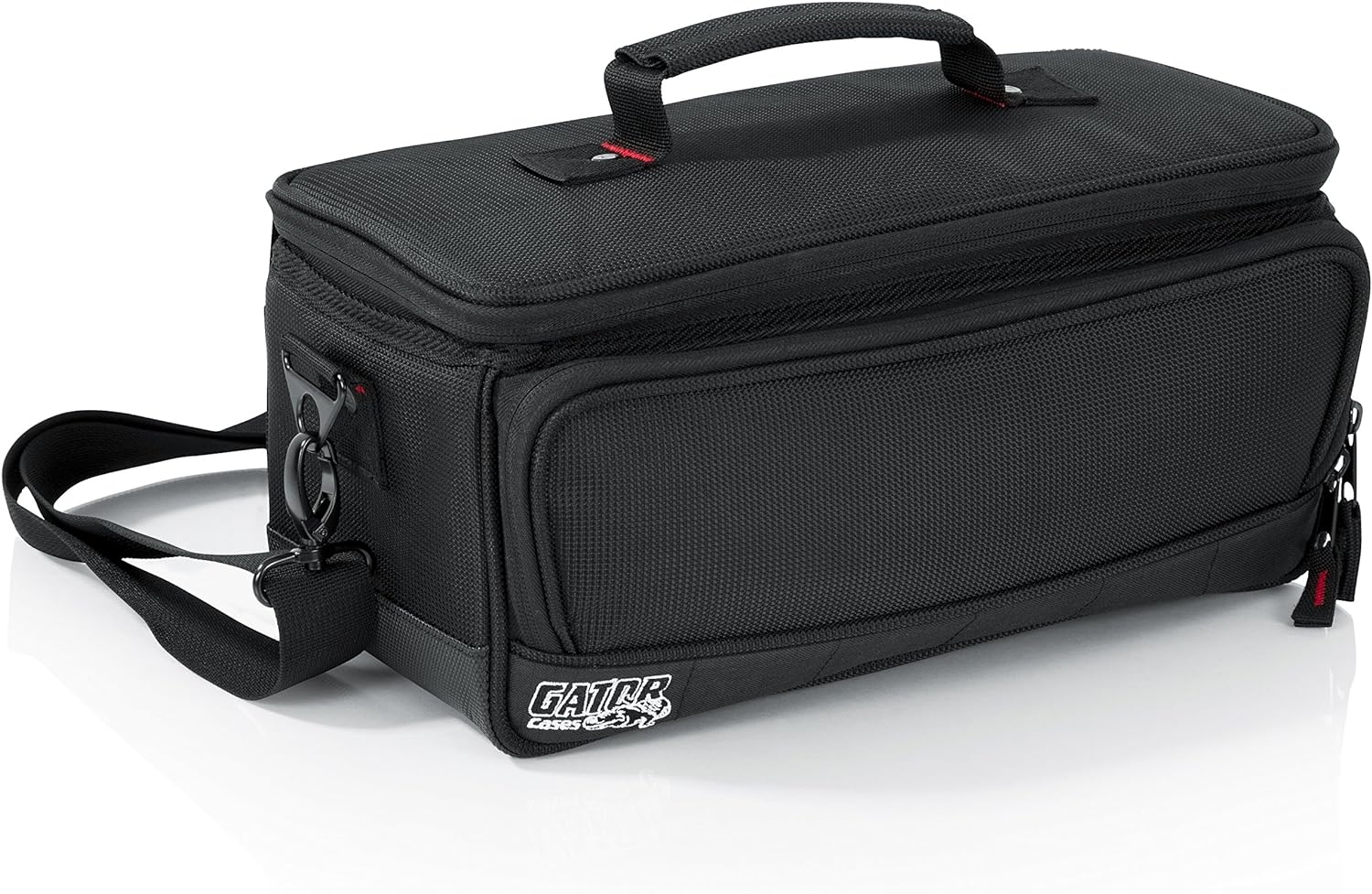
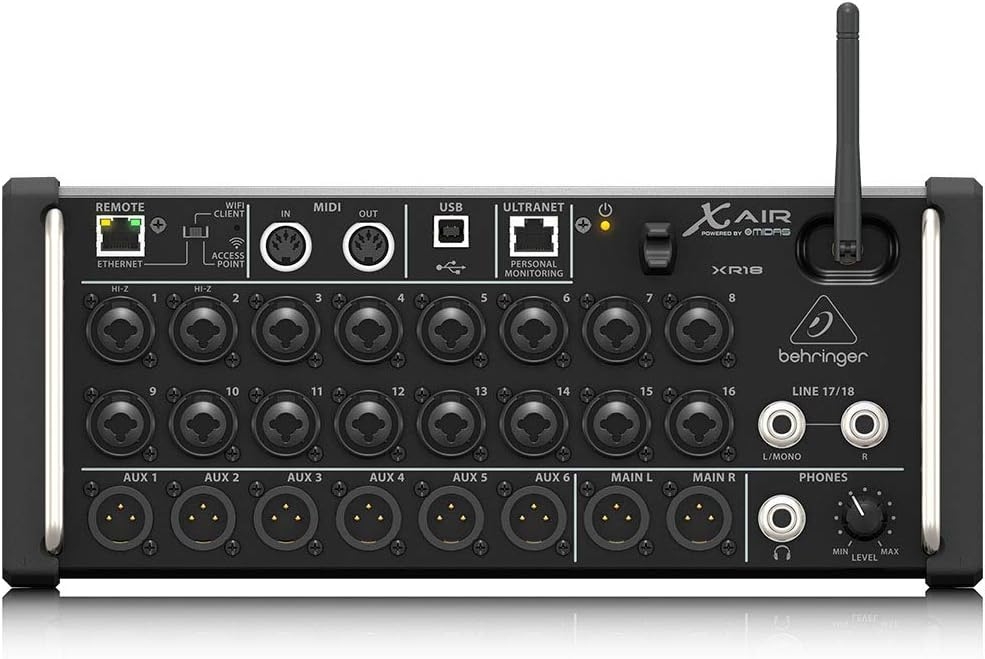

My read on the Behringer XR18 is that it is best understood as a compact digital mixing hub rather than a small version of a traditional desk mixer. The black chassis measures 13.11 x 5.87 x 5.51 inches and weighs 7.05 pounds, so I’d think of it as something that can live near the stage, in a rehearsal room, or as part of a mobile audio setup without demanding the space of a full console.
The important thing is that the XR18 is not just a box you buy in isolation. Its listed compatibility with a router and tablet tells me the surrounding control setup matters. If I were planning a rig around it, I’d budget space and attention for the control device, network hardware, USB connection, XLR cabling, and a dependable AC power point.
How I’d Plan a Practical XR18 Setup
Because the listed connector types include USB and XLR, I’d pair the XR18 with proper microphone cabling and a sensible computer or tablet-based workflow. This is the kind of mixer I’d consider for a room where several audio sources need to be gathered into one controlled system, but where a big physical mixer would be inconvenient.
The power source is corded electric, which is an important limitation. I would not treat this as a battery-friendly field solution or something for remote work without reliable mains power. It makes more sense for venues, churches, rehearsal spaces, podcast rooms, streaming setups, or mobile rigs where AC power is already part of the plan.
The Tradeoff I’d Watch Closely
The appeal here is compact control, but the tradeoff is dependency on the rest of the system. A router-and-tablet-centered mixer can be elegant, but only if the control device is charged, the network side is thought through, and the cabling is kept tidy. At 7.05 pounds, the XR18 is portable enough to move around, but connected XLR, USB, and power cables still need strain relief and organization.
I’d also be cautious recommending it to someone who wants every adjustment under their fingers at all times. From the spec sheet and category, this is a modern control approach, not the same experience as a large physical surface full of knobs and faders.
Who I’d Tell to Skip the Behringer XR18
- I’d skip it if you need a battery-powered mixer for outdoor or remote use.
- I’d skip it if you strongly prefer a large hands-on control surface.
- I’d skip it for very simple microphone setups where a basic interface or small analog mixer is easier.
- I’d skip it if using a router or tablet would be awkward, unreliable, or restricted in your space.
For the right buyer, the Behringer XR18 looks like a compact way to build a serious XLR-and-USB-based mixing setup. I’d just make sure the control workflow fits your room before ordering.
Reviews
There are no reviews yet.