
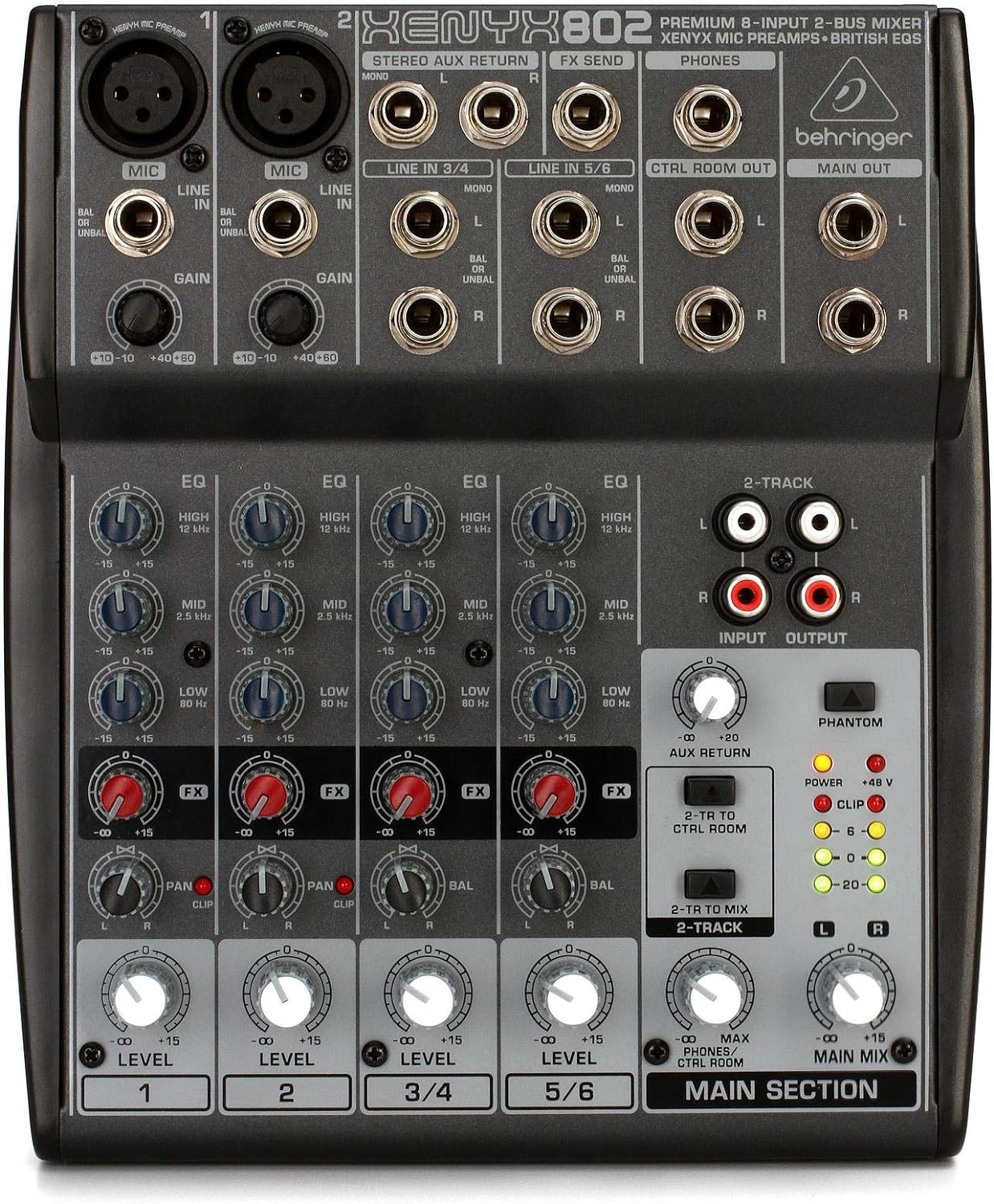

If I were choosing a compact mixer for a small source list, the Behringer 802 is the kind of box I’d put on the shortlist before jumping to a larger console. My read of the specs is simple: this is an 8-channel, corded electric mixer with familiar 3-pin XLR and 1/4-inch TRS phone connections, packed into a small black composite chassis measuring 8.66 x 7.44 x 1.85 inches and weighing 3.55 pounds.
Why I’d consider the Behringer 802 for a small setup
The main appeal here is size. At under four pounds and less than two inches tall, the Behringer 802 looks like a practical fit for a desk, rehearsal corner, keyboard area, podcast table, or compact live position where a full-size mixer would be more hardware than the job needs.
I’d look at this mixer when the goal is basic signal combining rather than building a large, expandable rig. The 8-channel count gives you some flexibility for modest setups, but I would not treat it as a long-term answer for a band or production space that keeps adding microphones and instruments. Eight channels can disappear quickly once a setup grows.
Behringer 802 vs. stepping up to a larger mixer
The reason I’d choose the 802 over a larger stage mixer is space. If the mixer needs to sit close to the performer, on a crowded table, or beside other gear, the smaller footprint matters. A bigger mixer may give you more room around controls and more room to expand, but it also asks for more physical space.
The reason I’d skip the 802 is just as clear: growth. If I already knew I needed many microphones at once, lots of connected gear, or more surface area for frequent hands-on adjustments, I’d start with a larger mixer instead. Compact is useful only when the channel count and working space still fit the job.
What I make of the connections and power
The listed connector types tell me this is aimed at conventional audio setups rather than a screen-driven or computer-first workflow. A 3-pin XLR connection is the standard format for many stage microphones, while 1/4-inch TRS phone connections are common across audio gear and balanced line-level sources.
I also wouldn’t buy this expecting portable, battery-powered operation. The Behringer 802 is corded electric, with a 13-watt rating, so I’d plan on placing it near mains power. That is fine for a desk, rehearsal room, or fixed small stage position, but it is not the right direction if the whole point is cable-free field use.
Who I think should buy it, and who should skip it
I’d recommend considering the Behringer 802 if you need a small black 8-channel mixer with XLR and 1/4-inch TRS connectivity, and you value compact placement more than expansion room. The composite body and no color screen keep the product firmly in a straightforward, utility-minded category.
I’d skip it if your setup is already bigger than eight channels, if you want battery operation, or if you prefer a mixer built around a color screen and deeper visual control. For a small, traditional audio setup, though, the 802’s specs make sense.
Reviews
There are no reviews yet.