
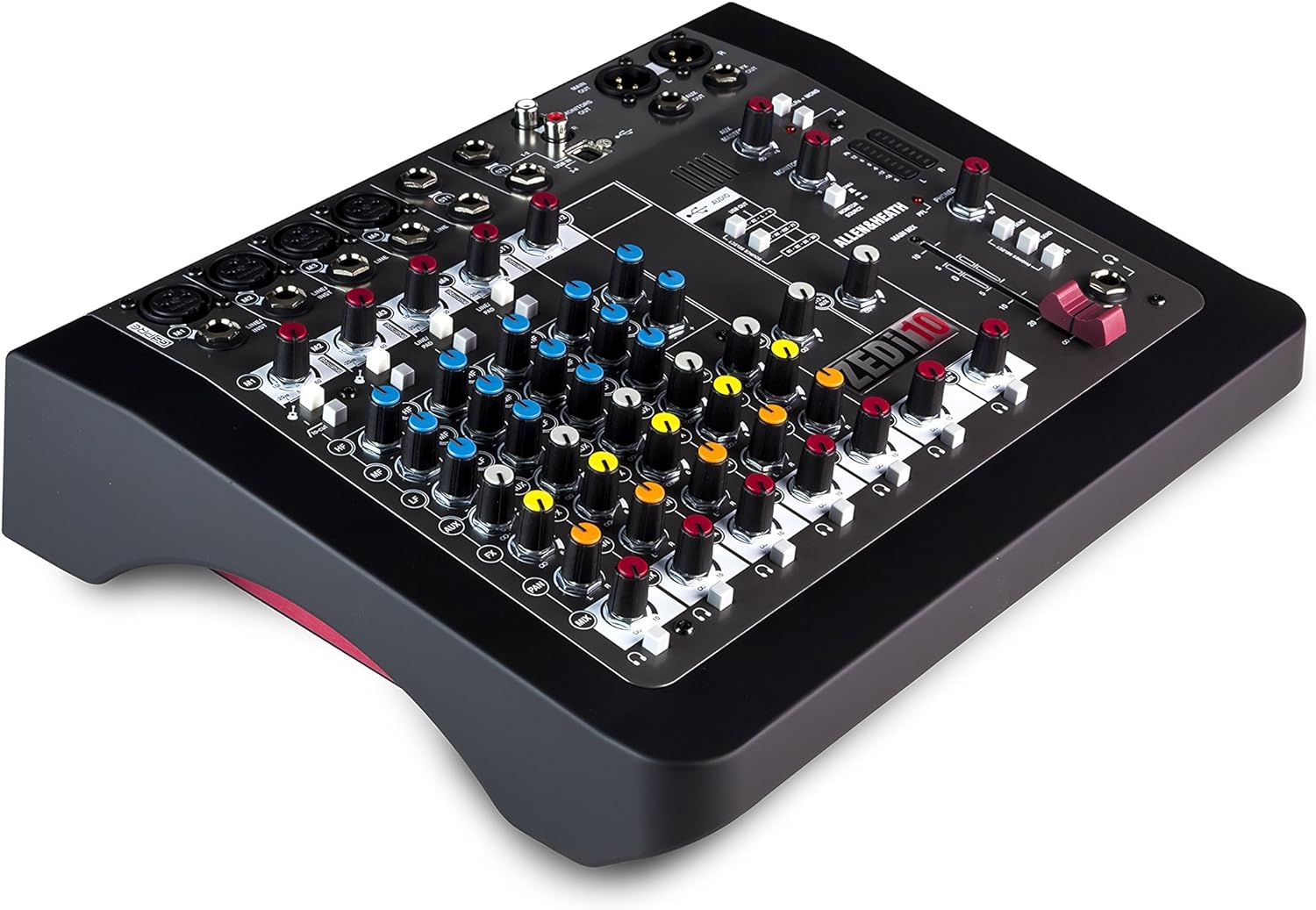

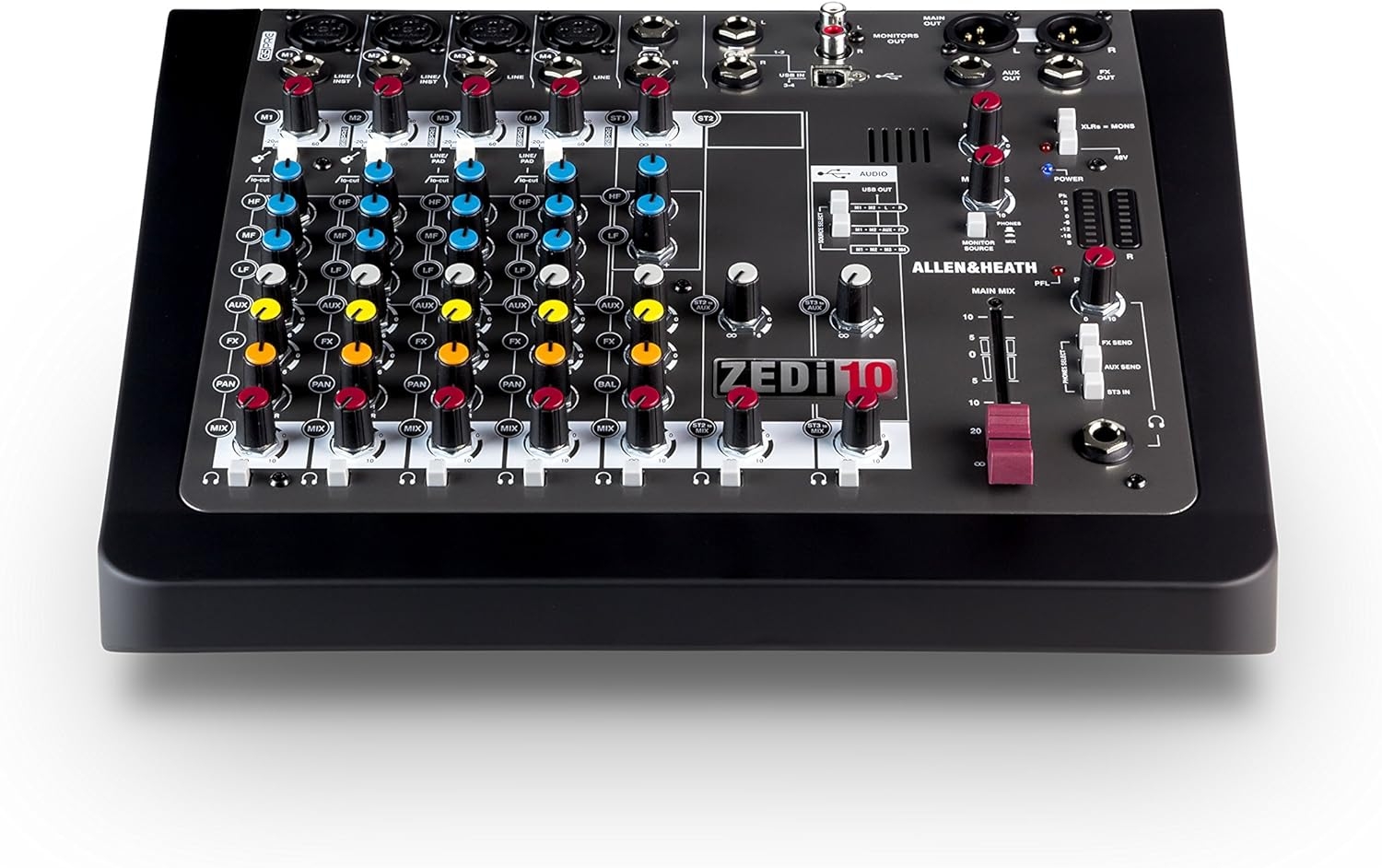
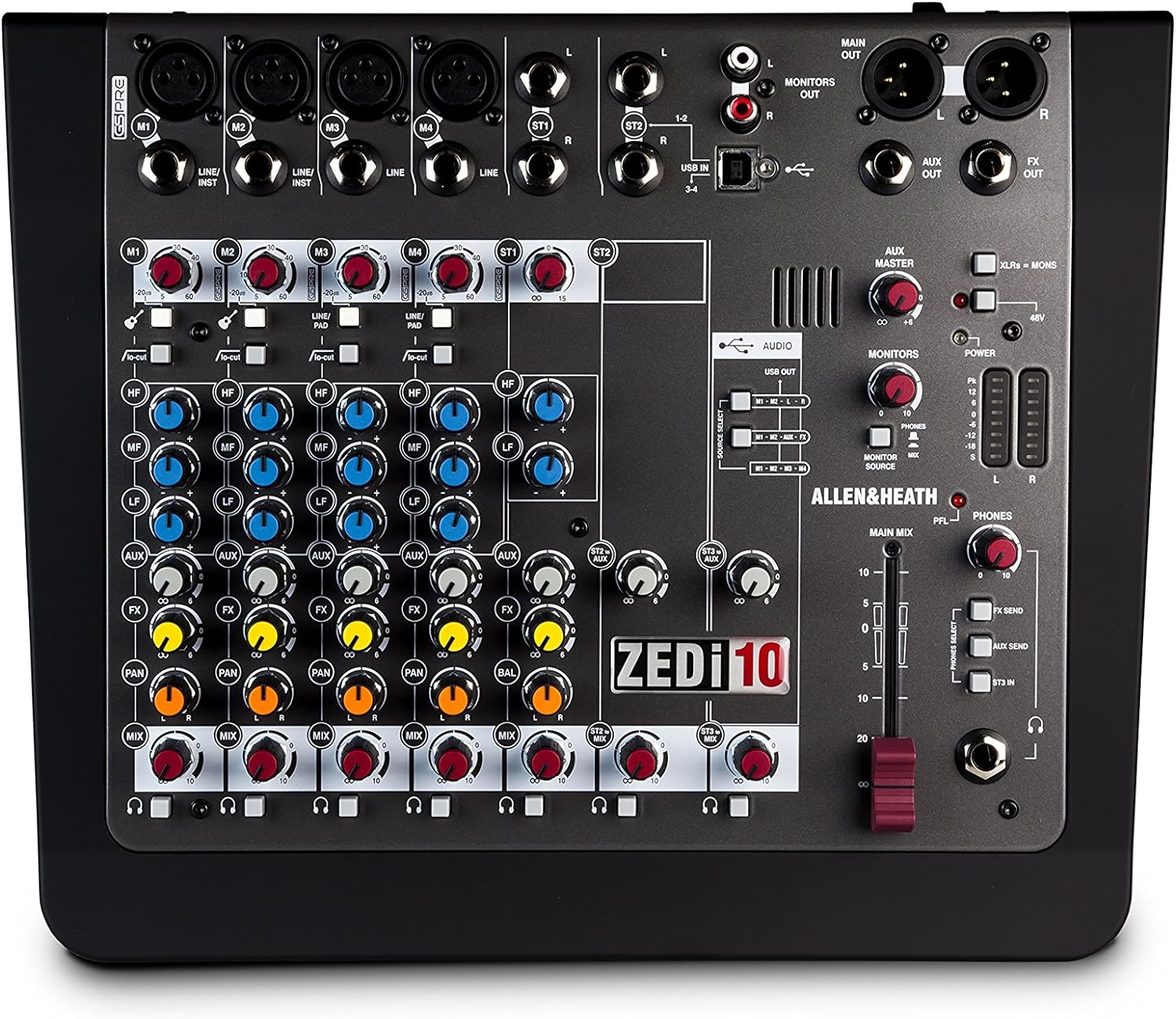

My read on the Allen & Heath ZEDi 10FX is that it makes the most sense as a compact analog mixer with a useful computer bridge, not as a replacement for a full digital production surface. The recorded spec that matters most is the pairing of a 10-channel analog mixer format with USB 3.0 connectivity and Cubase support, with Cubase LE included. That tells me this is aimed at people who still want hands-on mixing, but also need an easy route into a software-based recording or production setup.
Why I’d consider the ZEDi 10FX for a compact desk
If I were building a small music, podcast, karaoke, or DJ desk, this is the kind of mixer I’d shortlist before looking at larger consoles. Ten channels give enough room for a focused setup: a microphone, a stereo source, a controller, a playback device, or a couple of instruments, depending on how everything is assigned. I would not treat it as a “buy once for any situation” mixer, though. The 10-channel count is both the attraction and the ceiling.
The analog signal format is also important. I’d choose this kind of unit if I wanted real mixer-style control rather than doing everything inside software. At the same time, the USB connection and Cubase compatibility make it more flexible than a purely analog box. For someone already working in Cubase, the included Cubase LE software is a practical bonus, especially if the goal is to get a small recording workflow moving without adding another major software decision.
Portable size, but not a battery-style solution
At 5.1 pounds and 10.8 x 3.8 x 13.1 inches, the AH-ZEDI10FX looks like a manageable desktop or mobile-table mixer rather than a bulky console. I’d be comfortable considering it for a home studio desk, a compact DJ surface, or a small event rig where space matters. The black finish also keeps it visually understated, which I usually prefer for audio gear that lives around other equipment.
The limitation I would plan around is power. This is a corded electric mixer, so I would not buy it for a setup where battery operation or truly cable-light outdoor use is the priority. I’d also skip it if I needed digital-style session recall, automation, or a large number of independent inputs. Those are not the strengths suggested by this spec sheet.
Who I’d tell to buy it, and who should skip it
- Good fit: small home studios, karaoke hosts, compact DJ rigs, electronic music desks, and podcast-style rooms that need analog mixing with USB computer integration.
- Good fit: Cubase users who value included Cubase LE support and want a mixer that can sit between hardware sources and a computer.
- Skip it: bands or venues needing far more than 10 channels, battery-powered mobile rigs, and anyone wanting a fully digital mixer with deep recall and automation.
Reviews
There are no reviews yet.