
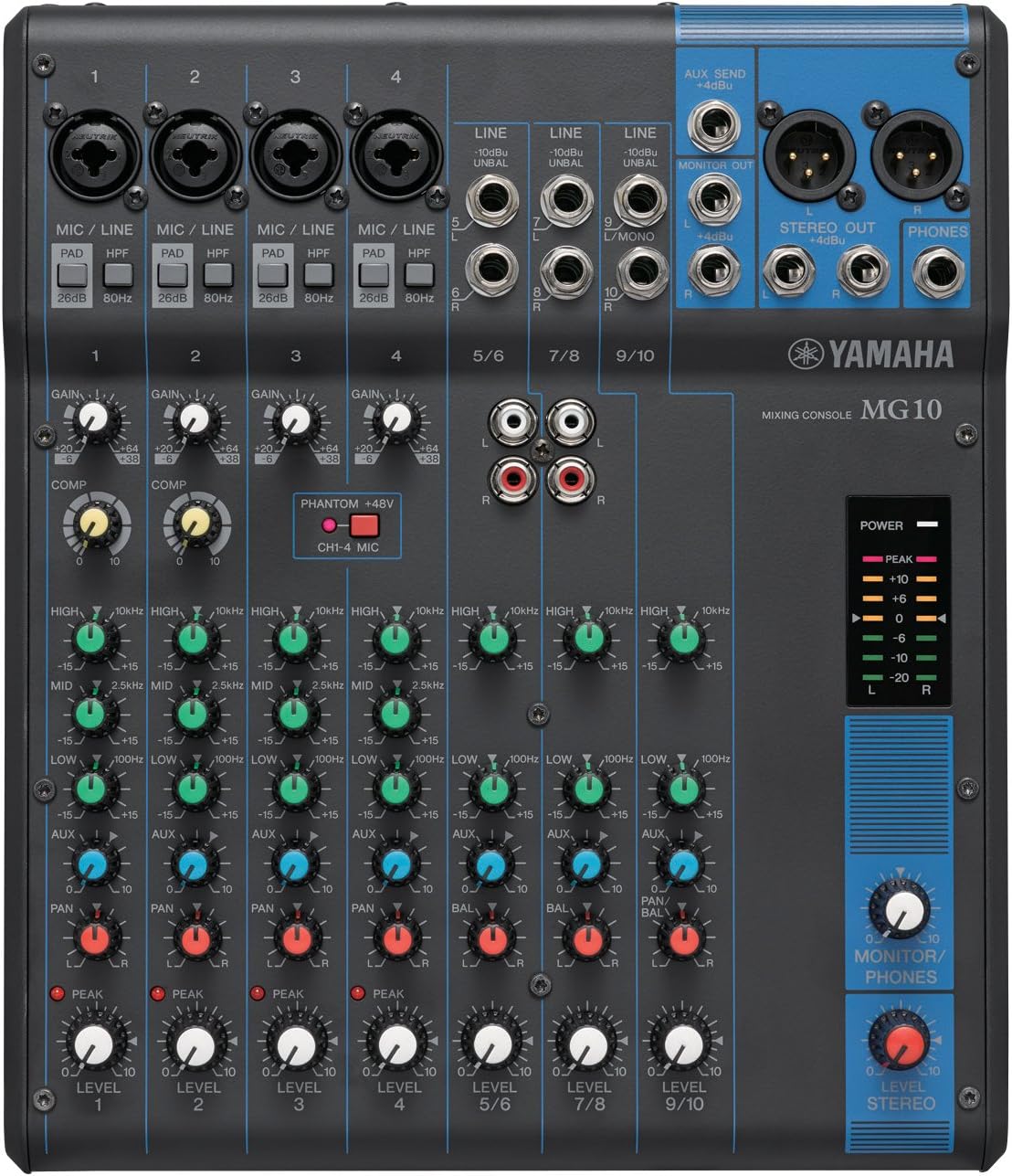

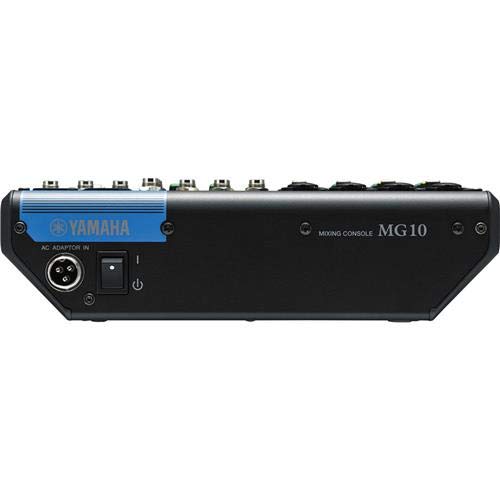

I look at the Yamaha MG10 as a practical small-format mixer for people who have outgrown a very basic two-channel setup but do not want a large console taking over the room. The headline spec is the 10-input layout. That gives it a clear purpose: gathering multiple sources in one place while keeping the footprint reasonable.
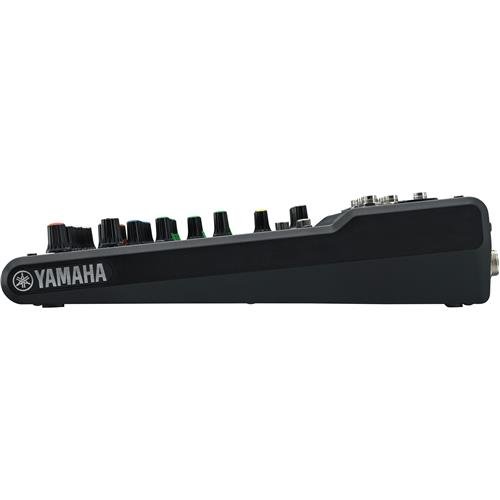
It is a black, corded electric mixer with a listed USB hardware interface, and the physical size tells me a lot about where it belongs. At 6.22 pounds and 15.75 x 5.2 x 14.17 inches, I would treat it as compact audio gear rather than a pocketable device. It can move when needed, but I would plan for it to live on a desk, rehearsal table, classroom station, podcast table, or small venue control area.
Why I’d Consider the Yamaha MG10
My read of the MG10 is that it makes the most sense when several sources need simple central control. That could mean microphones, instruments, playback gear, or other line-level equipment, depending on the rest of the system. For a home studio or rehearsal room, I’d consider it when the goal is to keep sources organized before sending the mix onward.
The listed USB hardware interface is also worth noting. I would pay attention to that if the mixer needs to sit near a laptop or desktop rather than function only as a standalone analog hub. I would not buy it just because it says USB, though; before ordering, I’d check exactly how that connection fits the intended computer workflow.
What the Size and Power Source Mean
This is not the mixer I’d choose for unplugged field work. The MG10 is corded electric, so it belongs somewhere with dependable wall power. That is not a flaw if the setup is semi-permanent, but it is an honest limitation for anyone trying to build a battery-powered or highly mobile rig.
The 6.22-pound weight is manageable, but the cabling will matter as much as the mixer itself. Even though the unit is compact for a 10-input format, I would still leave enough space around it for connected leads and hands-on control. On a cramped desk, the published dimensions are worth measuring against the actual available surface.
Who Should Skip the MG10
I’d skip the Yamaha MG10 if the setup regularly needs more than 10 inputs, if wall power is not available, or if the real need is just the smallest possible USB device for one source. I would also look elsewhere for a larger live-sound arrangement. The MG10 reads best to me as a compact multi-source mixer for fixed or semi-fixed spaces, not as an ultra-minimal interface or a full-scale production console.
Reviews
There are no reviews yet.