
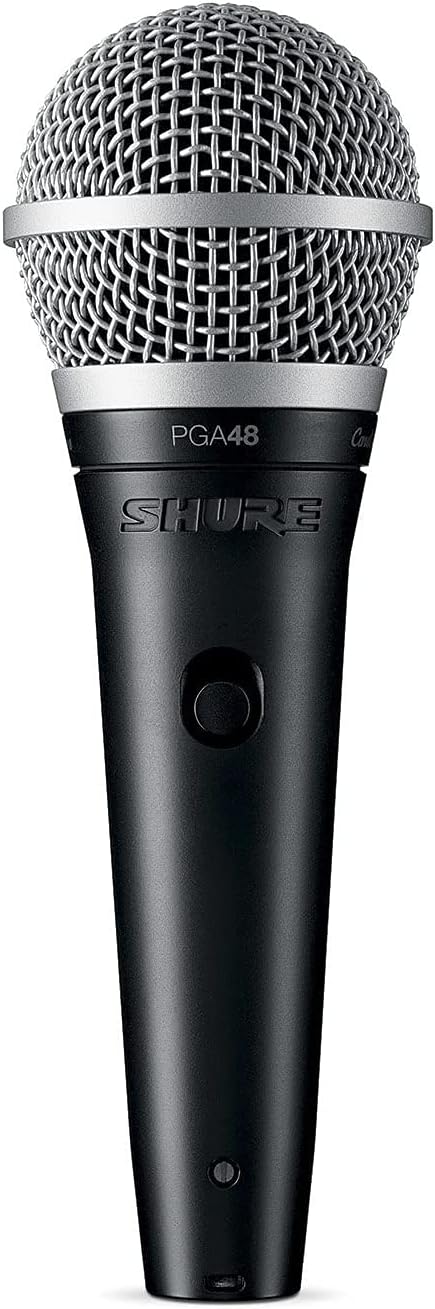
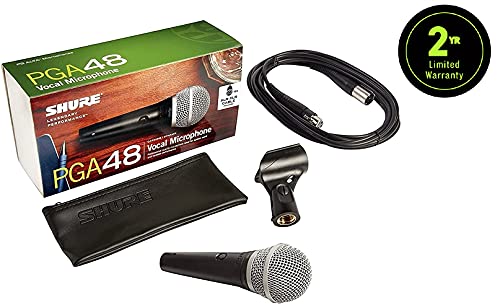
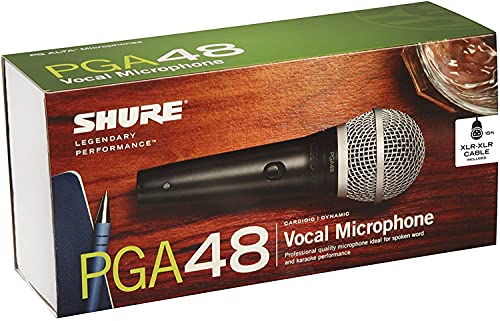
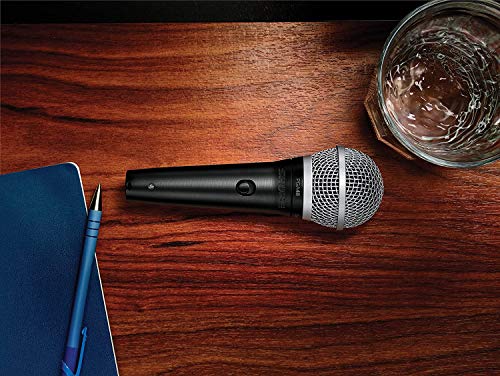

When I look at the Shure PGA48-XLR, I see a very straightforward choice: this is for people who already have an audio system waiting for an XLR microphone. If your setup is built around a karaoke machine, amplifier, or speaker rather than a laptop, the PGA48-XLR makes more sense than a USB mic. It is a corded electric model with an XLR connector, so I’d treat it as a traditional vocal mic for room-based use, not a plug-and-play computer accessory.
Why the XLR connection is the main reason to buy it
The most important detail here is not the black finish or the brand name — it is the connector. XLR is the practical format for many karaoke rigs, PA-style setups, amplifiers, and speakers. If I were buying for a fixed voice setup, that would be the first thing I’d check: does the device I’m plugging into actually accept this kind of microphone connection?
The PGA48-XLR is listed as compatible with an amplifier and speaker, with the hardware platform noted as a karaoke machine. That tells me the intended use is pretty clear. I would not buy this expecting direct computer convenience unless I already had the right supporting gear in the chain.
What I’d expect from the size and corded design
The listed dimensions are 5.00 x 10.00 x 3.50 inches, and the product dimensions are also given as 3.5 x 10 x 5 inches. That points to a handheld-style microphone rather than something meant to sit permanently on a desk. The listed weight is 1.9 pounds, so I’d think about how it will actually be used: held for short vocal turns, passed around for karaoke, or placed on a stand.
The corded electric design is a plus if you want to avoid batteries, charging, and wireless pairing. I like that kind of simplicity for a room where the mic stays connected to the same system. The limitation is just as clear: movement depends on the cable and the equipment it plugs into. If the goal is walking freely around a space, this is not the format I’d choose.
Who I’d recommend the Shure PGA48-XLR to
My read of the PGA48-XLR is that it is best for someone who wants a simple vocal mic for existing audio hardware. I’d consider it for karaoke, announcements, or general voice use where an XLR connection is already part of the setup.
- Good fit: buyers using a karaoke machine, amplifier, or speaker with the right microphone input.
- Check before ordering: whether your gear accepts XLR and whether a corded mic suits the room layout.
- Who should skip it: anyone who wants USB convenience, wireless movement, or a microphone aimed primarily at direct computer recording.
Reviews
There are no reviews yet.