
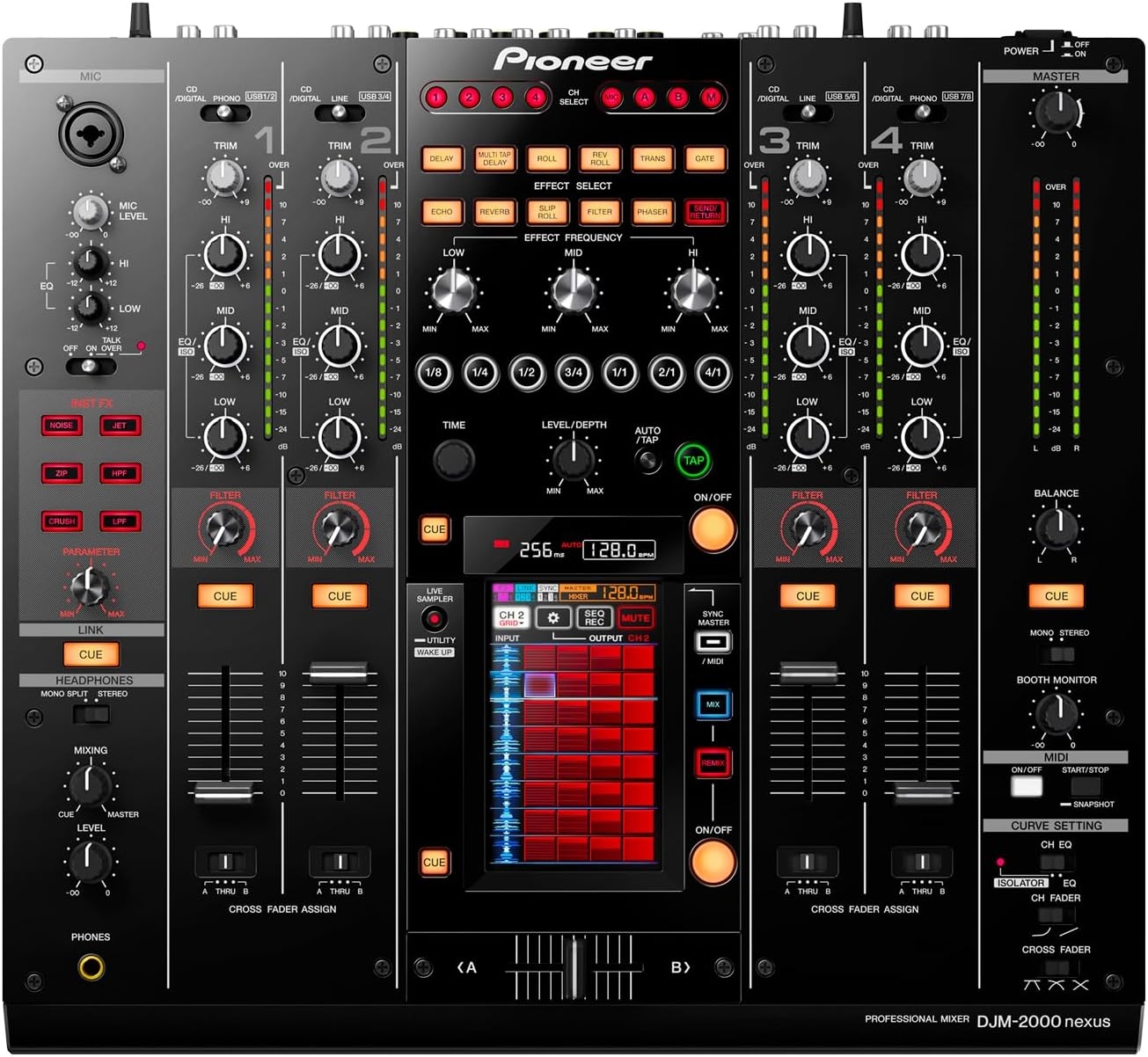
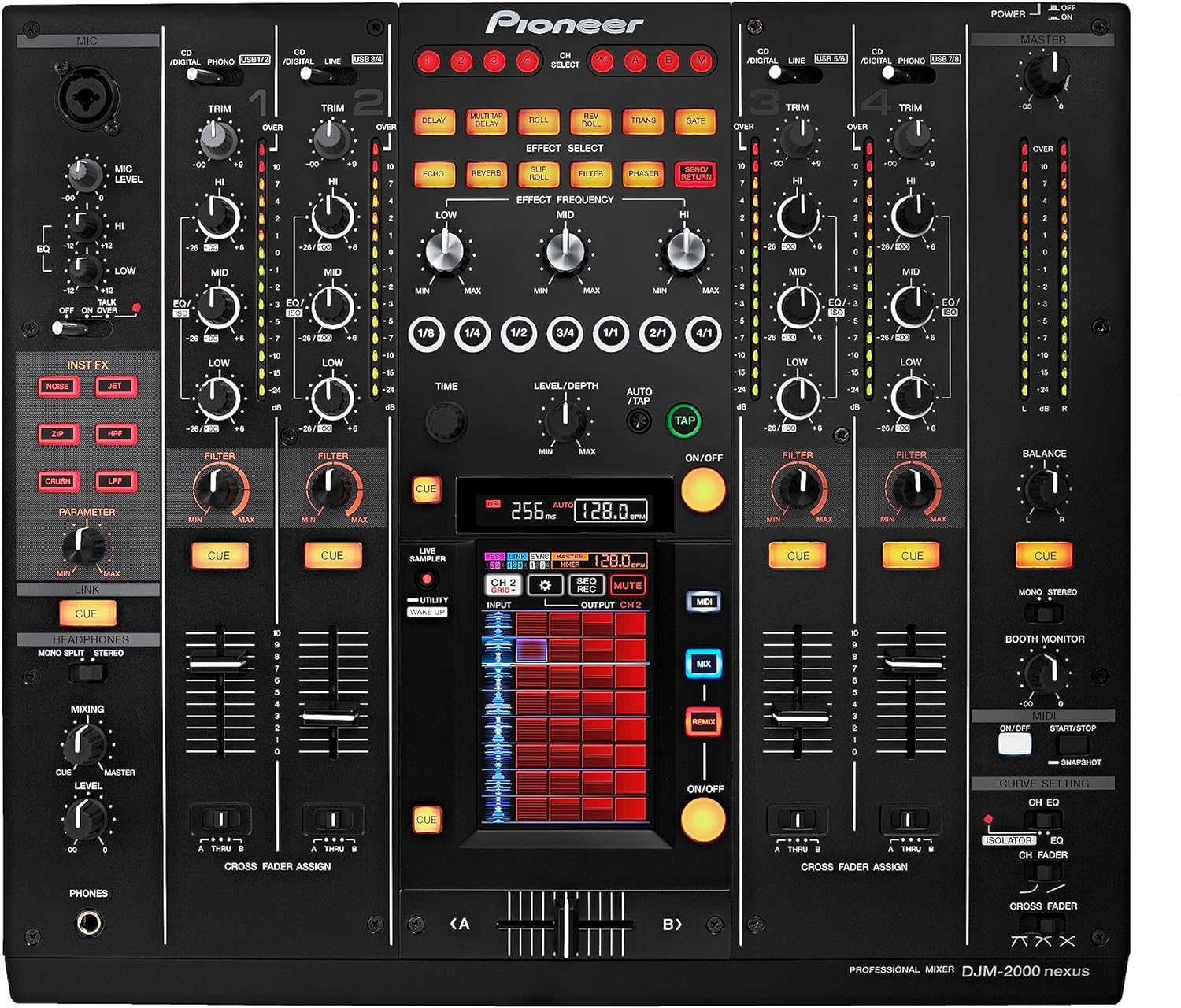

My read on the Pioneer DJM-2000 nexus is that it is very much a full-size booth mixer, not a casual add-on for a cramped desk. This is the black DJM-2000NXS from Pioneer DJ, and the headline spec I’d focus on first is the 4-channel layout. If I were building around more than two sources, that channel count would be the reason to consider it.
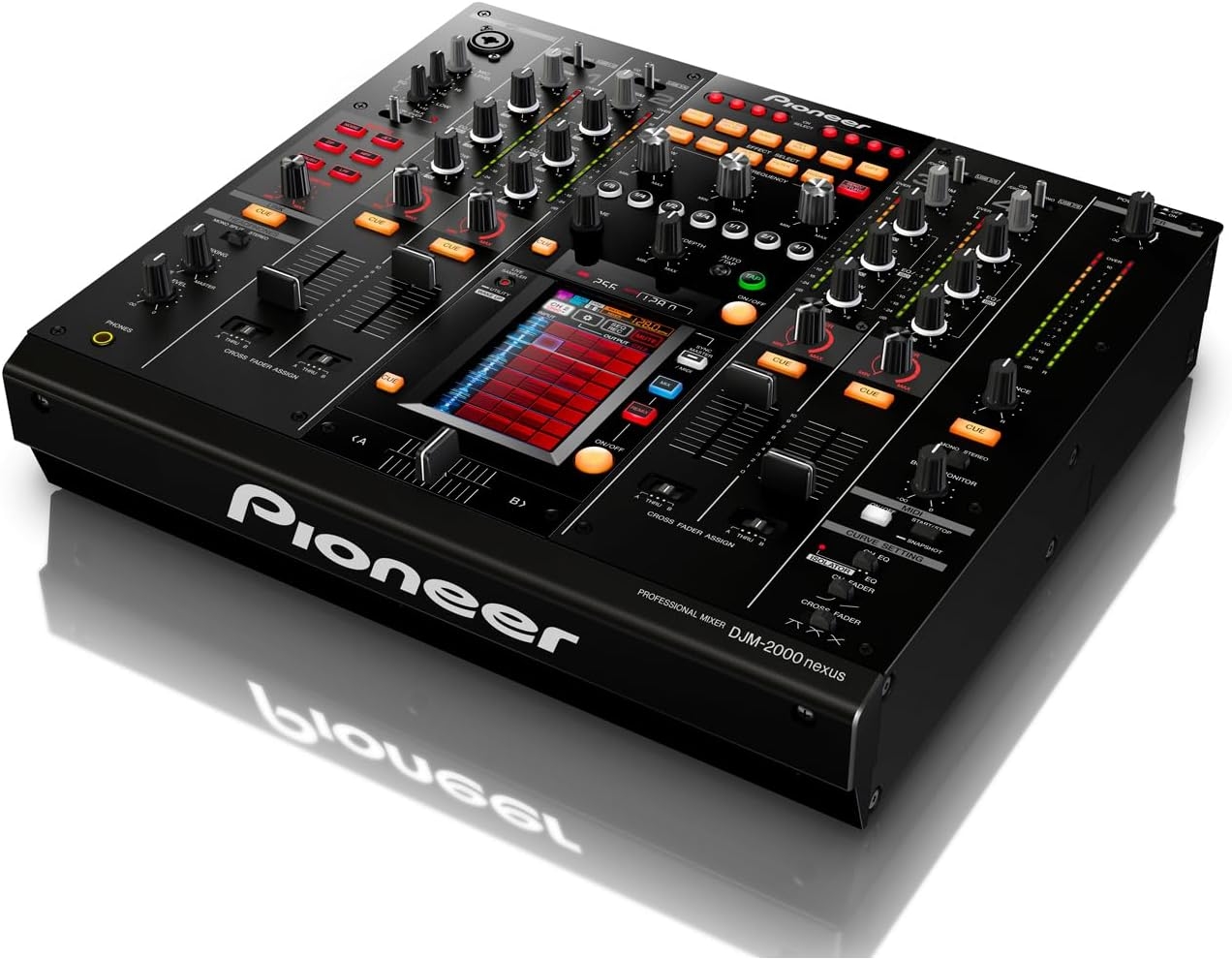
The other thing I would not ignore is the physical scale. At 25 pounds and 21.2 x 19.8 x 9.3 inches, this is not the kind of mixer I’d want to move around casually every weekend. I’d think of it as booth or studio furniture: something that needs a proper surface, space around the sides, and enough depth for comfortable cable routing and hand movement.
Where I think the DJM-2000NXS makes the most sense
I’d look at the Pioneer DJM-2000 nexus if the setup genuinely needs four mixer channels. Two channels can cover the main decks, while the other two leave room for additional players, backup sources, samplers, or other line-level devices depending on the rig. That flexibility is the real argument here.
If all I wanted was a basic two-deck setup, I would not choose a mixer this large just for the name. The size and weight only make sense if the extra channels are part of the workflow. Otherwise, the footprint becomes a burden instead of an advantage.
What I would check before ordering this mixer
- Space: At nearly 20 inches deep, it needs more desk or booth room than a compact mixer.
- Transport: At 25 pounds, I’d treat it as semi-permanent gear rather than an easy carry-in unit.
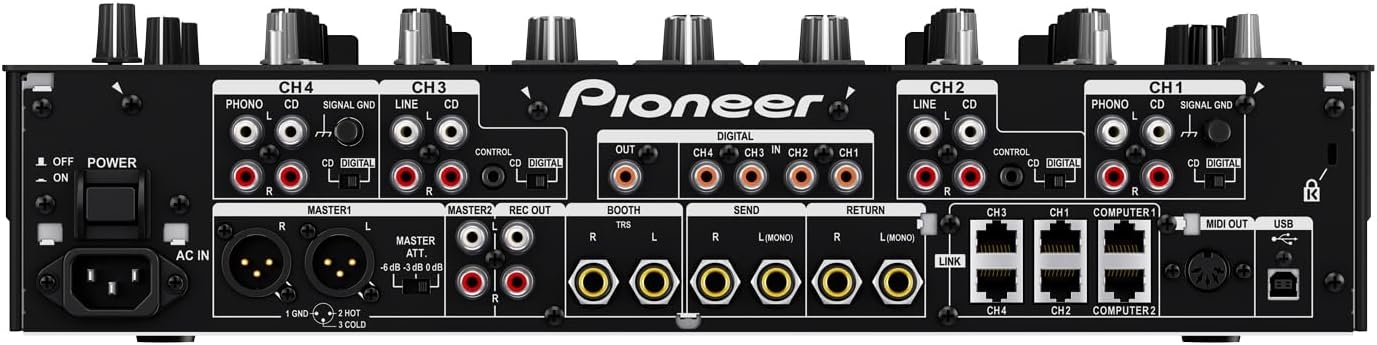
- Setup planning: The listed USB cable power source makes cable layout worth thinking through in advance.
- Generation: First available on December 1, 2012, it comes from an earlier era of Pioneer DJ hardware.
That age is not automatically a deal-breaker for me, but it is an honest limitation. If I were buying at this level, I’d want to be clear that the workflow, size, and connectivity expectations match the rest of the setup.
Who should skip the Pioneer DJM-2000 nexus
I’d skip the DJM-2000NXS if space is tight, if the mixer has to travel often, or if the job only calls for two channels. I’d also pass if the goal is the lightest, newest-feeling setup possible. This makes more sense for DJs who actually need a substantial 4-channel Pioneer DJ mixer and have the booth space to give it a permanent place.
Reviews
There are no reviews yet.