
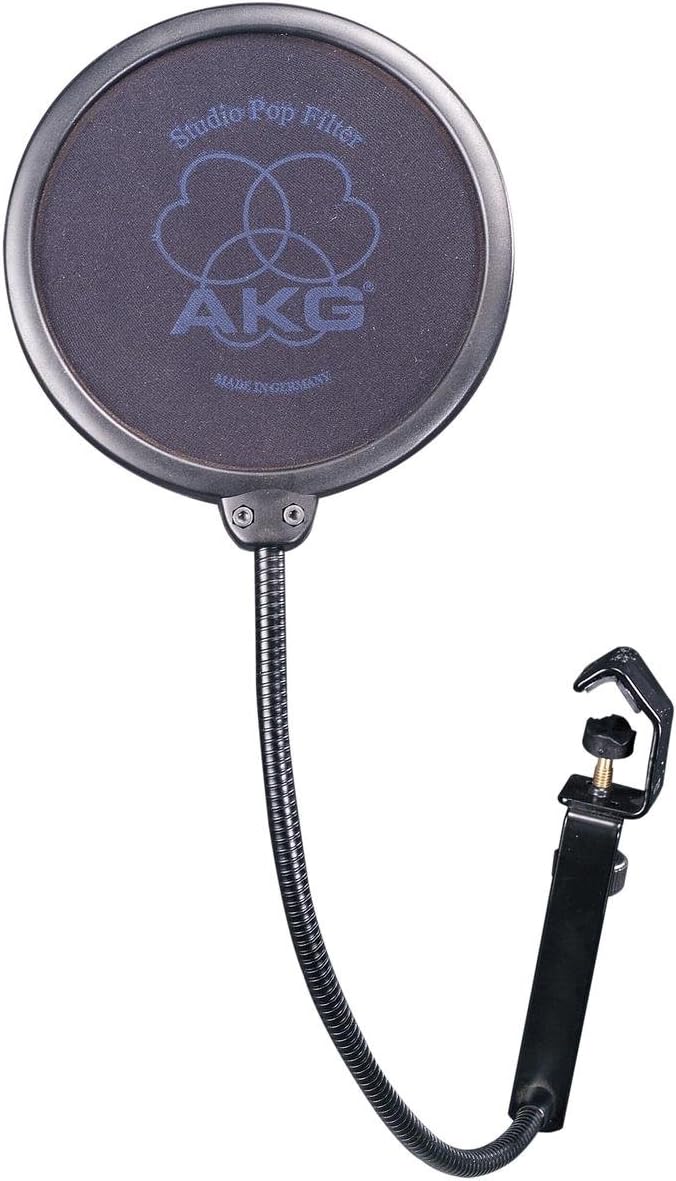

I’d look at the AKG PF80 first as a studio accessory, not as anything electronic in the recording chain. It is not a microphone, and it does not connect through XLR, USB, or wireless. Its job is physical: sit between a voice and a microphone to reduce the force of breath blasts and plosive consonants before they reach the capsule. From the spec sheet, the key point is size. At 16 x 9 x 1.5 inches and 12.8 ounces, this is a full-size pop filter, not a pocketable add-on for a minimal rig.
Why I’d consider the AKG PF80 for voice work
My read on the PF80 is that it makes the most sense in a setup built around close vocal work. Singers, voice-over artists, podcasters, streamers, and narration setups all run into the same basic issue: strong “p,” “b,” and “t” sounds can push air directly into a microphone and create problems that are better prevented than repaired later.
That is where I like the logic of a proper pop filter. It deals with the problem acoustically, before the signal ever reaches editing software or processing. If I were putting together a fixed vocal position, I’d rather have a physical barrier doing part of that work than depend entirely on cleanup after recording. The PF80’s appeal is simple: it is an AKG-made accessory with a large working area, intended for serious microphone placement rather than casual laptop audio.
What I’d watch before ordering the PF80
The same size that makes the PF80 interesting is also its main limitation. A 16-inch by 9-inch accessory takes up real space. I would not expect it to disappear on a crowded desk, and I’d think twice before choosing it for a camera-facing setup where the recording area needs to look open and uncluttered.
The 12.8-ounce weight is not extreme, but I would still want a stable stand or mounting position before buying. With any larger pop filter, drift and placement can become annoying if the rest of the setup is flimsy. I also would not treat it as a substitute for basic technique. Distance, angle, and gain choices still matter, even with a filter in front of the mic.
Who I think should buy or skip it
- Best fit: fixed recording spaces, vocal booths, home studios, and broadcast-style desks where a dedicated microphone position is already part of the setup.
- Good match: users who want broad physical plosive control instead of relying only on editing tools after the fact.
- Skip it: mobile recordists, very compact podcast desks, travel rigs, and anyone who wants the smallest possible visual footprint.
For the AKG PF80, model number PF80, first available on October 16, 2012 and not discontinued by the manufacturer, my judgement is straightforward: I’d shortlist it for a permanent vocal setup, but I’d skip it where space, portability, or on-camera visibility matters more than coverage.
Reviews
There are no reviews yet.