
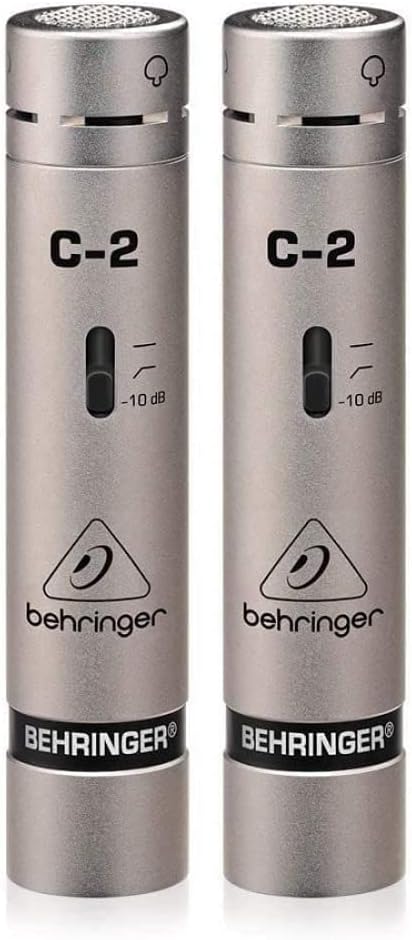


I look at the Behringer C-2 as a straightforward wired XLR microphone for someone building a conventional audio chain, not as a grab-and-go recording gadget. The listed version is black, metal-bodied, corded electric, and uses an XLR connector. It measures 11.89 x 5.12 x 3.35 inches and weighs 1.65 pounds, so I would not treat it like a tiny clip-on accessory or something meant to disappear into a pocket setup. Model C-2 is made in China, is not listed as discontinued, and has been available since October 2, 2001.
How I would fit the Behringer C-2 into a setup
The spec that matters most to me here is the XLR connector. That tells me the C-2 belongs with proper audio hardware: an audio interface, mixer, field recorder, or camera audio arrangement that accepts XLR. I would not buy it expecting to plug it straight into a laptop headphone jack, phone, or basic consumer input.
Because this is a corded electric microphone, I would plan the whole setup before ordering. That means thinking about cable routing, the device providing the microphone input, and how the mic will be physically positioned. For a camera-based rig, I would only consider it if the camera system or adapter can handle XLR properly. For desk, voice, or instrument recording, I would pair it with an interface or mixer that gives useful gain control.
- I would budget for: an XLR cable and a device with an XLR microphone input.
- I would also plan: a stand, clip, or mounting method that suits the recording position.
- I would not expect: USB convenience, wireless operation, or direct phone/laptop compatibility.
What my read of the C-2 specs says
On paper, the C-2 makes the most sense for users who already understand, or are ready to learn, a wired XLR workflow. The metal body is a practical plus in this category, and the black finish should stay visually low-key around a desk, studio corner, or camera rig.
The honest limitation is that the microphone is only one part of the result. With any XLR mic, the rest of the chain matters: the input device, gain settings, cable quality, room noise, placement, and the source being recorded. I would not expect the C-2, by itself, to solve a noisy room, distant placement, or a poorly planned recording space.
Who I think should skip the Behringer C-2
I would skip the Behringer C-2 if you want a USB mic, an all-in-one recorder, a wireless option, or something that plugs directly into a phone or laptop without extra hardware. I would also look elsewhere if you want the simplest possible setup with minimal cables and decisions.
My take is that the C-2 is for buyers comfortable building around XLR. If that describes your setup, it can make sense as part of a larger recording chain. If you want convenience first, I would not start here.
Reviews
There are no reviews yet.