

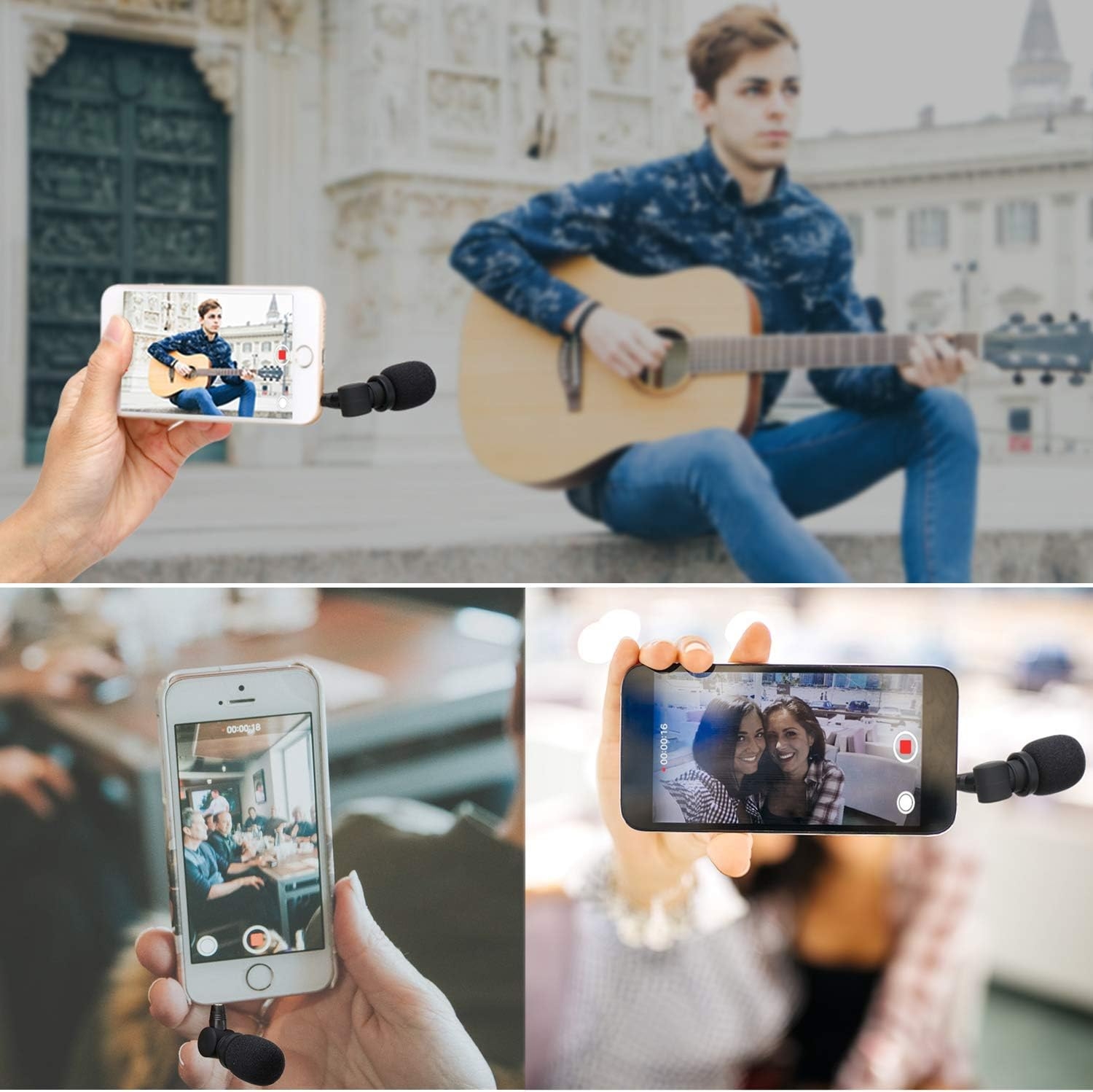
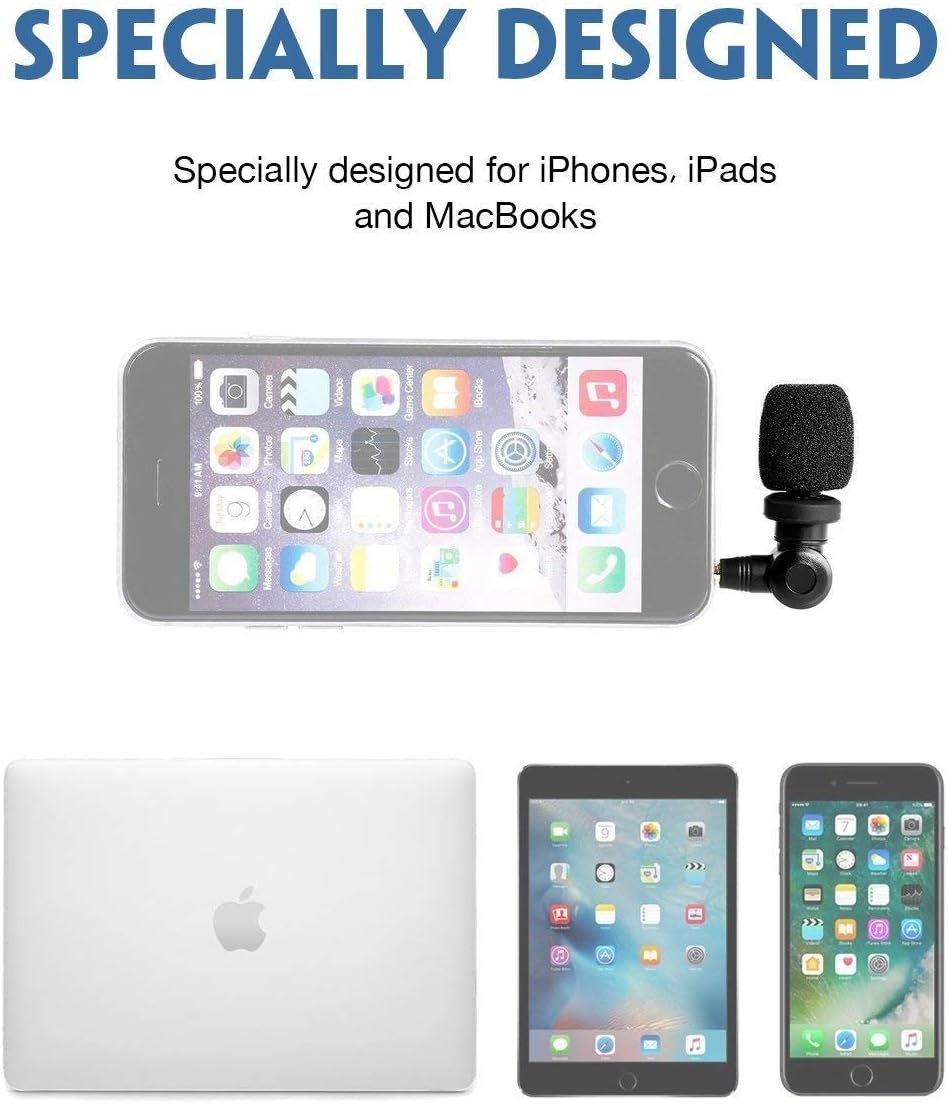


My read on the Saramonic SmartMic is straightforward: this is a tiny phone-first microphone for people who want a more directional capture option without building a full recording rig. It measures 1.18 x 1.18 x 2.72 inches and weighs 0.741 ounces, so I’d think of it as a pocket accessory rather than a serious production mic system.
How I’d place the SmartMic in a phone kit
The important detail here is the TRRS 3.5mm connector. That makes the SmartMic an auxiliary phone-style microphone, not a USB, XLR, wireless, or camera-focused setup. If I were buying it, I’d first check that my smartphone or Mac-style input actually accepts a TRRS 3.5mm mic connection. That compatibility point matters more than almost anything else with a mic like this.
I’d use this category of mic for quick phone video, short spoken clips, voice notes, simple social content, and lightweight interview-style recording where carrying a larger microphone would be annoying. The unidirectional polar pattern tells me it should be aimed at the person speaking, not left to capture the whole room evenly.
- Connection: auxiliary TRRS 3.5mm jack for compatible phone-style inputs.
- Device match: built around smartphone use, with iOS and Mac-style TRRS compatibility listed.
- Pickup: unidirectional, so I’d point it toward the subject and keep placement intentional.
- Power: battery powered, with one lithium ion battery required and a battery listed in the included components.
- Build format: microphone-only form factor with foam material and a stand feature.
What I would not expect from a mic this small
I would not treat the Saramonic SmartMic as a studio microphone or a replacement for a more controlled recording chain. There is no XLR integration here, no balanced cabling, no stereo capture, and no multi-channel setup; the listed channel count is one. The 74 dB sensitivity, 74 dB signal-to-noise ratio, and unidirectional pickup all point to a mic that should be used close to the source and aimed carefully.
The honest limitation is that a small TRRS directional mic can only do so much. It may help you focus on a voice in front of the phone, but it does not remove the need for good placement, reasonable speaking distance, and a controlled environment. I’d be especially cautious about relying on it from across a room.
Who I’d tell to skip the Saramonic SmartMic
I’d skip the SmartMic if I needed wireless recording, USB-C or Lightning connection, XLR workflow, stereo audio, or a microphone mainly for DSLR or mirrorless camera inputs. I’d also pass if my phone setup does not clearly support TRRS 3.5mm microphone input.
For the right buyer, though, the appeal is obvious: a very small Saramonic phone mic with simple auxiliary connectivity and a directional pickup pattern. I’d consider it only if that exact TRRS smartphone use case matches the job.
Reviews
There are no reviews yet.