
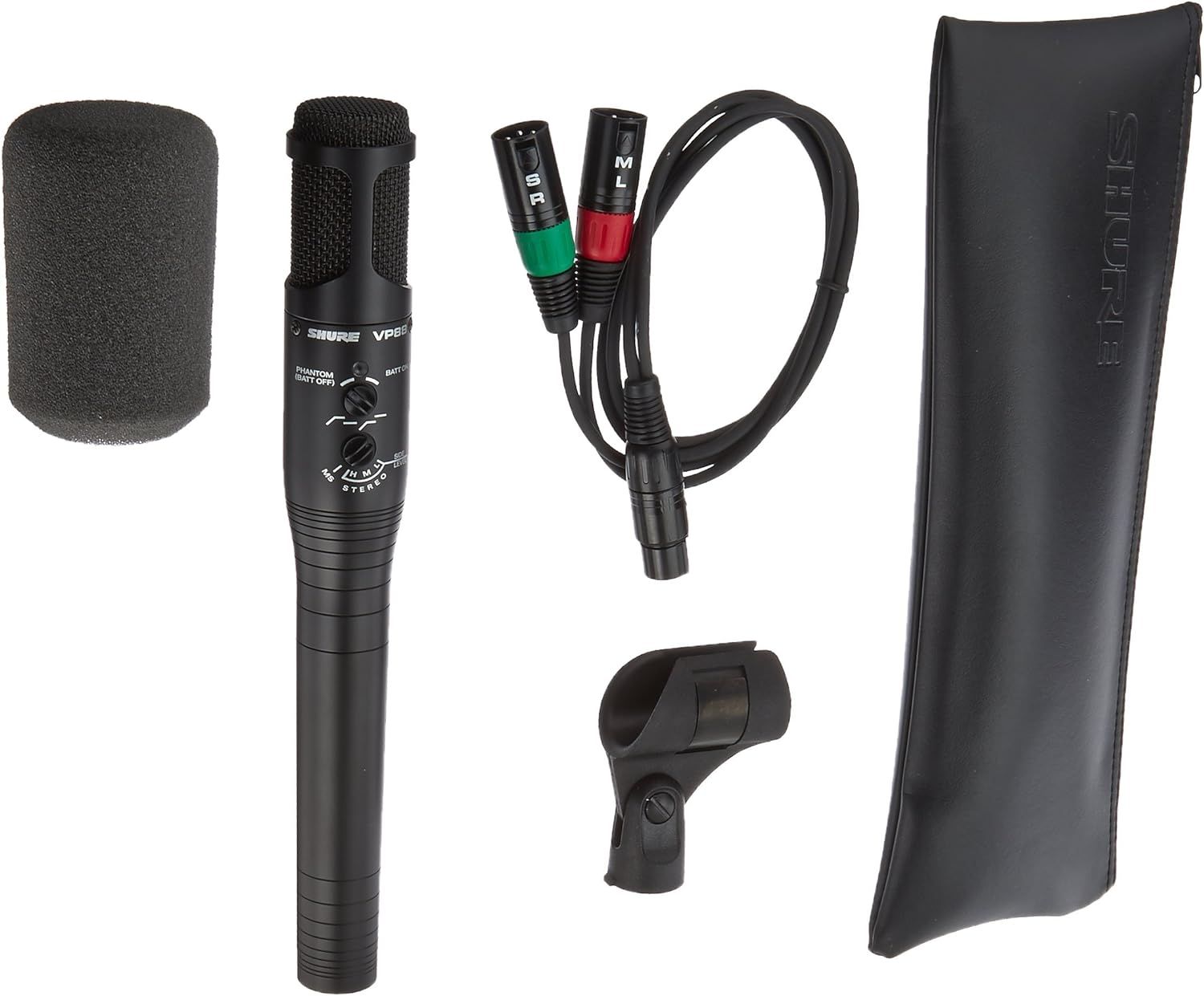
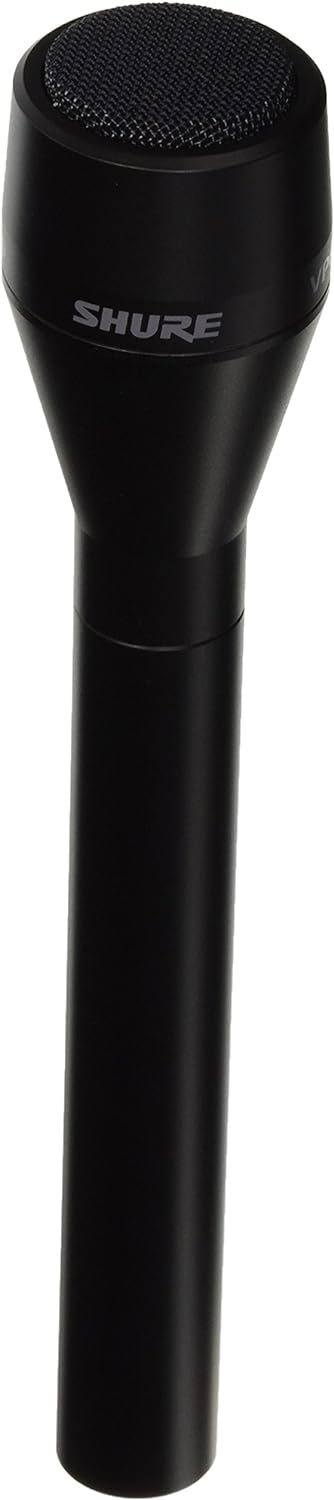
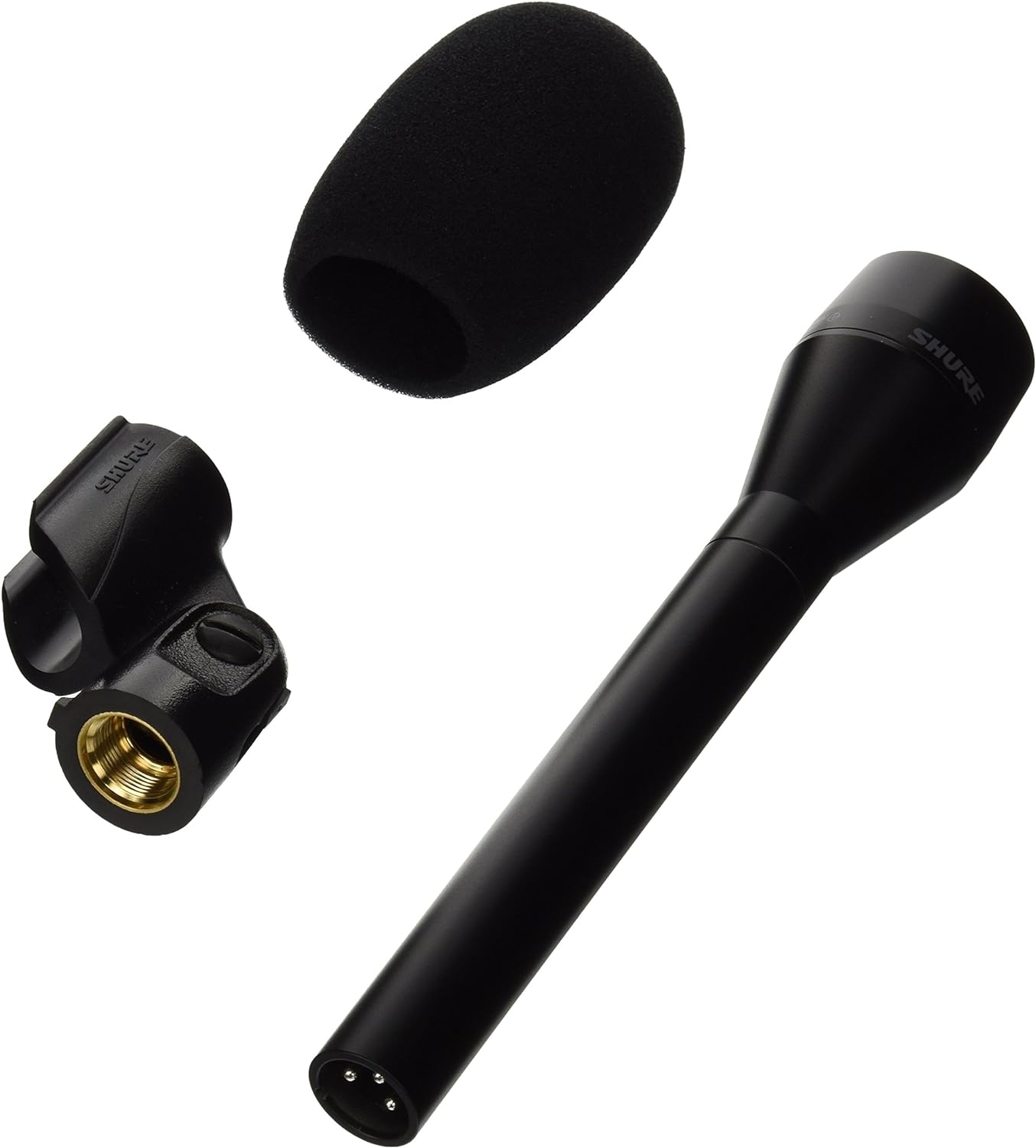

If I were looking at the Shure VP64A, I’d treat it as a straightforward handheld interview mic for camera work rather than a do-everything microphone. The appeal is its simplicity: black handheld body, XLR connection, omnidirectional pickup, and a camera-friendly format. My read of the spec sheet is that Shure is aiming this at spoken-word capture where the mic can sit between people and pick up voices without demanding very tight aim.
Where I think the Shure VP64A makes sense
The VP64A is an XLR, corded electric microphone, so I’d pair it with a camera or recording path that already has proper XLR microphone input. If your camera only has a small consumer-style mic jack, I’d plan on extra connection gear before ordering. The listed 300 ohm impedance also points this toward standard mic inputs, not line-level or instrument-style connections.
I like that Shure includes the A57F swivel adapter and 49A130 windscreen, because those are practical pieces for this kind of microphone. The adapter gives you a way to mount it on a stand, and the windscreen is the right kind of basic accessory for speech, breath noise, and light air movement. At 11.2 x 4.9 x 2.7 inches and 11.7 ounces, this is clearly a full handheld microphone, not a tiny camera-mounted capsule.
What I’d expect from the omnidirectional design
The main buying decision here is the omnidirectional polar pattern. I’d choose that if I wanted a more forgiving mic position for interviews, quick comments, or camera-side conversation. You do not have to keep a speaker locked into a narrow pickup angle, which can be useful when more than one person is talking near the microphone.
The tradeoff is just as important: I would not choose an omnidirectional handheld as my first option for noisy streets, crowded rooms, or situations where background rejection matters. By design, it picks up sound from around the microphone, so the environment becomes part of the recording. The listed 78 dB signal-to-noise ratio looks appropriate for clear speech on paper, but I’d still care a lot about the recording chain and mic placement.
Controls and practical details I’d check before buying
The mute function is a useful practical touch if you need to cut the signal without unplugging the mic. The voice activated recording feature may also fit certain speech-triggered workflows, though I’d verify how that works with the specific camera or recorder being used. The rubber material and black finish keep the VP64A visually plain, which is exactly what I’d want for camera-facing interview work.
Who I’d tell to skip the VP64A
- Wireless-first presenters: this is a corded XLR microphone, not a cable-free handheld system.
- Noisy-location shooters: I’d look for a more directional option if background rejection is the priority.
- Minimal camera rigs: if your camera lacks XLR input, this may add more hardware than you want.
- Hands-free users: this is a microphone-only handheld form factor, so lavalier or headset buyers should skip it.
Reviews
There are no reviews yet.