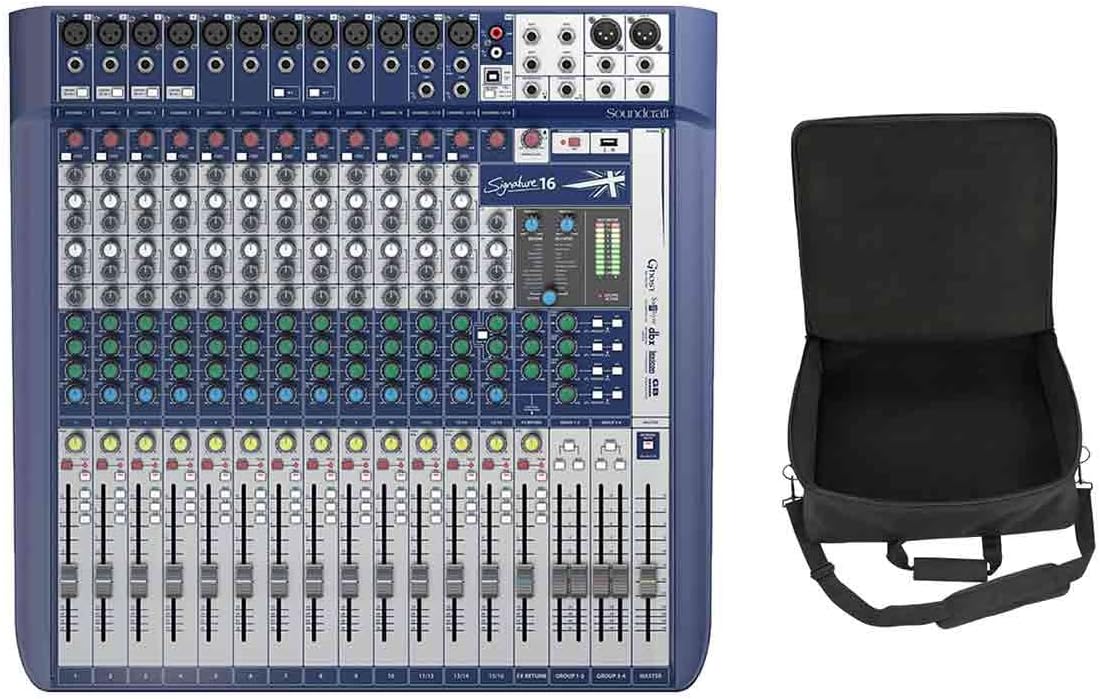
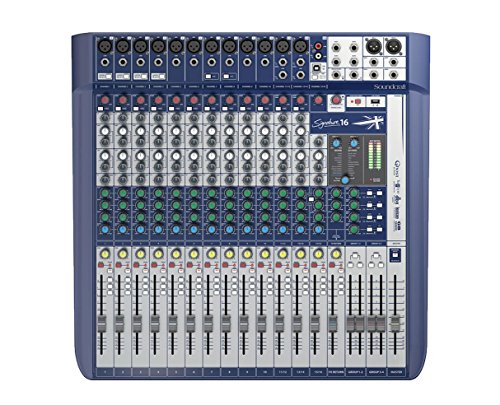
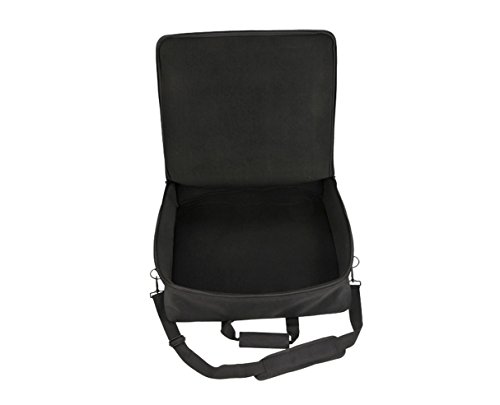
The Soundcraft Signature 16 is the kind of mixer I’d look at when a small two-input or four-input box has clearly stopped making sense. The important point here is the 16-channel format. That gives it a middle-ground role: enough room for a modest live setup, rehearsal space, worship room, project studio, or multi-mic content rig, but not the kind of channel count I’d choose for a large production with heavy expansion plans.
It is also a corded electric mixer, so I’d treat it as a piece for a stable setup with reliable mains power. I would not think of it as a grab-and-go battery solution or something for field work where power is uncertain.
Where I Think the Soundcraft Signature 16 Makes Sense
My read of the Signature 16 is that it fits best when several sources need to be brought under one set of hands before going to speakers, a recorder, or another audio system. That might mean vocal mics, instruments, playback devices, keyboards, or other line-level sources. The value of a mixer at this size is not mystery; it is control, organization, and having enough inputs that you are not constantly repatching.
If I were building a modest live or fixed room setup, I’d consider this category when I wanted a real central mixing surface rather than a minimal desktop interface. A 16-channel layout gives breathing room for small groups, presentations, rehearsals, and streaming setups with multiple people on microphones.
- For live sound: I’d use this type of mixer when several microphones and instruments need to be balanced before feeding a PA system.
- For recording setups: I’d consider it as a front-end control point for multiple sources before they move further down the recording chain.
- For installed spaces: the corded power requirement makes sense at a desk, booth, stage position, or equipment area with regular AC access.
The Limitation I Would Plan Around
The main limitation is also the headline spec: 16 channels. That sounds generous until stereo sources, multiple vocal microphones, drums, instruments, and playback devices start adding up. If I were buying for a band that might grow, or for a room that could need more complex routing later, I’d count every likely source before ordering.
I’d also be realistic about what any hardware mixer can and cannot solve. It will not fix poor mic placement, bad cables, inconsistent source levels, or a messy signal plan. A mixer like this still expects the operator to manage gain, labeling, cabling, and the basic discipline of connecting the right sources to the right inputs.
Who I’d Tell to Skip the Signature 16
I’d skip the Soundcraft Signature 16 if you only need one or two microphones, want the smallest possible desktop setup, or need battery-powered operation. I’d also pass if you already know 16 channels will be tight within a year. But for someone who wants a current, corded mixer with a moderate channel count and a practical role in a fixed or semi-fixed rig, this is a sensible category to be shopping in.


Reviews
There are no reviews yet.