
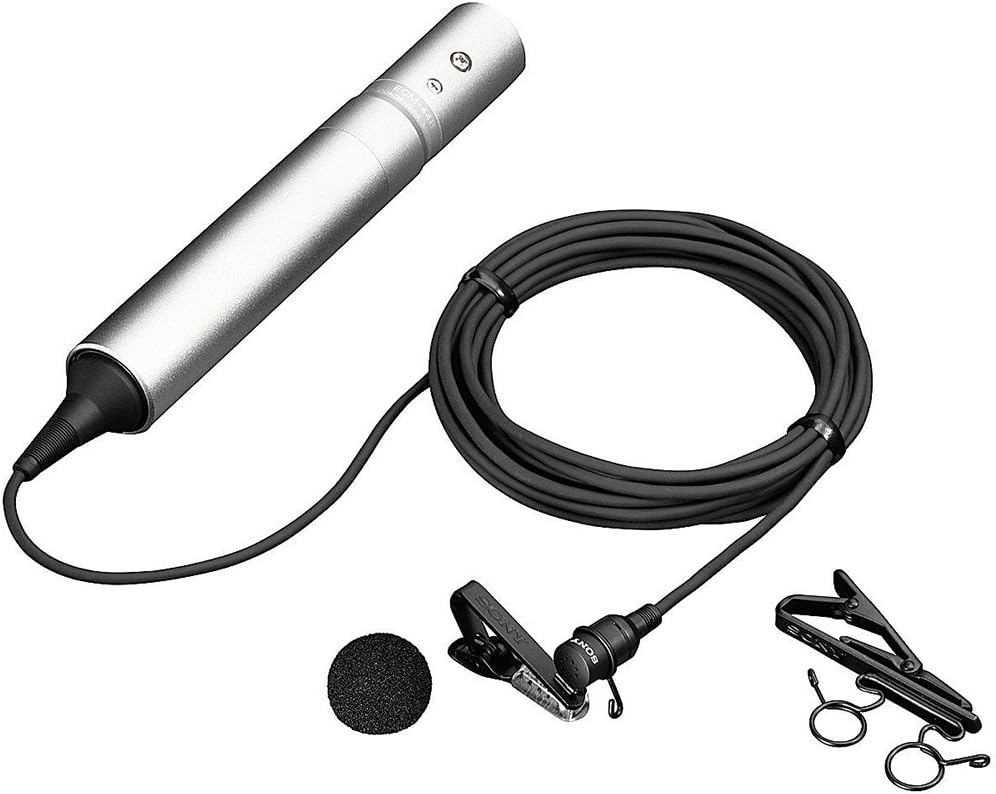

I look at the Sony ECM-44, model ECM44B, as a microphone for people who already live in a traditional wired audio chain. The spec sheet points clearly in that direction: XLR Connector, compatibility listed with an amplifier and speaker, and power listed as both corded electric and battery powered. That is not the profile of a quick laptop mic or a casual phone-recording accessory. My read is that this belongs with buyers who understand where the microphone signal is going next.
Why the ECM44B’s XLR Setup Matters
The biggest buying question here is not just “Do I want a Sony microphone?” It is “Do I have the right chain for an XLR microphone?” The ECM-44 uses an XLR connector, so I would pair it with gear that has a proper microphone input path, or with the correct mixer, interface, amplifier setup, or adapter before it ever reaches a speaker.
That is a strength if your setup is already built around wired audio. XLR is common in more serious microphone systems because it is meant for secure, cable-based connections. But it is also the first reason I would tell some buyers to skip it. If you want a direct USB microphone, a phone-ready mic, or something that plugs straight into a basic computer without extra hardware, this is not where I would start.
The AA Battery Requirement Is Worth Noticing
The power arrangement is the spec that would make me pause before ordering. The ECM-44 is listed as corded electric and battery powered, with 2 AA batteries required. I like the flexibility implied by battery operation, especially for setups where you do not want the entire plan to depend on one specific power arrangement from the rest of the system.
At the same time, AA batteries are another thing to manage. If I were buying this for regular use, I would make sure battery replacement and spares were part of the workflow. Anyone who wants a no-maintenance, always-plugged-in desktop solution should probably look elsewhere.
Size, Weight, and Long-Term Fit
At 6.9 ounces, the Sony ECM-44 is not a heavy item to account for in a kit. Its listed dimensions are 9.19 x 4.19 x 1.75 inches, and the black finish keeps it visually understated. Those details make sense for practical audio work where gear should not draw unnecessary attention.
I also pay attention to the timeline here. The ECM-44 has been listed as available since July 21, 2004, and it is recorded as not discontinued by the manufacturer. That kind of long market presence can be reassuring if you prefer established gear over a brand-new release.
Who I’d Buy It For — and Who Should Skip It
I would consider the Sony ECM-44 for an XLR-based PA, amplifier, speaker-routing, or recording setup where the rest of the equipment is already planned properly. I would not choose it for minimalist mobile recording, USB-first desktop use, or anyone who does not want to deal with AA batteries and wired connectivity. Before ordering, I would check the input type, power expectations, and the rest of the signal path carefully.
Reviews
There are no reviews yet.