
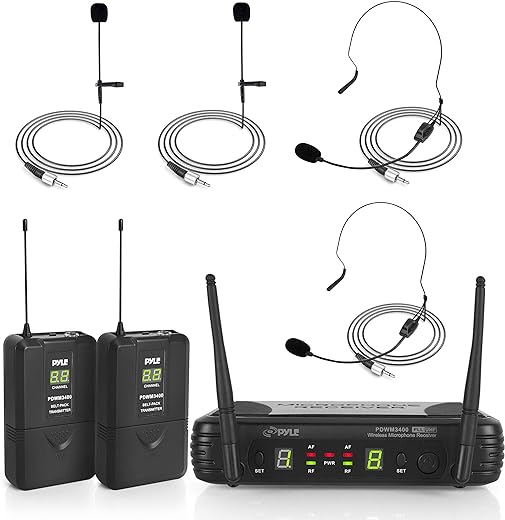

My read on the PylePro PDWM3400 is that it is a straightforward wireless microphone system for people who value cable-free handling over maximum control. The key fact I would plan around is its AA-battery operation: it requires 2 AA batteries, which keeps the setup familiar, but also means battery checks become part of the job every time it is used.
Where I think the PDWM3400 makes the most sense
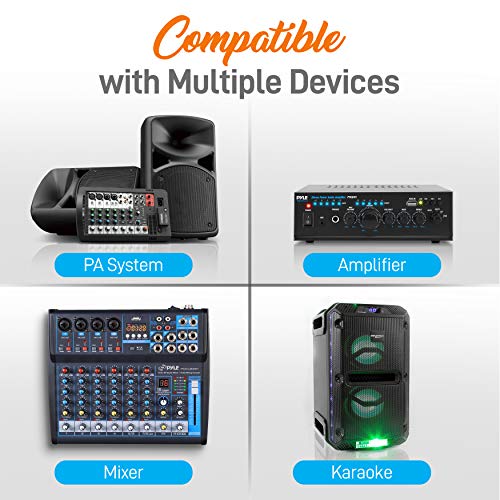
I would look at the PDWM3400 for speech, hosting, karaoke-style use, classroom talking, community-room announcements, and small informal events. That is the kind of situation where a wireless microphone format can be genuinely useful: the person speaking can move, hand the mic to someone else, or stand away from the rest of the audio gear without dragging a cable behind them.
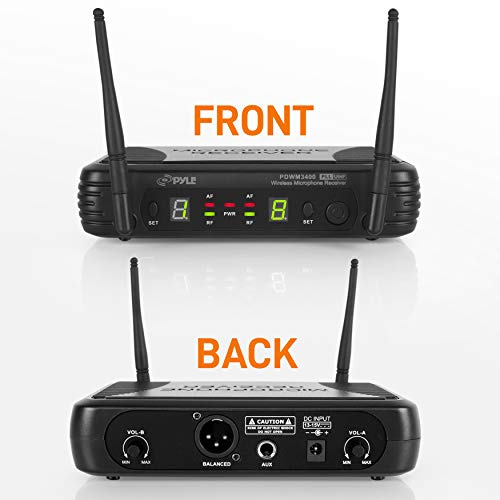
The listed dimensions are 10.75 x 11.25 x 2.5 inches, so I would expect it to fit into a modest tabletop or rack-adjacent setup without demanding much space. At 1 pound, it also reads as easy enough to carry with the rest of a small PA kit. For mobile users who already have speakers, cables, and accessories to move around, that matters.
The AA-battery tradeoff I would not ignore
The part I would not gloss over is power management. A wired microphone has its own hassles, but it does not ask you to think about AA cells before a meeting or event. With the PDWM3400, I would keep spare AA batteries with the system and check them before anything important.
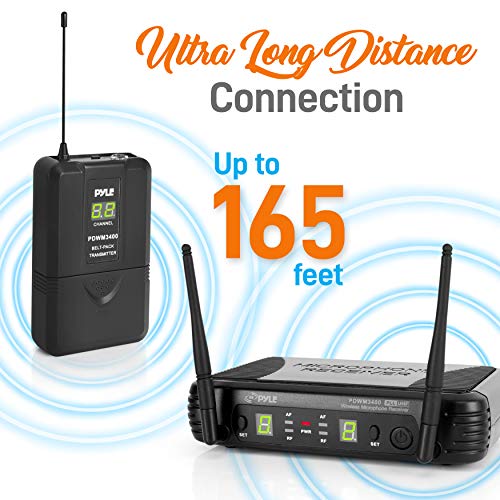
I would also keep expectations realistic about the wireless format. In general, wireless microphones require more care than a cable: placement, distance, obstacles, and nearby electronics can all become part of the equation. For a simple room or casual event, that may be perfectly acceptable. For a large venue, a dense stage setup, or anything mission-critical, I would be more cautious and look at a more advanced wireless system with clearer planning for expansion and control.
Who I would buy it for, and who should skip it
The PDWM3400 is model number PDWM3400, manufactured by Sound Around, with country of origin listed as China. It is not marked as discontinued, and it has been available since June 27, 2013. On paper, I would treat it as a practical cable-free microphone option rather than a studio-centered recording tool or a touring-grade wireless platform.
I would consider it for home entertainment, small gatherings, classrooms, community spaces, and casual vocal or announcement duties. I would skip it if I needed integrated rechargeable power, professional large-venue wireless coordination, or a system I could build a more complex stage setup around.
Reviews
There are no reviews yet.