
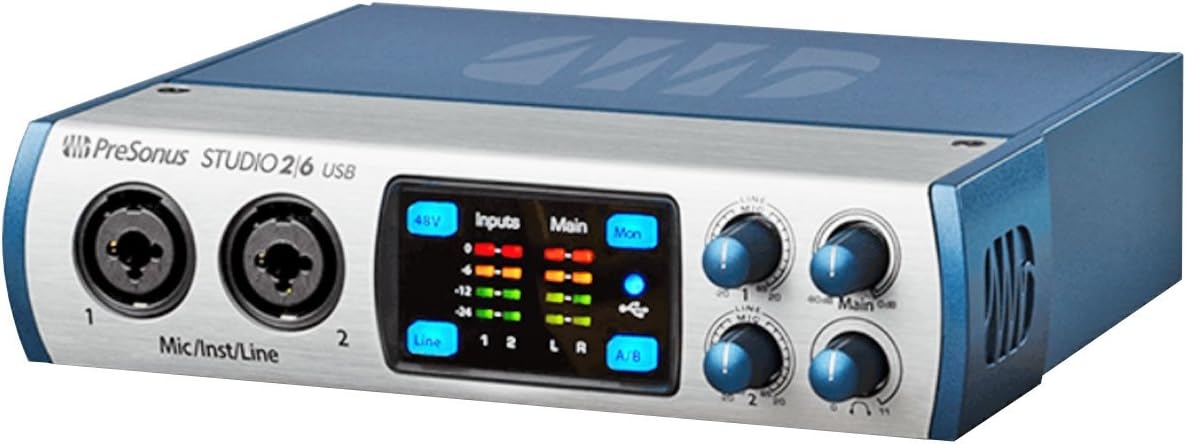
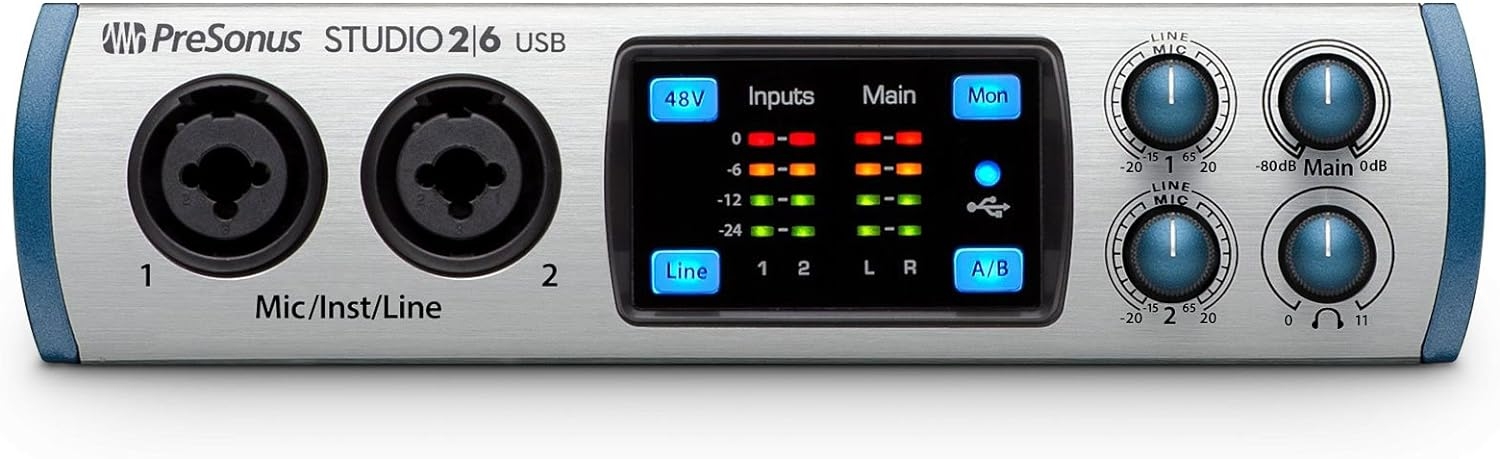
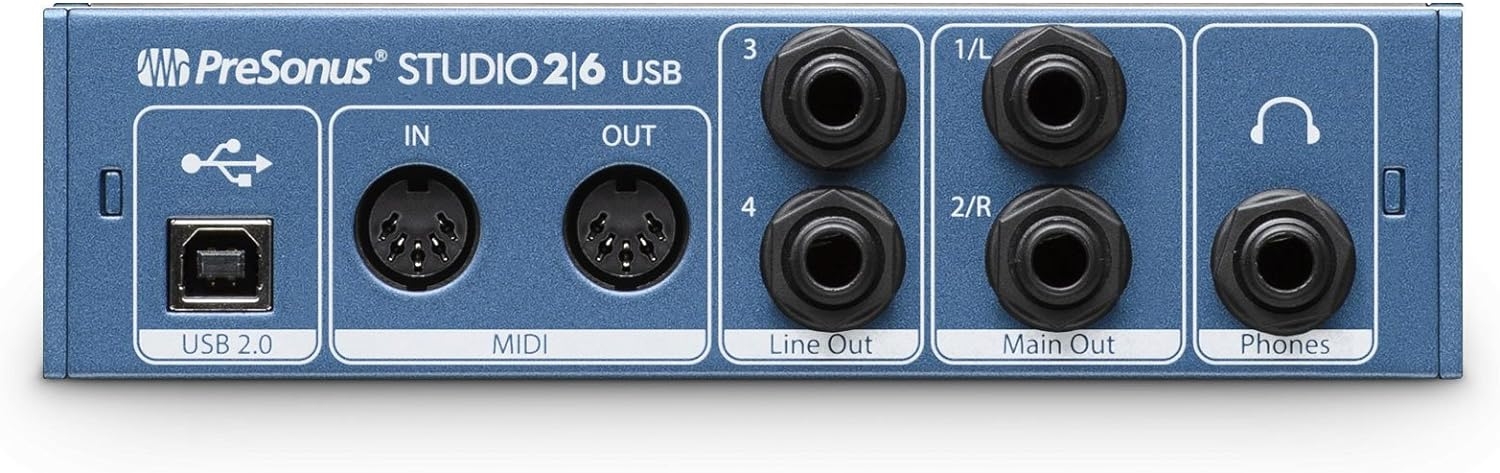

My read on the PreSonus Studio 26 is that it’s a compact, practical USB audio interface for a Windows-based desk where recording is the priority, not just playback. The recorded configuration is “2 Mic Pres – 4 Line Outs,” which tells me this is aimed at people who need a small front end for microphones and a bit more output routing than the most basic two-output interface.
Where I Think the Studio 26 Fits Best
At 7 x 5.5 x 1.75 inches and 1.54 pounds, the Studio 26 looks like the kind of interface I’d consider for a small writing desk, podcast corner, or portable recording bag. It is not a large rack-style hub, and that matters if you’re trying to keep a laptop setup clean.
I’d pair this with a Windows computer, recording software, headphones, and powered speakers or another proper line-level monitoring setup. The recorded hardware interface is USB, so the basic connection path is straightforward. I would not think of it as a standalone solution for passive speakers, because line outputs normally need powered monitors or an amplifier downstream.
My Take on Two Mic Pres and Four Line Outs
The two mic preamps are the center of the appeal here. For a solo musician, a vocal-and-instrument setup, a two-person spoken-word session, or a stereo recording task, that count makes sense. If I were buying at this level, I’d be asking whether two microphone inputs cover the sessions I actually plan to record, not the sessions I imagine doing someday.
The four line outputs are the part that makes the Studio 26 more flexible than a very bare-bones interface. I’d value those if I wanted extra routing options, an alternate monitoring path, or a more organized speaker/headphone workflow depending on the rest of the system. That said, if all you need is a simple left/right output to speakers, those extra outputs may not change your daily use much.
What I’d Check Before Ordering
The recorded operating system is Windows, so I’d be especially careful if I were buying for a non-Windows machine. I’d also check the rest of the signal chain: microphone cables, headphone needs, powered monitors, and the software workflow. An interface can be the right size on paper and still be the wrong match if the surrounding setup is not planned.
Who Should Skip the PreSonus Studio 26
- Full-band recorders: two mic preamps are likely to feel restrictive for drums, live ensembles, or several vocalists at once.
- Non-Windows buyers: because the recorded operating system is Windows, I’d choose carefully before putting it in another setup.
- Playback-only users: if you only need audio out to speakers, I’d look at a simpler device rather than paying attention to mic preamps you may not use.
- People who need a larger studio hub: the compact 2-mic-pre format is useful, but it is not a substitute for a bigger multi-input recording system.
Reviews
There are no reviews yet.