
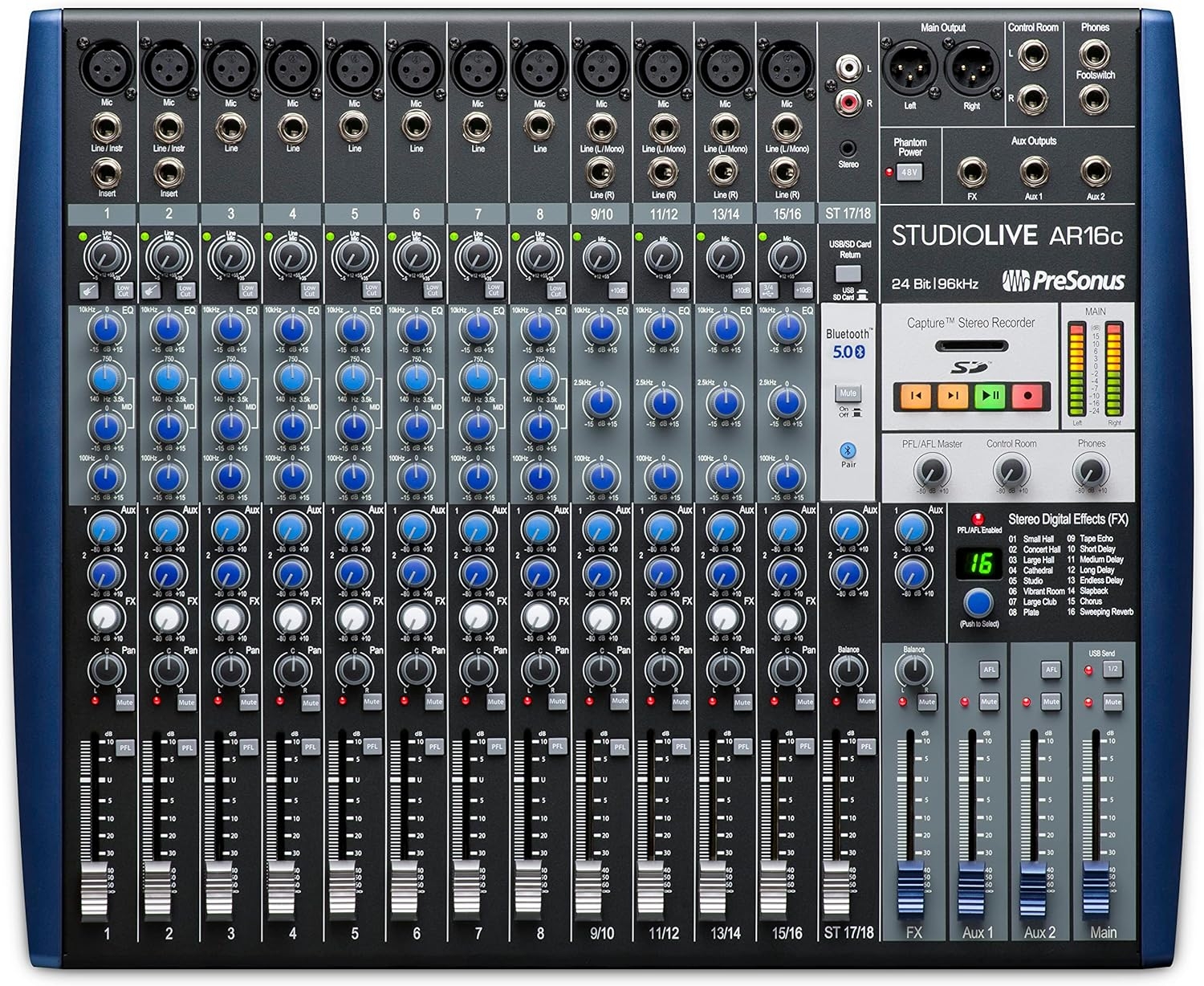
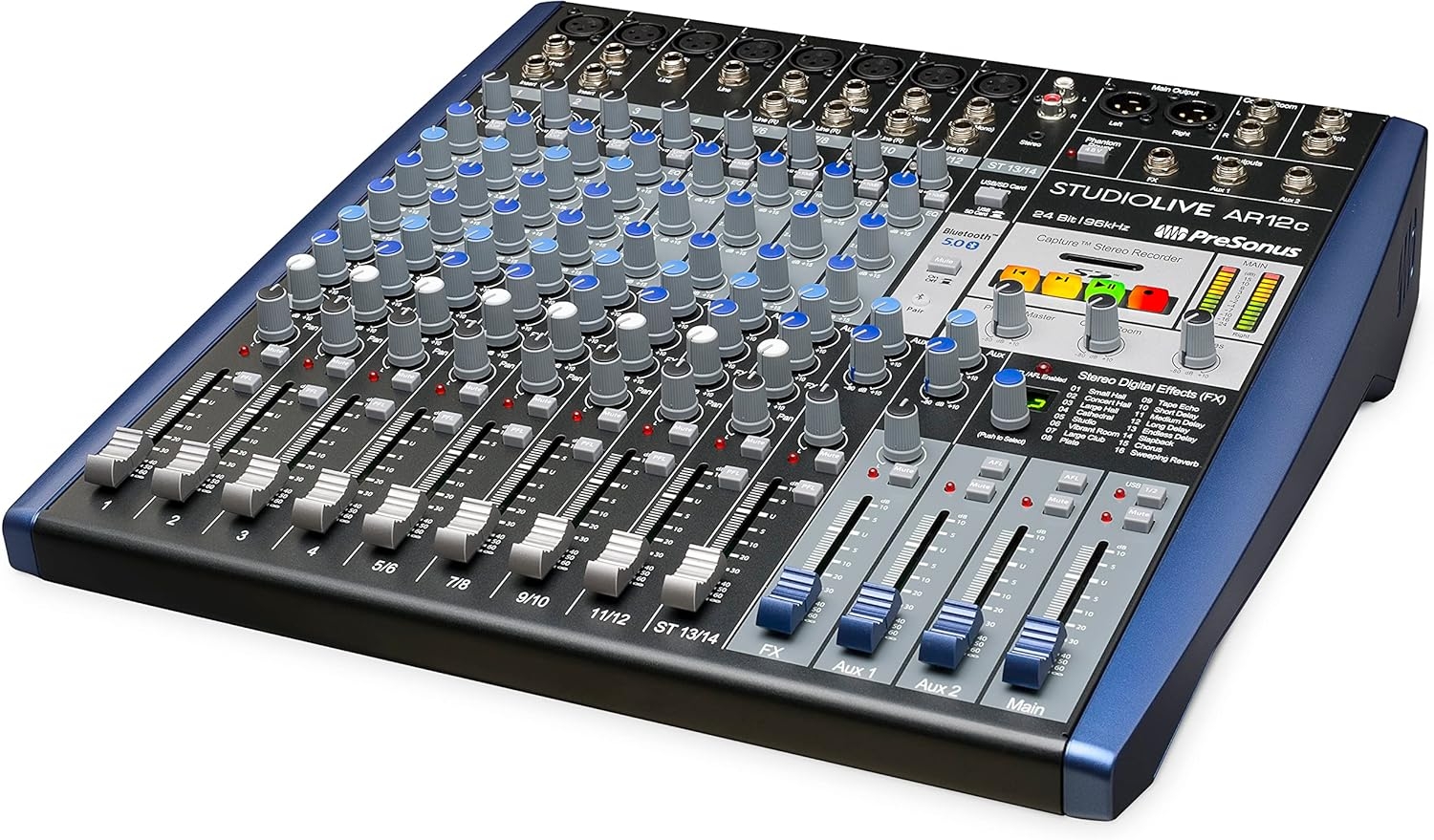

As I read the PreSonus StudioLive AR16c on paper, its appeal is pretty straightforward: it gives you an 18-channel unpowered mixer without moving into a huge console footprint. At 15 x 20 x 3.7 inches and 14.08 pounds, it is not a tiny desktop box, but I would still consider it manageable for a project room, rehearsal setup, podcast table, house of worship, or small live space.
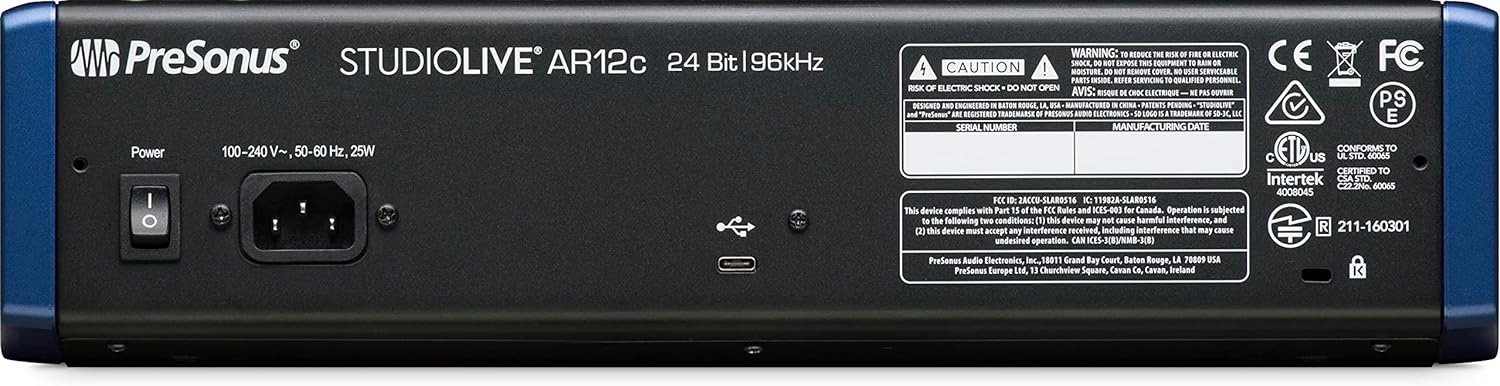
This is the StudioLive AR16c model, listed as the StudioLive AR16c 18-Channel version, and it is a corded electric unit. That matters. I would not look at this as a grab-and-go battery rig or a field mixer. My read is that it belongs somewhere with dependable AC power and enough sources to justify the larger channel count.
Why I’d Consider the 18-Channel Format
The main reason I would look at this PreSonus is channel headroom. An 18-channel mixer gives you room to keep more sources connected instead of constantly repatching. If your setup includes several microphones, stereo instruments, playback devices, or separate feeds, that extra space can make the whole system feel less cramped.
I would not buy a mixer this size just to run one microphone and one music source. But if your setup is already growing, or you know it will, the AR16c’s format makes more sense than a very small mixer that you outgrow quickly. The physical size also looks like a reasonable middle ground: big enough for hands-on control, but not a full console-sized commitment.
- Best fit: multi-source recording or live mixing where 18 channels are useful.
- Desk impact: larger than compact mixers, but still physically manageable.
- Power expectation: suited to fixed AC power, not battery-based operation.
What I’d Check Before Ordering
The biggest limitation is that this is an unpowered mixer. I would not expect it to drive passive speakers by itself. Passive speakers need separate amplification, while powered speakers need their own power and the correct line-level connection from the mixer. That is normal for this category, but it is the wrong choice if you want one box that also acts as the speaker amp.
The listed 48-volt specification is also worth noting because condenser microphones often require phantom power. I would still check the exact microphone and input requirements before building a rig around it, especially if you are mixing condenser mics, dynamic mics, instruments, and playback sources.
Who I’d Point Toward It — and Who Should Skip It
I would put the PreSonus StudioLive AR16c on the shortlist for someone who needs a corded, 18-channel mixer from a known audio manufacturer and has the rest of the system already planned. It is especially sensible for a semi-permanent space where the mixer can stay connected and ready.
I would skip it if you need battery operation, the smallest possible travel mixer, or built-in speaker amplification. I would also pass if your channel needs are modest; in that case, the AR16c is more mixer than you need.
Reviews
There are no reviews yet.