
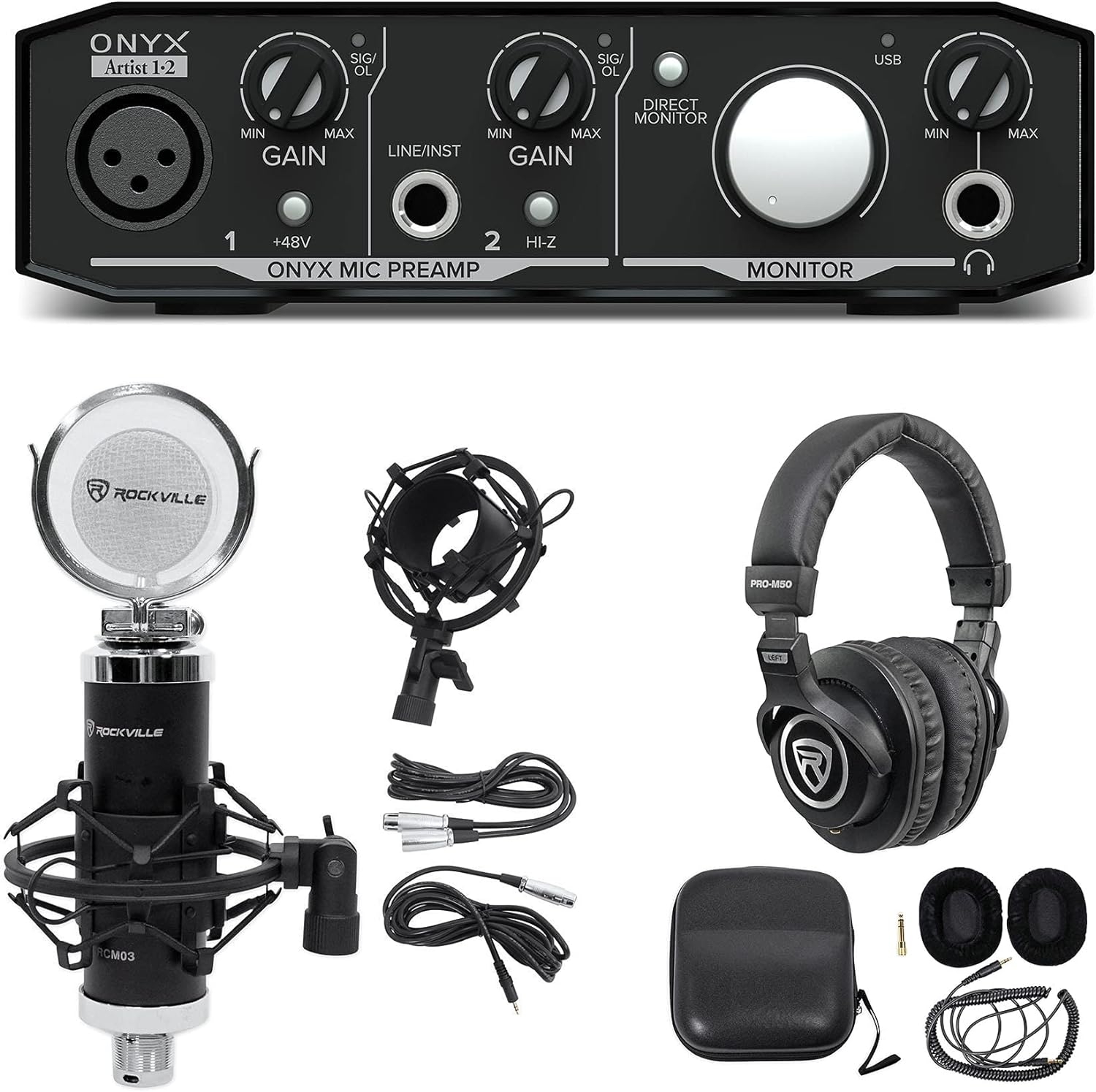

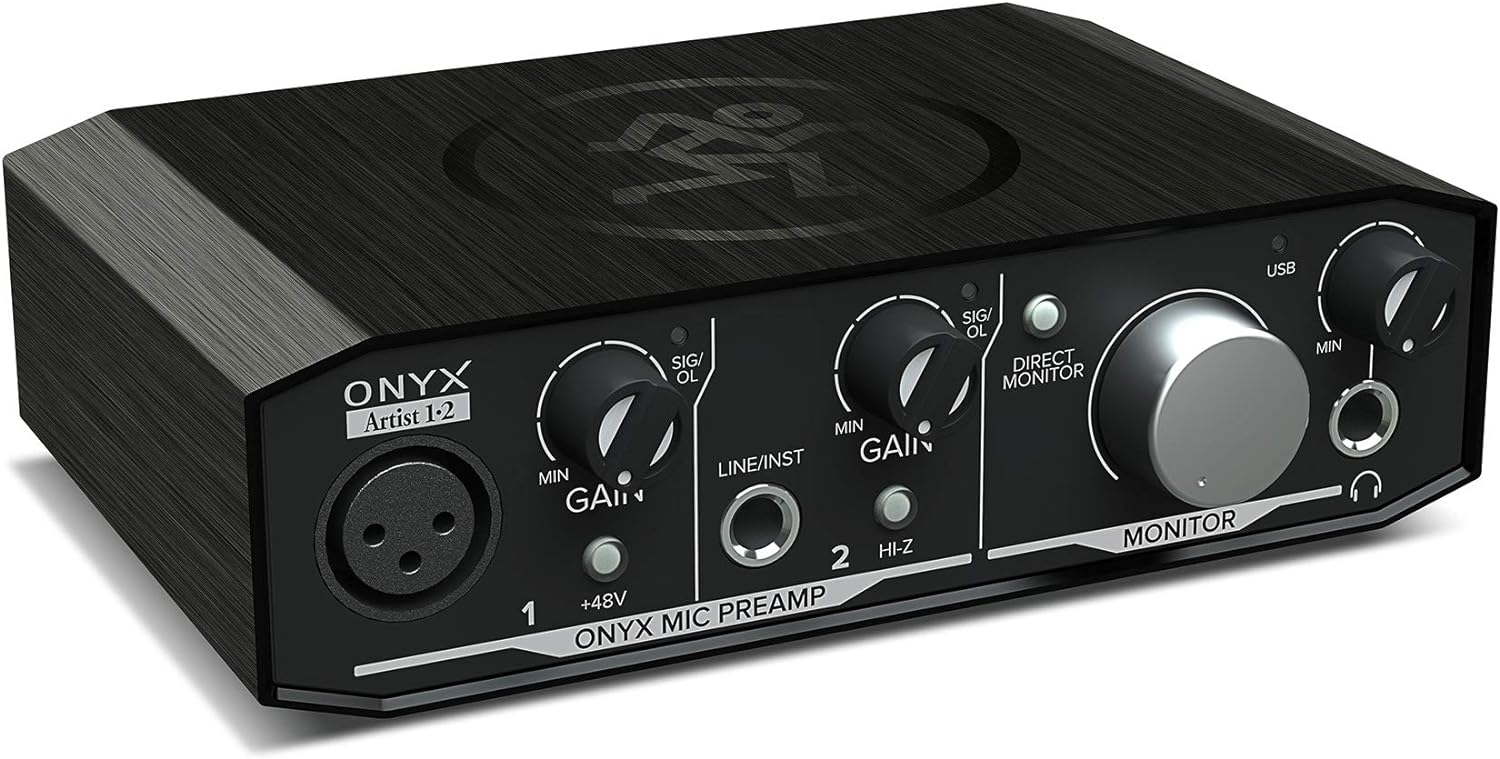
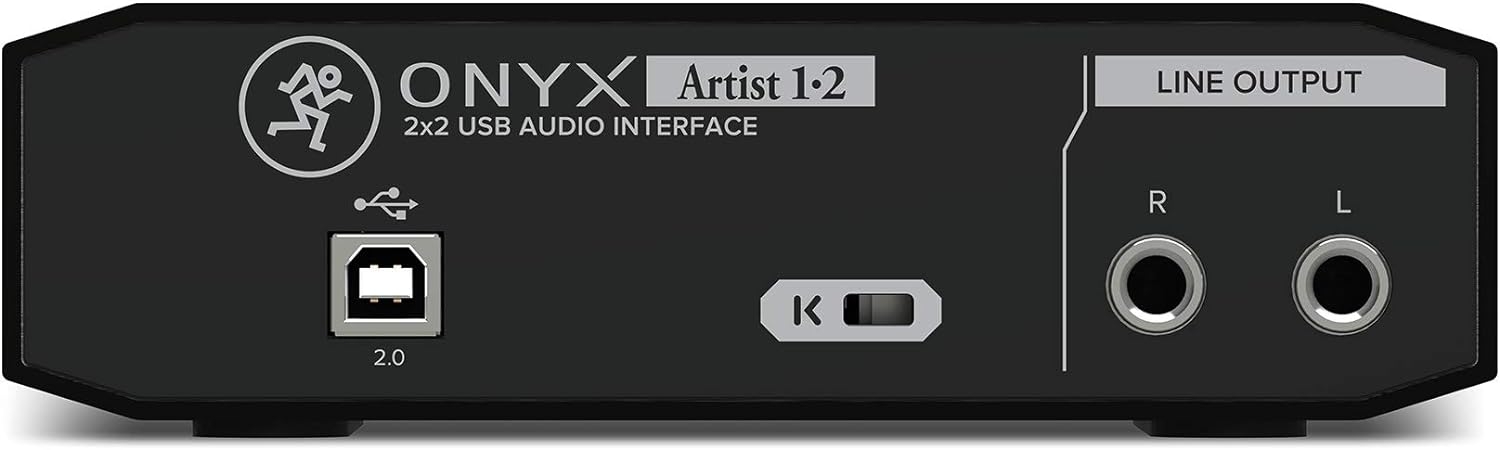

My read of the Mackie Onyx Artist 1×2 is that it belongs in the simple, computer-based recording lane: one person, one main source, and a tidy desk setup. The recorded compatible device type is Personal Computer, with Linux listed as the operating system, so I would look at it first for a small PC recording station rather than as a do-everything studio hub.
Why I’d Treat the Mackie Onyx Artist 1×2 as a Desk Interface
The “1×2” format tells me this is aimed at focused recording rather than multi-source production. I’d consider it for voice work, podcasting, solo music sketches, guitar ideas, online teaching, or basic computer audio duties where the interface sits close to the keyboard and microphone. I would not buy this expecting it to replace a mixer or handle a room full of microphones.
The listed package dimensions are 10.5 x 6.3 x 3.2 inches, and the item weight is 3.2 pounds. From those numbers, I’d expect something that fits naturally into a compact workspace without feeling like a tiny throwaway adapter. If I were building a small writing desk or editing corner, that size class would make sense to me.
The Aluminum Body Is the Spec That Catches My Eye
The most useful recorded detail here is the aluminum construction. For a small audio interface, that matters. These boxes tend to live around cable tension, headphone leads, mic stands, laptops, and crowded desks. I generally prefer a metal chassis in that situation because it suggests a more confidence-inspiring physical design than lightweight plastic.
That does not tell me how it sounds, and I would not pretend otherwise from a spec sheet. But as a buying clue, aluminum is still meaningful. If someone asked me what stands out about this Mackie on paper, I would point to the compact computer-focused role and the metal build before anything else.
Where I Think the 1×2 Format Becomes the Limit
The limitation is scale. I would skip the Mackie Onyx Artist 1×2 if the plan is to record several microphones at once, track a drum kit, capture a full band, or keep multiple speakers on separate channels. A 1×2-style interface is better suited to one-person recording and overdubbing than to bigger sessions.
I’d also be careful if the setup is not centered around a personal computer, since the recorded compatibility points that way. For a Linux-based PC desk where the goal is a straightforward, compact recording front end, this Mackie makes sense on paper. For larger sessions, mobile-first workflows, or anyone who already knows they need more inputs, I’d look at a bigger interface instead.
Reviews
There are no reviews yet.