
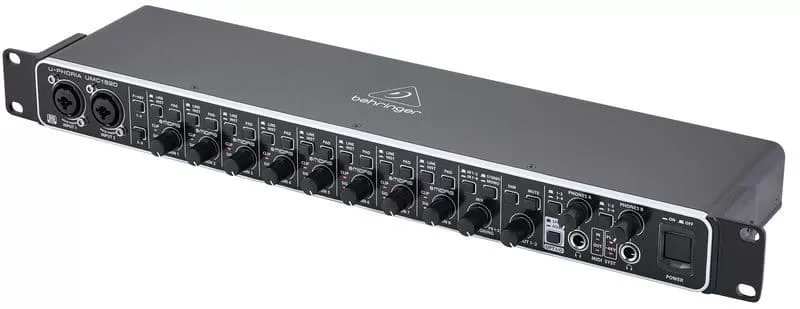

I look at the Behringer U-PHORIA UMC1820 as a practical hub for a computer-based recording setup, not as a tiny grab-and-go interface. It is a black USB audio interface, model UMC1820, built around an 8-channel format and listed for use with a personal computer, with Mac operating system compatibility and S/PDIF support. My read of these specs is simple: this is aimed at people who need several sources connected at once, rather than someone recording a single vocal or guitar track now and then.
Where I Think the UMC1820 Makes the Most Sense
If I were building a Mac-based home studio around multiple microphones, instruments, or pieces of outboard gear, this is the type of interface I would shortlist. The 8-channel size is the key reason. It gives you room to treat the interface as the center of a small recording rig, where leaving things connected matters as much as the recording itself.
The physical size tells the same story. At 19.02 x 5.12 x 1.81 inches and 4 pounds, I would not think of the UMC1820 as a pocket interface or a casual laptop-bag accessory. I would plan desk space for it, or treat it like a fixed studio component. That is not a flaw if your setup is semi-permanent, but it is worth thinking about before ordering.
Why S/PDIF Matters Only for the Right Setup
S/PDIF support is useful if you already own compatible digital gear or plan to add some. I like seeing it on an interface in this category because it gives you another way to connect digital audio equipment without treating every signal as analog first.
That said, I would not buy the UMC1820 just because it lists S/PDIF. I would first check whether anything else in the rig actually uses that connection. If not, the real value here remains the USB connection to the computer and the 8-channel layout.
The Limitations I Would Keep in Mind
An interface like this will not solve the boring but important problems: poor mic placement, a noisy room, bad cables, weak gain staging, or unsuitable recording software workflow. I would budget time and attention for the whole chain, not just the box in the middle.
I would also be careful about space. Smaller two-input USB interfaces are easier to live with if your setup is minimal. The UMC1820 makes more sense when the extra channel count prevents constant unplugging and repatching.
Who I Would Tell to Skip the Behringer UMC1820
I would skip the Behringer U-PHORIA UMC1820 if you only record one microphone, one guitar, or one instrument at a time. I would also skip it for a phone-first or tablet-first setup, or if you want a standalone recorder that works without a computer.
Best fit: a Mac-based personal computer studio that needs an 8-channel USB interface, has room for a wider unit, and can make real use of several connected sources.
Reviews
There are no reviews yet.