
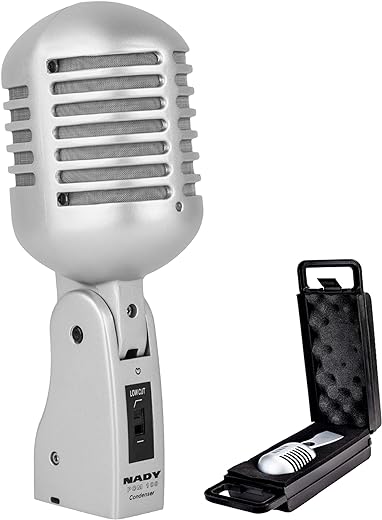
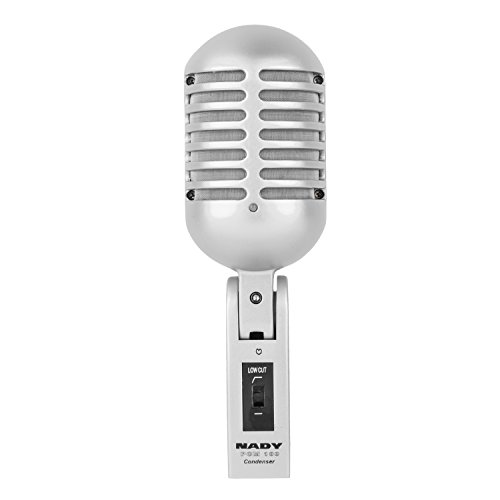
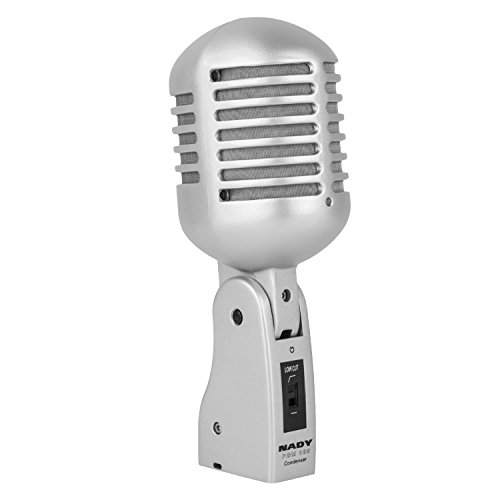
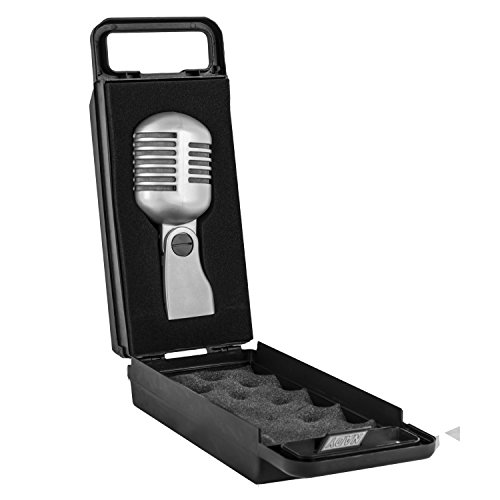

The Nady PCM-100 is the kind of microphone I’d look at only if I were already building around traditional XLR audio gear. The important detail here is not flash or modern convenience: it uses a male 3-pin XLR connector, so this is not a USB mic, not a wireless mic, and not a plug-straight-into-a-laptop solution. The listed dimensions are 2.63 x 2.63 x 6.75 inches, with an item weight of 2.2 pounds, so I’d treat it as a full-size corded microphone rather than a compact travel or clip-on option. The body material is listed as plastic, and the model number is PCM-100.
How I’d Think About Connecting the Nady PCM-100
My read of the PCM-100 is simple: it belongs in a setup with proper microphone-side hardware. Its male 3-pin XLR output is meant to connect by XLR cable to a compatible mixer, phantom power supply, or preamplifier. Because the power source is listed as corded electric, I would not buy it expecting battery operation or cable-free stage movement.
If I were using this for computer recording, I would plan for an audio interface, mixer, or preamp between the mic and the computer. That is the normal path for an XLR microphone, and it matters. Anyone expecting the convenience of a USB mic may be frustrated unless they already own the supporting gear or are ready to add it.
Where the PCM-100 Makes the Most Sense
I’d consider the Nady PCM-100 for a simple XLR-based voice, rehearsal, PA, podcast, or basic recording setup where a conventional wired microphone is the goal. The advantage of this format is flexibility with common audio equipment: the microphone stays separate from the mixer, preamp, or recording device, which is how many small audio rigs are built.
The limitation I’d keep in mind is the plastic construction. That does not automatically make it unsuitable, but I would not approach it as a premium all-metal studio-style body. The listed 2.2-pound item weight also makes me think carefully about support. If I were using it hands-free, I’d want a stable stand or secure mount rather than a flimsy desktop setup.
What I’d Check Before Ordering
- I’d confirm that I already have an XLR cable and a compatible mixer, preamplifier, or phantom power supply.
- I’d make sure I do not need direct USB connection to a computer.
- I’d check that a corded microphone fits the space and workflow.
- I’d be comfortable with plastic construction rather than holding out for an all-metal housing.
Who Should Skip the PCM-100
- Anyone who wants a USB microphone that plugs directly into a laptop.
- Performers who need wireless movement on stage.
- Buyers looking for a lavalier, headset, or camera-mounted microphone.
- Users who want a heavier-duty metal body as a priority.
Reviews
There are no reviews yet.