
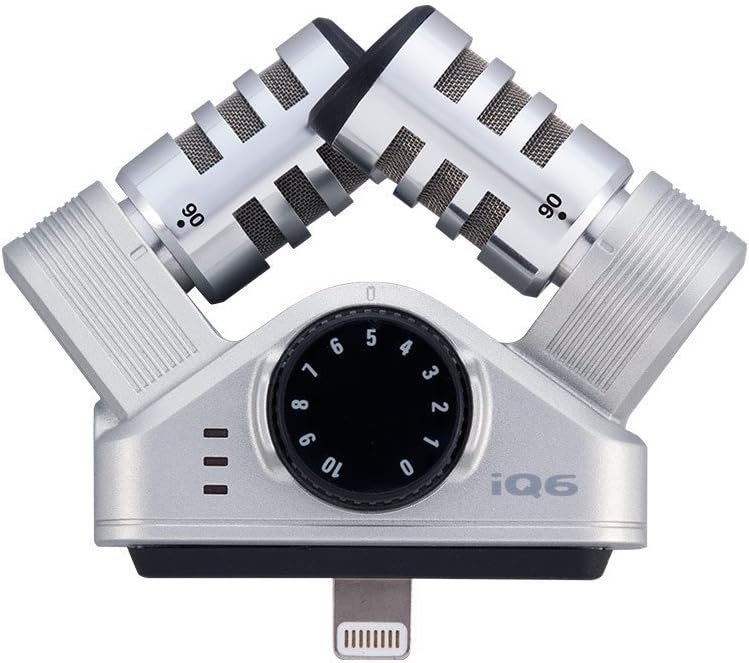
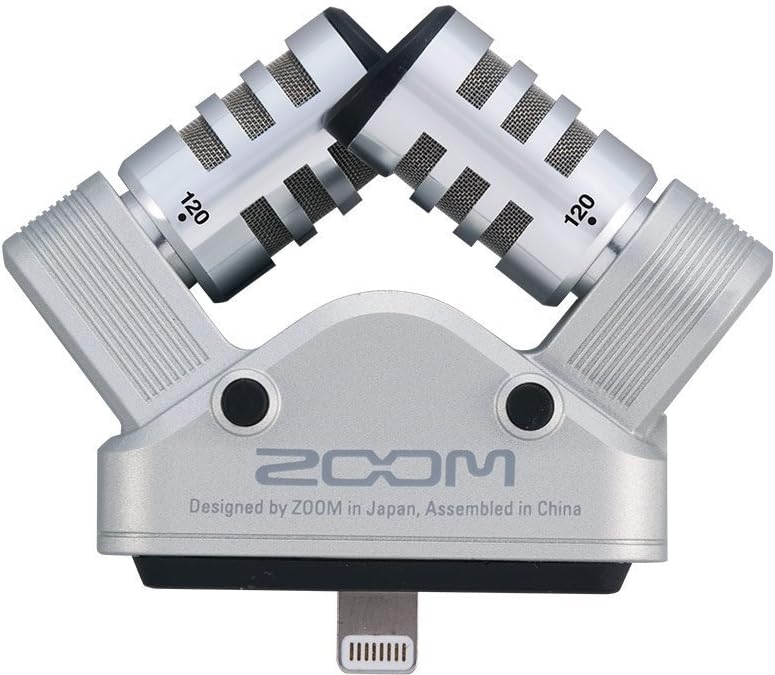
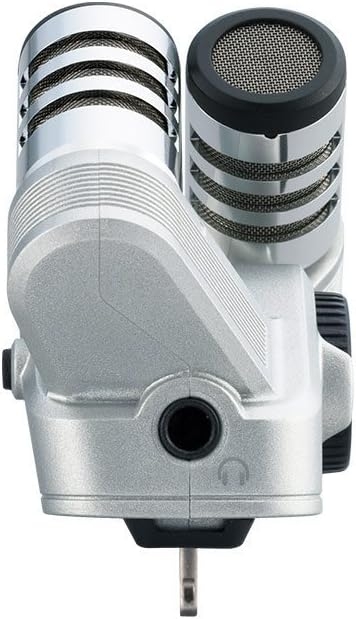
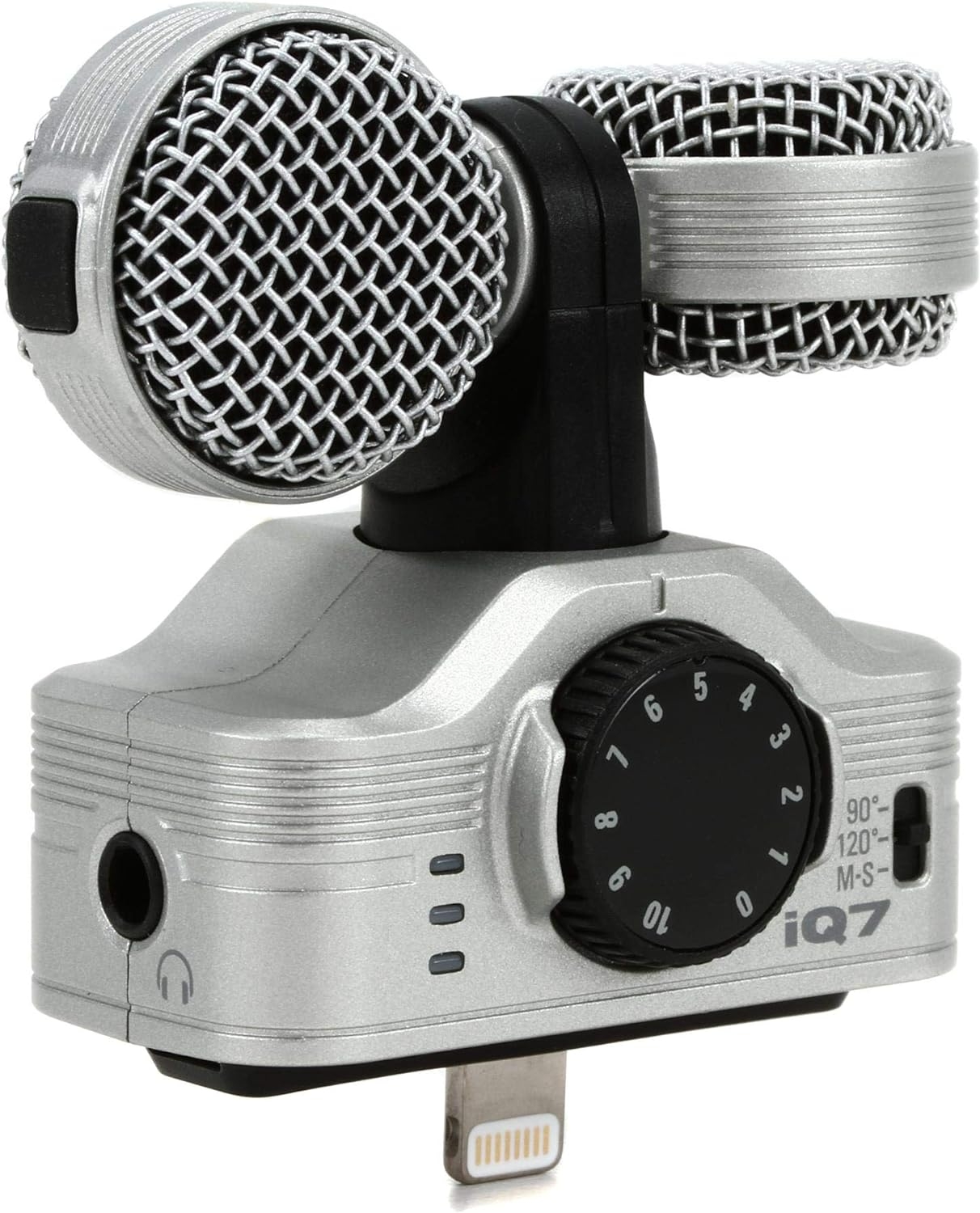

My read on the Zoom iQ7 is that it is for a very specific kind of mobile recorder: someone who wants a tiny Lightning microphone and does not want to build a larger audio chain. The appeal is the direct plug-in format. With a Lightning plug, it connects straight to compatible gear rather than asking for an interface, recorder, or extra cabling. That also defines its biggest boundary: if your device does not accept Lightning, this is not the mic I would buy.
At 2.1 x 1 x 2.2 inches and about 4.8 ounces, the iQ7 is clearly meant to live with a smartphone, tablet, or camera-style setup, not on a studio desk. It is powered through the connected device, so I would treat it as a compact add-on microphone rather than a standalone field recorder.
Where I think the iQ7 fits best
The unidirectional polar pattern tells me this mic is built for focused capture. I would look at it for speech, camera-facing commentary, spoken notes, quick interviews at short range, and situations where the subject can stay in front of the microphone. That directional approach is useful when you care more about one source than the whole room.
The listed single-channel design also matters. I would not choose this as my first pick for wide ambience, music ensembles, or anything where a broad stereo picture is the goal. For voice-led content, though, one focused channel can be perfectly sensible. The included foam windscreen is a welcome basic accessory, especially for close speech and light air movement around the mic.
The trade-offs I would not ignore
- The Lightning connection limits the audience. If your current setup is USB-C, XLR, or 3.5 mm based, I would skip this and look for a mic built around that connection instead.
- It depends on placement. A unidirectional microphone rewards aiming. If the speaker turns away or moves off-axis, I would expect less consistent capture than with careful positioning.
- The kit is minimal. The recorded package is microphone-only with a foam windscreen. If you need mounting hardware, shock isolation, or stronger outdoor wind protection, I would budget for a different setup.
- It is not meant to cover a room evenly. For group conversations or scene recording, I would want a different mic approach.
Who should buy it, and who should skip it
I would consider the Zoom iQ7 if I were building a small Lightning-based recording setup for directed voice capture and wanted something more purpose-built than a device’s built-in microphone. The 78 dB signal-to-noise ratio and compact form factor point to a practical mobile tool for creators who work close to the source.
I would skip it if I needed studio-style connectivity, multi-source recording, a fuller accessory package, or compatibility beyond Lightning-equipped devices. The iQ7 makes sense when simplicity is the priority; it makes much less sense when flexibility is.
Reviews
There are no reviews yet.