
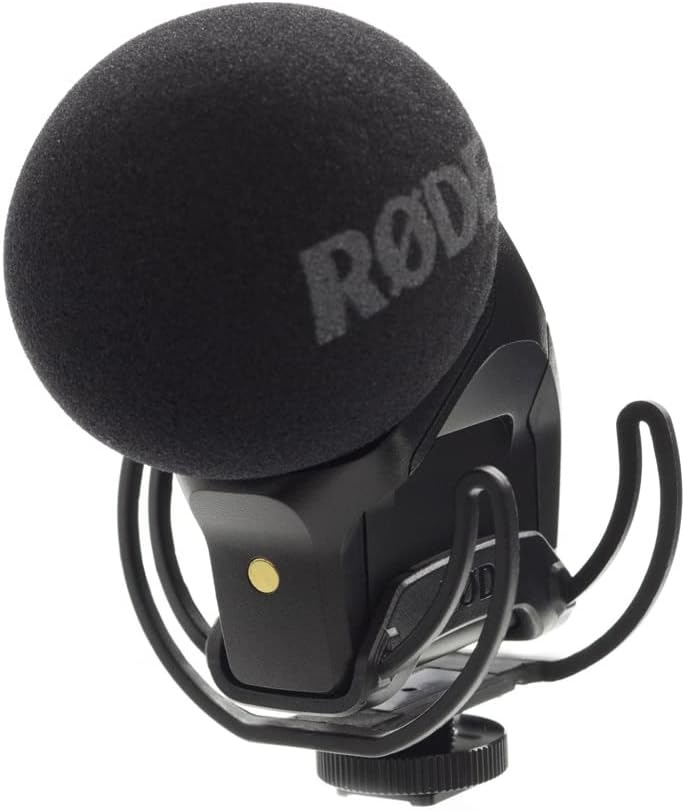
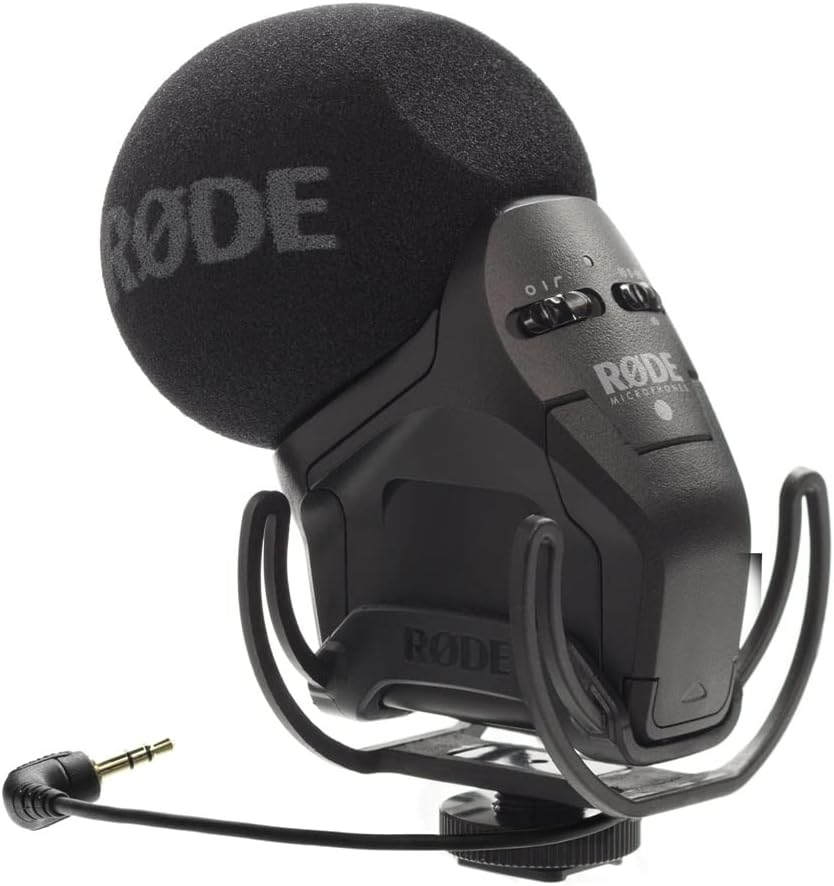
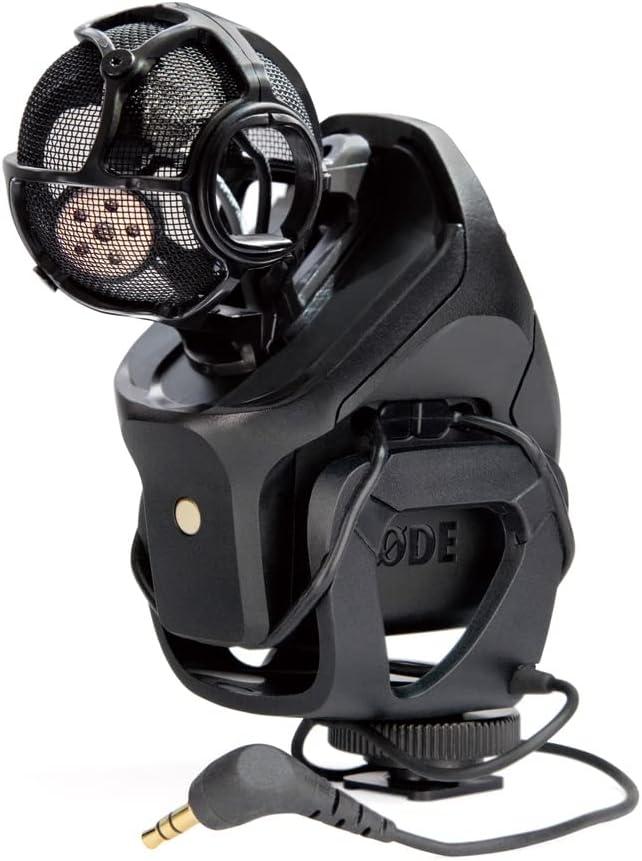
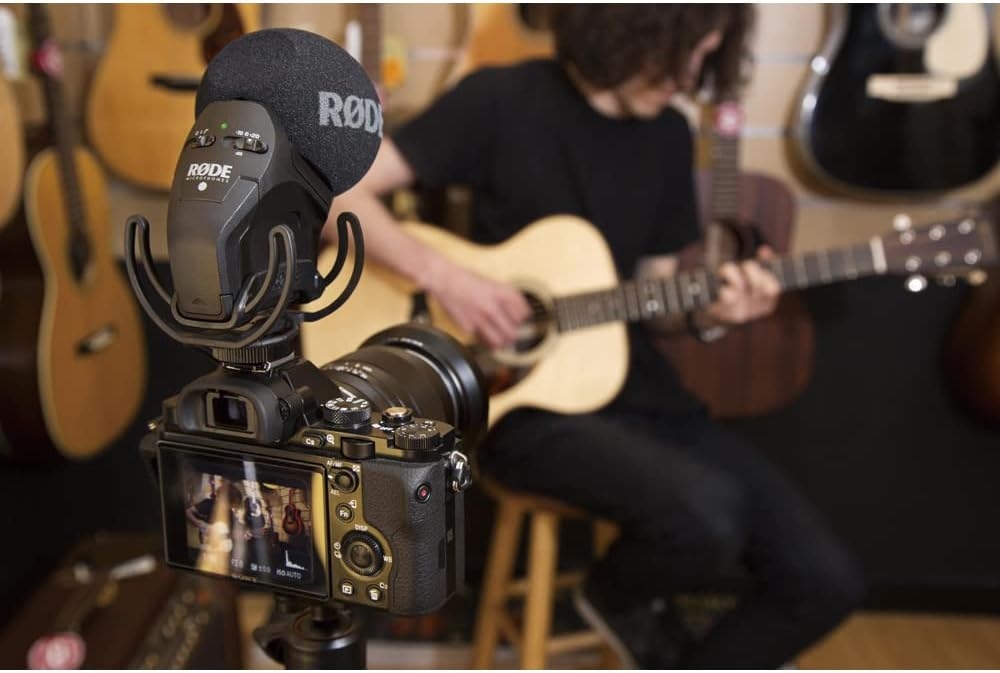

If I were choosing a simple camera mic from the spec sheet, the Rode Stereo VideoMic would make sense for one job: getting a more focused front-facing pickup than a camera body mic, without building a larger audio rig. This is a camera-oriented Rode microphone with a 3.5mm auxiliary connection, battery power, and a unidirectional pickup pattern. My read is that it is meant to stay straightforward, not to replace a recorder, mixer, USB mic, or studio XLR setup.
Why I would consider it over a built-in camera mic
Camera microphones are convenient, but they are usually a compromise. They sit inside or on the body, they are tied to camera handling, and they are rarely the most intentional way to capture sound from the scene in front of the lens. A dedicated camera mic like the Rode Stereo VideoMic is the more purposeful choice if the subject is generally ahead of the camera and you want a cleaner, more directed recording path through the camera’s mic input.
I would not buy it expecting total isolation, though. The unidirectional pattern should favor sound from the front, but that is not the same thing as putting a mic close to a speaker or using a more controlled production setup. If the audio is mission-critical, I would still think carefully about mic placement, camera input settings, and the limitations of a 3.5mm camera connection.
What the specs tell me before ordering
- 3.5mm camera connection: The auxiliary 3.5mm terminal is the key compatibility point. I would check that the camera has the right microphone input before buying.
- Directional pickup: The unidirectional polar pattern is the reason I would choose it for subjects in front of the lens rather than general room ambience.
- Battery powered: It requires one battery, so I would treat battery checks as part of the shooting routine. That is a small but real limitation.
- Camera-friendly size: At 8 x 3 x 5 inches and 3.87 ounces, it looks manageable for a camera-mounted setup, though still large enough to be an obvious accessory.
- Audio specs: The listed 40Hz–20kHz frequency range, 20 dB noise level, 38 dB sensitivity, and 200 Ohm impedance read like camera-mic territory rather than a desk or studio workflow.
Who I would buy it for, and who should skip it
I would shortlist the Rode Stereo VideoMic for camera users who want a black, battery-powered, 3.5mm microphone with directional pickup and a simple on-camera workflow. I would skip it if I needed wireless movement, USB recording, XLR routing, phantom-power integration, or a no-battery setup. I would also skip it for close vocal work at a desk, where a different microphone type would be the cleaner choice.
Reviews
There are no reviews yet.