
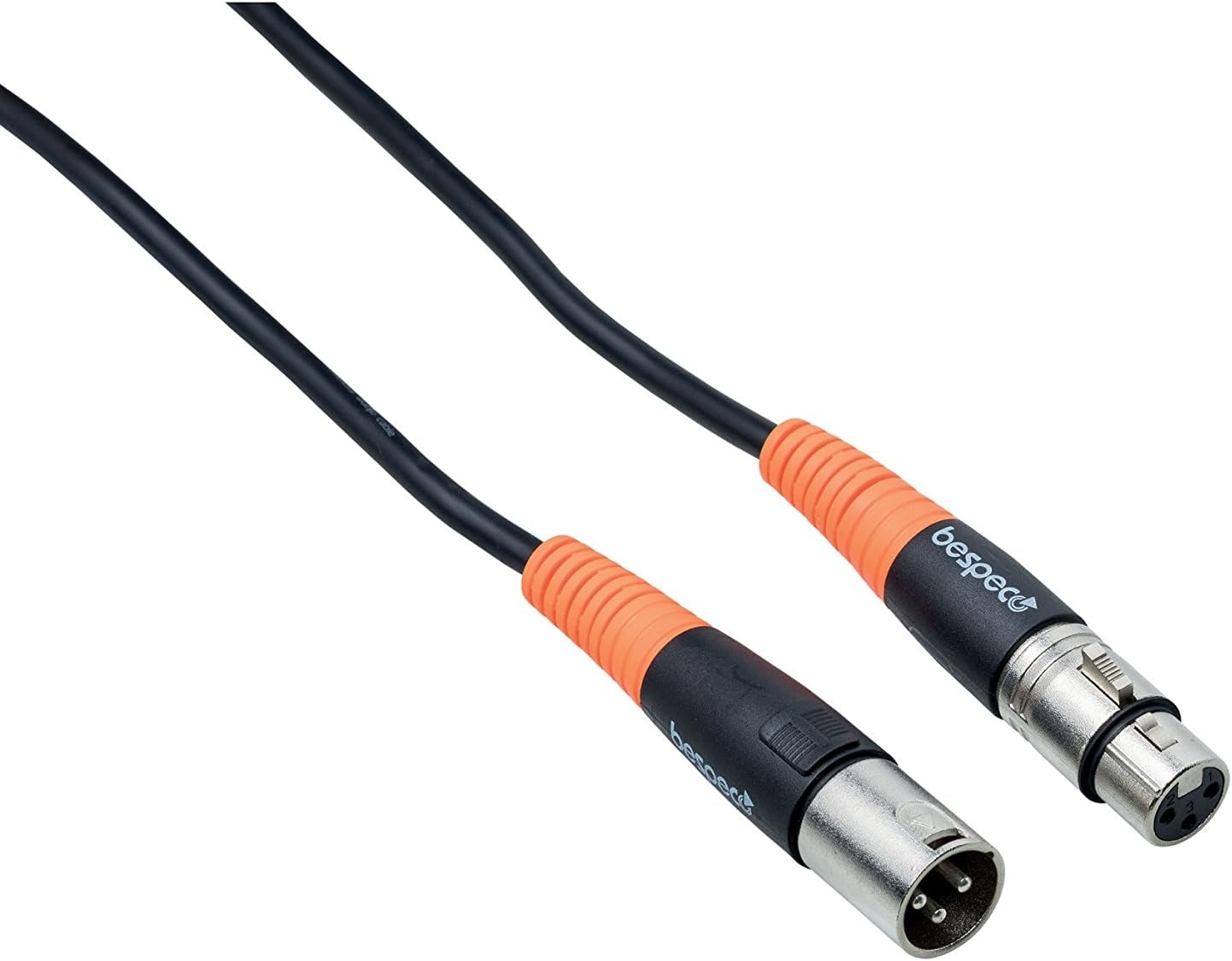
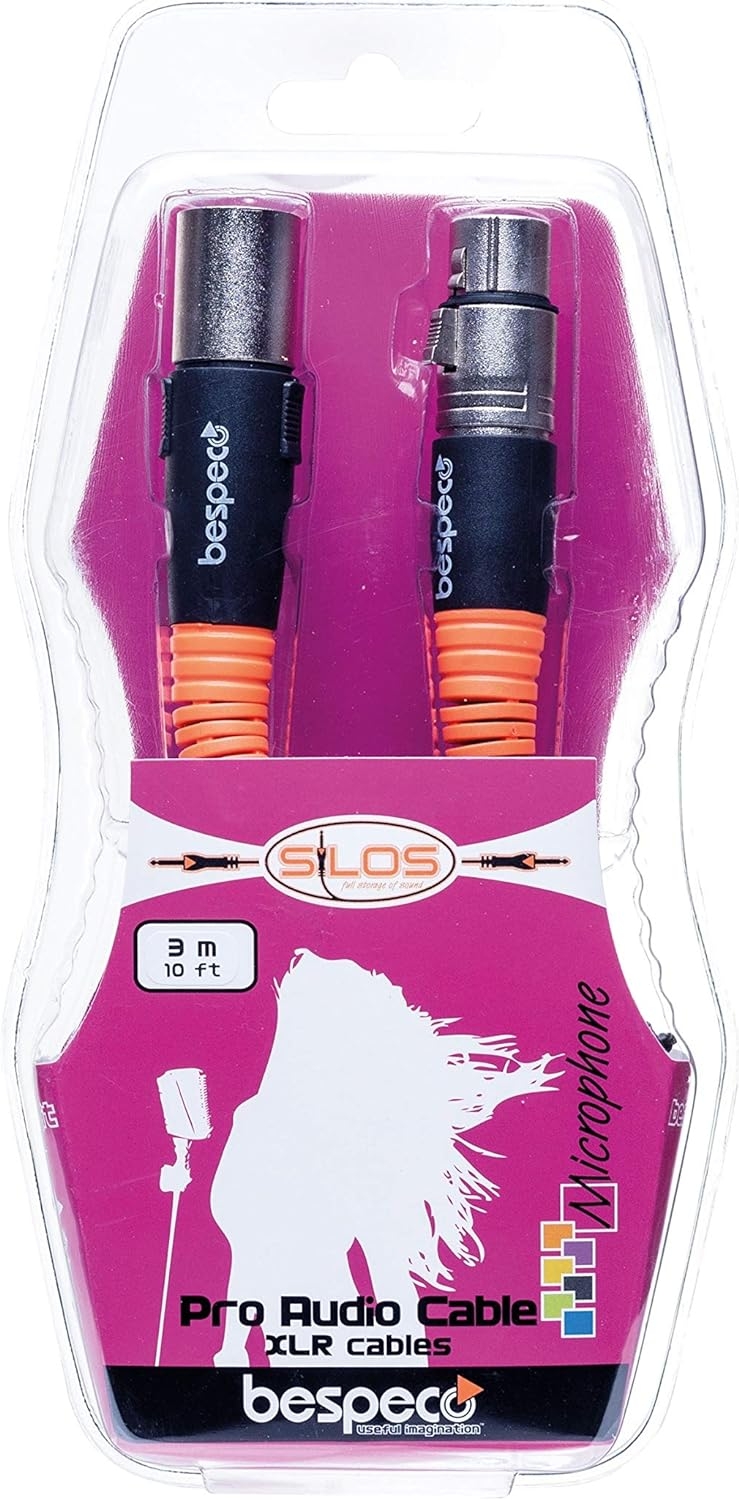

My read on the Bespeco Instrument Cable is simple: this is a 20-foot XLR lead for a very specific job, not a default microphone cable I’d tell everyone to grab without checking their gear first. The important spec is the male-to-male XLR connector layout. That makes the SLFM600 useful only when both pieces of equipment have the right matching female XLR sockets.
A 20-Foot XLR Lead with a Specific Connector Job
At 20 feet, this Bespeco cable gives you a practical amount of reach for spreading gear out across a room, rehearsal area, stage corner, or podcast table. I like that length for setups where a short cable would force awkward placement, though I’d still think about cable routing before ordering. Twenty feet is helpful, but it also means more cable to manage around stands, furniture, and foot traffic.
The black-and-orange finish is a small but useful detail. I wouldn’t buy a cable for color alone, but in a bag or on a floor full of plain black leads, a more visible cable can be easier to identify. The round shape is the expected form for this kind of audio cable, and the listing positions it for microphone-compatible XLR use.
Where I Think the SLFM600 Makes Sense
I’d look at the Bespeco SLFM600 if I already knew I needed a male XLR plug on both ends. That is the whole decision point here. XLR is common in microphone-related systems, but most typical microphone-to-mixer or microphone-to-interface connections do not use male-to-male cables. Many microphones require a female XLR connector on the cable end, so this is not the cable I’d recommend as a blind purchase for a standard mic setup.
- Best fit: setups where both connected devices have female XLR sockets.
- Length: 20 feet is useful when the mic-related connection needs more reach.
- Quantity: this is a single cable, so multiple connections require multiple purchases.
- Visibility: the black-and-orange color may help separate it from other cables.
Check the XLR Gender Before You Buy
The main limitation is compatibility, and I would not gloss over it. A male-to-male XLR cable is less universal than the standard female-to-male XLR cable many people expect when shopping for a microphone lead. If one of your devices already has a male XLR output, this cable will not connect directly in the usual way.
Who should skip it? Anyone looking for a general-purpose microphone cable for a typical mic-to-interface, mic-to-mixer, or mic-to-preamp connection should look for a female-to-male XLR cable instead. I’d only choose this Bespeco if the connector layout is exactly what the rest of the rig requires.
Reviews
There are no reviews yet.