
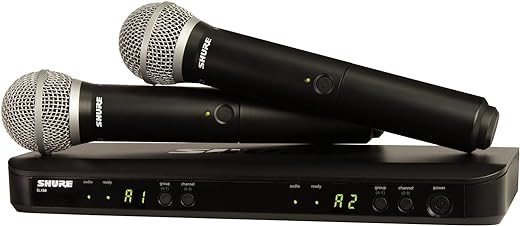
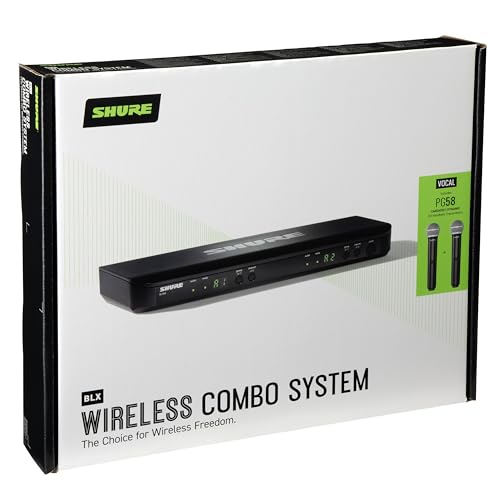
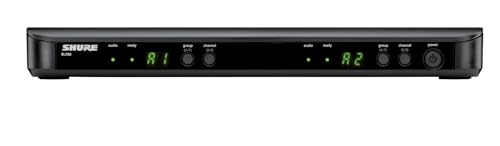
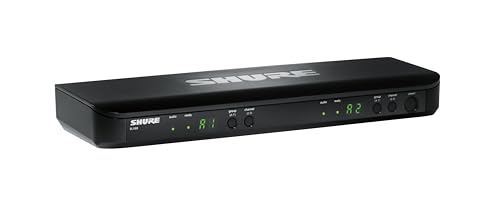

I’d look at the Shure BLX288/PG58-H10 as a practical wireless microphone package for people who already have, or are willing to build around, an XLR-based audio setup. It’s a black PG58-size system, battery powered, listed with an XLR connector, and made with a plastic material type. At 5.1 pounds and 19.3 x 3.5 x 16.4 inches, my read is that this belongs with event, karaoke, presentation, worship, or rehearsal gear rather than as a tiny desktop accessory.
What I would plan before buying the BLX288/PG58-H10
The first thing I’d check is the rest of the signal chain. This is listed with an XLR connector, which makes sense for mixers, PA systems, audio interfaces, and venue sound gear. I would not buy it expecting a direct plug-and-play path into a phone or laptop unless another piece of gear sits between the microphone system and the computer or speaker setup.
The compatible device field says “Headphone,” but I’d treat that carefully. Headphones are normally part of monitoring from a mixer, interface, or receiver path, not the final destination for an XLR microphone signal by themselves. If someone’s whole setup is just headphones and a laptop, this is probably the wrong direction without additional equipment.
Power is another practical point. The system requires 4 AA alkaline batteries, and they are included, which is helpful for getting started. Still, I’d keep spares with the kit. Wireless microphones are exactly the sort of gear where battery planning matters, especially for long services, school events, karaoke nights, or back-to-back presentations.
Where these specs make the most sense to me
Given the PG58 size, XLR connection, battery power, and karaoke-machine hardware-platform listing, I’d place this in the general live-use category: spoken word, announcements, karaoke, small performances, and rooms where cable-free movement matters. The listed wireless microphone frequency is 572, so I’d also check whether that works cleanly in the intended location, particularly if other wireless audio equipment is already in use.
The honest limitation is the plastic material type. I don’t treat plastic as an automatic problem, but I also wouldn’t present it as the same proposition as heavier metal-bodied hardware. If I were buying this, I’d want to be comfortable with a practical, transportable package rather than expecting a premium all-metal feel.
Who I think should skip it
- USB-only users: I’d skip this if the goal is direct computer input with no mixer, interface, or XLR-friendly gear.
- Battery-avoidant buyers: it requires 4 AA alkaline batteries, so spares should be part of the plan.
- Metal-body shoppers: the recorded material type is plastic, and that matters if hand feel is a priority.
- Very compact setups: at 19.3 x 3.5 x 16.4 inches and 5.1 pounds, I’d make sure there is room to store and carry it.
Reviews
There are no reviews yet.