
As an Amazon Associate we earn from qualifying purchases. This post contains affiliate links.
A cardioid pattern picks up sound mostly from the front and rejects the rear, which is why it’s the default choice for live vocals, podcasting, interviews and close-miked instruments — it keeps the source loud while fighting room noise and feedback. So the real decision here isn’t “is it cardioid” (they all are) but what job you’re miking for: stage vs. studio, handheld vs. mounted, USB plug-and-play vs. an XLR mic that needs an interface or phantom power.
Comparing options? See our full roundup of the best cardioid condenser microphones.
Who should get what: if you want to plug straight into a computer, get a USB model; for live singing on stage, choose a handheld dynamic or a stage condenser; for studio, film and location recording, step up to a phantom-powered condenser. Match the connection and use-case first, then let budget sort the rest.
Quick comparison
| Microphone | Type | Best for | Connection |
|---|---|---|---|
| Movo M1 USB | USB condenser | Podcasting, streaming, plug-and-play desktop recording | USB |
| Sony ECM-CS10 | Electret lavalier | Clip-on interviews, vlogging, hands-free voice | 3.5mm plug-in |
| Shure VP64A | Handheld dynamic (omni-leaning ENG) | Field reporting and interviews, rugged handheld use | XLR |
| Sennheiser E 945 | Handheld dynamic (supercardioid) | Live lead vocals with strong off-axis rejection | XLR |
| Neumann KMS 105 MT | Handheld condenser | Premium live vocals, studio-grade stage sound | XLR (phantom) |
| Shure BETA 58A | Handheld dynamic (supercardioid) | Loud, feedback-resistant live vocals on stage | XLR |
| Sennheiser MKH 50P48 | RF condenser (supercardioid) | Professional film, TV and orchestral spot-miking | XLR (phantom) |
| Schoeps Colette Series | Modular condenser | High-end studio, classical and location recording | XLR (phantom) |
| Audio-Technica AT4053B | Modular condenser (hypercardioid) | Broadcast, film boom and detailed studio capture | XLR (phantom) |
- Omnidirectional – used to capture the sound around.
- Unidirectional – applied when sound from one direction is needed, hence the prefix ‘uni’. It’s also called cardioid directional microphone.
- Bidirectional – employed as a rule when it’s important to capture sound from two directions, therefore the word begins with ‘bi’ that explains the meaning. Just like others, the definition of this microphone type says for itself.
The users who want to make a perfect recording should consider these properties to avoid poor results. Do not ignore the directional properties of microphones. Moreover, it’s better to regard these factors in advance before buying the mic to acquire the device you need.
Omnidirectional mic pattern

As we can state from definition of microphone with omni polar pattern given above the process of recording with such device refers to capturing the environment around the mic. All sounds heard around are equal for such mics and they record them on the same level. Consequently, the omni device is sensitive to the sounds coming from different directions.
When to Use Omni’s
The direction of the mic doesn’t matter when it utilizes an omnidirectional microphone polar pattern. Other things are important such as proximity. What is closer is captured well. It’s necessary to keep the mic’s capsule right in front of the source for better signal and result.
When to choose it:
- When you need flexibility.
For instance, you don’t know where the source is going to be.
- When it’s necessary to record minimal wind noise.
The rear ports of unidirectional mics often cause turbulence and noise on recording. Capturing with mic of this pattern also reduces effect of plosives and reduces negative sides of proximity effect.
- When the person needs to record the sound of the room or a wide sound source.
As a rule, they choose lav mic for omnidirectional pattern. It’s convenient to attach it to the clothes for recording.
Movo M1USB Lavalier
- This is a clip on microphone;
- It’s a condenser;
- The length of cord is 20 ft.;
- Foam windscreen for clean capturing.
Sony ECM-CS10
- Tie-clip style;
- Low cost;
- Solid built;
- Natural sound;
- Excellent when you need inconspicuous design.
Shure VP64A
- Handheld;
- Suitable for those who value movement and freedom during recording;
- Less interference due to better construction;
- The grille with water resistance.
Supercardioid microphone
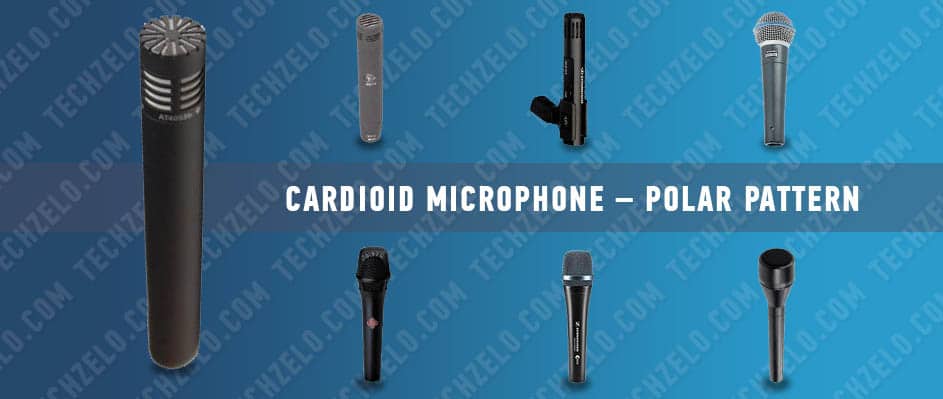
Cardioid microphone captures the sources in front of it and blocks the others from other directions. It isolates the noise coming from the environment therefore it’s frequently chosen when the person recording source wants to achieve the higher level of performance. Supercardioid device is a more directional mic so it’s necessary to locate it in a right way to attain successful result. The types of directional microphones are presented below. Select the example of mics you like best here.
When to Use Cardioids
Cardioid mic can be useful when:
- The drum kit should be miked up;
- There’ s no possibility to isolate the sound from other instruments;
- The space is untreated.
Sennheiser e945
- A dynamic handheld mic;
- Solid built, made of metal components;
- Supercardioid device perfectly isolates noise and ambient sounds;
- 10-year warranty.
Neumann KMS 105 MT
- A dynamic handheld mic;
- Robust construction;
- Comes with a standmount and comfy bag;
- Smooth sound.
Shure Beta 58A
The device is used for pro-level sound reinforcement. The advantages include:
- Rugged device;
- Steel durable mesh grill;
- Available in wireless form;
- Delivers detailed clarity.
Hypercardioid mic
Hypercardioid mic is not that sensitive to the sound coming from side and more directed to the front source. Its pickup angle is smaller and this helps to obtain a more detailed, clear reproduction. It should be used when it’s important to suppress unwanted sounds in the room. Direct the mic towards the source only.
Sennheiser MKH50
- It mutes the sounds on the sides;
- Small amount of selfnoise;
- Includes inbuilt filter removing proximity effect;
- Nice black design.
Schoeps MK41
The directivity of this mic with hyper cardioid mic pickup pattern can be compared with the same property of shotgun microphone. Therefore it’s often called the best hypercardioid device. It’s the choice of professional sound engineers because:
- It delivers natural sound;
- The device records dialogues well (this is one of bidirectional mic uses along with figure-8 pattern);
- Diffuses the energy of sound, so the sound is not colored.
The consumers like it much and often choose it when pricetag is not a problem.
Audio-Technica AT4053b
Audio-Technica AT4053B Review
The Audio-Technica AT4053B microphone is a good recording device used…
The device was created the be able to record professionally in the most challenging environment. What features customers like:
- Cardioid condenser microphone pattern flawlessly isolates sounds from back and sides;
- Doesn’t distort sounds;
- Small diaphragm device;
- Awesome sound.
How to achieve the result for outdoor work? Just use this mic! It delivers sound like an excellent shotgun.
FAQ
What does a cardioid polar pattern actually do? A cardioid mic is most sensitive to sound arriving from directly in front and progressively rejects sound from the sides and rear, giving a heart-shaped pickup area. This isolates your source from room reflections and background noise and helps prevent feedback in live settings, which is why it’s the most common pattern for vocals and speech.
Cardioid vs. supercardioid — what’s the difference? Supercardioid (like the E 945, BETA 58A, MKH 50 and AT4053B) has a tighter front pickup and better side rejection than standard cardioid, but it picks up a small lobe directly behind the mic. That makes it excellent for isolating one source on a loud stage or film set, as long as you keep monitors and noise sources off that rear null.
Do I need XLR or is USB fine? USB models like the Movo M1 plug straight into a computer and need no interface, which is ideal for podcasting and streaming. XLR mics generally offer better sound and flexibility but require an audio interface or mixer, and condensers additionally need 48V phantom power.
Dynamic or condenser for live vocals? Dynamic mics like the BETA 58A and E 945 are rugged, handle very high volume and resist feedback, making them the safe stage default. Condensers such as the Neumann KMS 105 capture more detail and air but are more sensitive to handling and stage bleed, so they suit controlled or premium live setups.
Why choose a modular condenser like Schoeps or the AT4053B? Modular systems let you swap capsules to change the polar pattern while keeping the same preamp body, so one mic can serve several recording jobs. They’re aimed at professional film, broadcast and studio work where sonic quality and flexibility justify the higher cost.
Conclusion
Choose by the job before the badge: pick the connection (USB for desktop, XLR for everything serious), then the form factor for your use. For plug-and-play podcasting the Movo M1 USB is the easy start; for loud, reliable live vocals the Shure BETA 58A is a proven workhorse; and for professional film, broadcast and studio capture the Sennheiser MKH 50P48 or Audio-Technica AT4053B deliver the directional precision the work demands.