
As an Amazon Associate we earn from qualifying purchases. This post contains affiliate links.
What decides a microphone is almost always three things in this order: the source you’re recording (voice, guitar amp, drums, an orchestra), where you’ll use it (a treated studio versus a noisy stage or untreated room), and what your interface can feed it — condensers and most ribbons need phantom power and a clean preamp, dynamics don’t. Sort those out and the microphone type chooses itself: dynamic for loud, close, imperfect rooms; condenser for detail and quiet sources; ribbon for smoothing harsh, bright sources.
Quick steer: for stage vocals and guitar cabs a rugged dynamic like the SM58 or SM57 is the safe default; for a home studio voice or acoustic instrument a condenser such as the AT2035 or a pair of NT5s does more; and if a source sounds harsh or brittle — brass, a bright cab, cymbals — a ribbon like the M160 or NTR tames it. Match the mic to the job, not the price tag.
Quick comparison
| Microphone | Type | Best for | Level / tier |
|---|---|---|---|
| Shure SM57 | Dynamic | Guitar/snare/amp miking, close instruments | Workhorse / affordable |
| Shure SM58 | Dynamic | Live and spoken vocals, rugged stage use | Workhorse / affordable |
| Sennheiser Professional MD 421-II | Dynamic | Toms, guitar cabs, broadcast/voice | Pro / mid |
| Audio-Technica AT2035 | Condenser (large-diaphragm) | Home-studio vocals, acoustic instruments | Entry-to-mid / needs phantom |
| Rode NT5 | Condenser (small-diaphragm) | Acoustic guitar, overheads, stereo pairs | Mid / needs phantom |
| AKG C214 | Condenser (large-diaphragm) | Studio vocals, loud sources (high SPL) | Mid / needs phantom |
| MXL R144 | Ribbon | Taming bright guitars, brass, room color | Budget ribbon / needs clean preamp |
| Beyerdynamic M160 | Ribbon (hypercardioid) | Overheads, brass, guitar amps, strings | Pro ribbon / needs clean preamp |
| Rode NTR | Ribbon (active) | Detailed ribbon capture, amps, strings, brass | Pro active ribbon / phantom-powered |
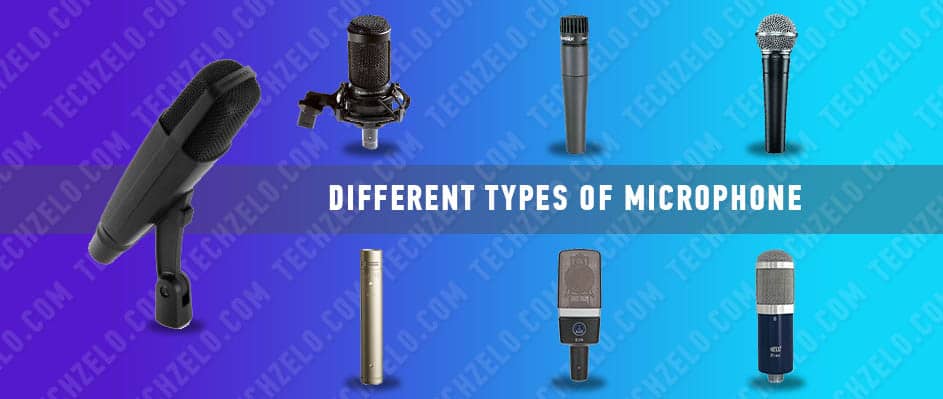
The main types of microphones are divided into three groups explained below.
- Dynamic
- Condenser
- Ribbon
It’s easy to explore different mics and their uses when musicians record their works in the studio. Even small ones offer the assortment of tools so the person resorts to trial and error method to find the mic that meets the requirements.
Dynamic microphones

Such mics are used primarily for live performances. The musicians use them when them perform onstage. The classic example of this group is ShureSM57 so we will start describing these devices beginning with this model.
It also worth saying that it enters the group of ‘umbrella’ categories. That means that it’s a must-have for any studio. It includes two different types of mics and their uses depends upon the goals set. One can resort to this type when recording:
- rock vocals;
- electric guitar;
- drums.
People love to acquire them to record in home conditions where the room without proper treatment distorts sounds. Unidirectional pattern of such mics is a good solution under the circumstances.
Shure SM57
It’s one of the most widespread mics, which actually became an iconic device.
Features:
- It’s often used for live performances due to good isolation of background noise.
- The consumers love its solid built therefore mic is used on the road.
Pros:
- It creates rich sound when instrument or vocals are reproduced.
- Excellent frequency response and durability of the model are its main benefits.
Cons:
- It’s hard to look for the cons as it’s an industry standard. Still customers say that proximity effect is noticed in it.
Shure SM58
The devices of this brand are actually the best among different types of dynamic mic. It’s superb as well and worth considering. In many respects it’s actually the same device as the previous model with one exception though in design – its grille differs.
Pros:
- The price tag is affordable for these types of dynamic microphones.
- People can see the same models when celebrities perform on the stage. The collection of mics almost always includes this staple.
Cons:
- The sound is not warm enough.
Sennheiser MD421 II
Prosumers select this model thanks to its fantastic capabilities.
Pros:
- The item features incredible sound.
- The musicians resort to it in absolutely diverse consequences. It copes with almost any of them.
- The model is suitable for high SPLs.
Cons:
- It’s more expensive than the two previous ones but this is explicable. It works well with different types of instruments, groups of vocalists and also an excellent choice for broadcasting.
- There are some minor drawbacks such as fragile mic clip that spoil the impression but in general all consumers point out how awesome it is.
Condenser microphones
This is one of the most sophisticated kinds of mics that also enter umbrella category. The microphone of this type is rarely taken by the musician while travelling because it’s known for being fragile. It should necessarily enter the collection of mics because it delivers excellent, rich and clear sound. They sound sweet and accurate in comparison with other types of microphones and their functions are more versatile. Many devices have a number of patterns that can be changed switching the button. They can be:
- unidirectional (picking sound up from one side),
- bidirectional (picking it up from two opposite sides)
- and omni (picking it up from around).
When the sound is focused on certain direction, it cancels out the rest. It helps to control the result.
The microphone design types include small and large diaphragm condensers. We will cover both types in this review.
Audio Technica AT2035
It’s a universal device that can be a perfect studio mic.
Pros:
- Smoothness of performance is delivered thanks to its large diaphragm.
- Excellent frequency range enables widest spectrum of sound.
- It captures neutral sound, which isn’t distorted.
- The bass response is good.
Cons:
- Though some may think about its poor connectivity because it’s equipped with XLR jack only, this feature provides the possibility to improve the performance and use its potential fully.
Rode NT5
In case the stereo sound is required, this model from Australian manufacturer is a wonderful option. Features:
- It presents a pair of microphones that are frequently called pencil mics. These are small diaphragm condensers used for diverse instruments and live performances.
- It’s unidirectional. It means that this mic and its types capture only sound in front of you cancelling other noise.
Pros:
- It’s lightweight,
- compact,
- with excellent sound.
Cons:
- The price isn’t affordable.
AKG C 214
Features:
- Has embedded filter and suspension removing selfnoise.
- LD condenser.
- Cardioid polarity.
- The model includes the features decreasing proximity effect and other distortions.
Pros:
- This is a rather durable device as its body was made of metal.
- It can be a good road mic for tours.
- It delivers awesome reproduction of sound with its all nuances.
Cons:
- The mount looks fragile.
Ribbon microphones
Such devices are more expensive than others, so why do we still buy them?
- If you want a vintage feel, you should purchase one of these mics. Retro style has its charm.
- It’s an excellent way to submerge into atmosphere of the past with its warmth and coziness.
- Such mic is not a necessity, but just nice addition to collection of microphones purchased by audiophiles as a rule. The sound is warmer.
MXL R144
Features:
- It’s a microphone for musicians who play horns or an electric guitar.
- Comes with a shockmount.
Pros:
- This is a compact device.
- Handles high SPLs with ease.
- Affordable.
Beyerdynamic M160
Features:
- Purchase this mic for drums, stringed instruments, and pianos.
- It’s an excellent gear for recording and onstage performance.
- Chosen mainly by prosumers.
Cons:
- Expensive.
Rode NTR
Pros:
- The device is incredibly sensitive.
- The consumers love its matte finish and design.
Cons:
- Very expensive. Still many are ready to pay for detailed sound it delivers.
FAQ
What’s the practical difference between dynamic, condenser and ribbon mics? Dynamics are tough and handle loud sources and noisy rooms well, which is why they dominate live stages. Condensers are more sensitive and detailed, so they capture quiet or nuanced sources better but pick up more room. Ribbons have a smooth, rolled-off top end that flatters bright or harsh sources but are generally more delicate.
Do I need phantom power for these mics? Condensers like the AT2035, NT5 and C214 need 48V phantom power from your interface or mixer. Dynamics such as the SM57, SM58 and MD 421-II do not. Passive ribbons (M160, R144) must never see phantom power, while the active Rode NTR does require it — check each mic before switching 48V on.
SM57 or SM58 — which should I get? They share very similar capsules; the difference is mostly the grille. The SM58’s ball grille and built-in pop filtering suit handheld vocals, while the SM57’s slimmer head gets closer to instruments and amps. Pick the 58 for singing, the 57 for miking cabs, snare and instruments.
Are ribbon mics too fragile for beginners? Passive ribbons like the M160 and MXL R144 can be damaged by high blasts of air or by accidentally sending phantom power to them, so they reward careful handling. If that worries you, the active Rode NTR is more robust and runs off phantom power by design. For loud, close work a dynamic is the more forgiving choice.
One mic to start a home studio — what should it be? For a single do-everything first mic, a large-diaphragm condenser like the AT2035 covers vocals and acoustic instruments cleanly if your room is reasonably quiet. If your space is noisy or you also want to mic amps, an SM57 or SM58 is the more room-tolerant starting point.
Conclusion
Choose by source and setting first: reach for a dynamic (SM58 for vocals, SM57 for amps and snare, MD 421-II for toms and cabs) when things are loud or the room is untreated; a condenser (AT2035 for a first studio voice, NT5 pairs for acoustic and overheads, C214 for higher-SPL studio work) when you want detail in a quiet space; and a ribbon (M160 or NTR) when a bright, harsh source needs smoothing. Match the type to the job and even a modest mic will outperform an expensive mismatch.
Though the explanation above isn’t comprehensive, hopefully, you received the idea of 3 types of microphones. You can buy any of these models on Amazon at reasonable price.
Choosing the right microphone is like picking the perfect spice for your favorite dish – it enhances the experience. Dynamic mics like Shure SM57 and SM58 rock the stage, conquering noise with style. Sennheiser MD421 II takes it a notch higher, offering a symphony of sound for diverse settings.
Enter the realm of condenser mics, where Audio Technica AT2035 serenades with smoothness, and Rode NT5 crafts stereo magic. AKG C 214, a durable road warrior, ensures your sound journey is distortion-free. Switching to ribbon mics, MXL R144 brings a vintage vibe, while Beyerdynamic M160 and Rode NTR deliver excellence in recording and onstage performances.
The journey through sound types is an adventure – dynamic for the stage, condenser for the studio, and ribbon for a touch of nostalgia. Your guide to this symphony is knowledge, humor, and a touch of the right microphone. So, whether you’re rocking the stage or creating magic in the studio, let the sound waves carry you to perfection. Happy mic hunting!