
As an Amazon Associate we earn from qualifying purchases. This post contains affiliate links.
For a single-mic run of the Saramonic UwMic9, the decision comes down to one thing: do you need reliable, budget-friendly UHF wireless for interviews, run-and-gun video and events — without paying for the newer 2.4GHz digital systems? The UwMic9 is an older-generation UHF workhorse. Its appeal is range, selectable frequencies to dodge interference, and standard XLR/3.5mm outputs that plug into cameras, mixers and recorders alike.
Get it if you want a proven, affordable UHF lav that just works for talking-head and field work, and you don’t mind manual frequency setup. Skip it if you need pocket-sized 2.4GHz convenience, onboard recording, or the automatic channel-hopping of newer kits — in dense RF environments a modern digital system will be less fuss.
Quick comparison
| Aspect | Verdict |
|---|---|
| Best for | Budget interviews, run-and-gun video, events and documentary work where you need dependable UHF wireless and standard camera/mixer connections. |
| Sound | Clean, broadcast-usable lavalier audio for spoken word; a capable, no-frills system rather than a studio-grade one. |
| Build & usability | Practical plastic-bodied transmitter/receiver with selectable UHF frequencies; setup is manual, so you tune channels yourself to avoid interference. |
| Connectivity | Standard 3.5mm and XLR outputs make it flexible across DSLRs, mirrorless cameras, camcorders, field recorders and mixers. |
| Value | Strong value for its price tier — a lot of dependable UHF wireless for the money, provided you don’t require newer 2.4GHz digital features. |
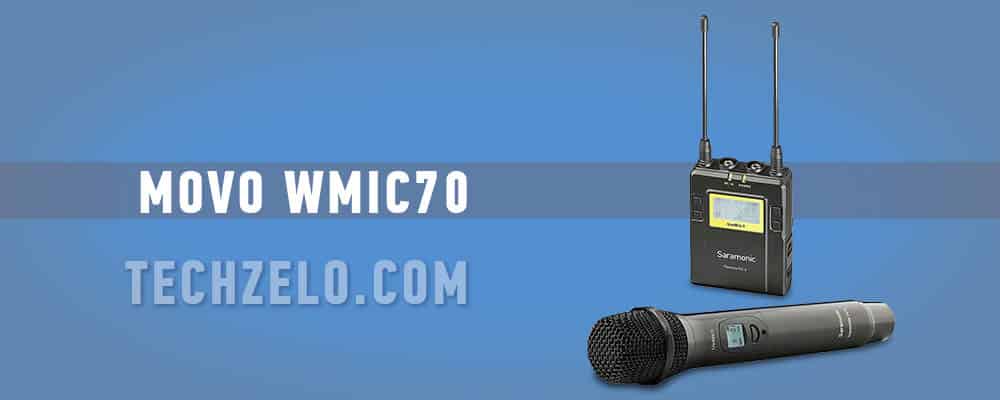
For example, let’s talk today about the Saramonic UwMic9 radio system. It has everything you need to gain widespread acceptance of users in the near future and to crowd out market leaders. So, the package includes two transmitters and one receiver. There is also a single transmitter version. If desired, the user can purchase, connect, use a lapel transmitter, a hand-held radio microphone, or an XLR unit.
The radio receiver is designed for 96 channels in a wide frequency range (channels are divided into two groups). It is worth noting the economical approach to production since the manufacturer gives the user only devices in the box. Additional accessories, such as covers, need to be purchased as needed. At the same time, everything you need is there: the package includes 2 transmitters, 1 receiver, 2 cables for camera connection (mini-jack and XLR), 2 lapel microphones, studs for attaching to the belt and fasteners for the cold shoe.
Build quality is high, and attention to detail, taking into account situations of active use, pleases attention. The cables are thick and durable, the connectors have a strict fixation, foam rubber wind protection with a rubber frame is easily fixed and can be removed.
Wireless Lavalier Microphones System Review

Each device is powered by 2 AA batteries, there is no USB connection. The Chinese manufacturer has placed the receiver and transmitters in shockproof all-metal cases, and this is a good move. We have a fairly inexpensive solution that perfectly withstands difficult operating conditions in the active mode and looks stylish at the same time. The only thing is that the weight of the devices is relatively large. This does not interfere with daily work.
The menu has a full set of standard settings. In the receiver, in addition to the standard frequency selection options, you can lock the power button, set the sound level at the output, and set the backlight time.
Characteristics and features
- for lavalier microphones
- stylish and reliable all-metal housing of receivers and transmitter
- connection via 3.5 mm jack
- 40-18000 Hz frequency range
- powered by 2 AA batteries
- simple and flexible system settings
Saramonic UwMic9
An extremely useful function for recording two channels simultaneously is the ability to transmit a signal in stereo when different stereo systems are displayed on the left and right channels. This allows you to work with each signal source separately at the installation. Mono sound is also available.
A convenient and bright screen shows the signal level and sound level on the channels. Here’s also presented device synchronization via infrared.
On the transmitter, by pressing the volume button, you can mute the sound. This option can be disabled. 3 power modes are also available.
Interference is present when working at a fairly large distance, but their degree is not so great in comparison with proven premium devices. As for the price, the manufacturer estimates the goods are slightly more expensive than other Chinese manufacturers but significantly cheaper than the goods of well-known brands.
If desired, the buyer can look for decent Chinese solutions in the cheaper price segment, but he risks wasting time. Here, Saramonic UwMic9 offers a very reliable balance of price and quality.
FAQ
Is the Saramonic UwMic9 good for interviews and YouTube? Yes. It’s aimed squarely at interviews, talking-head video and event work, delivering clean spoken-word audio wirelessly. For single-person YouTube or two-person interviews it’s a practical, affordable choice.
Does the UwMic9 work with DSLR and mirrorless cameras? It does. The receiver outputs via a standard 3.5mm jack and the system also supports XLR, so it connects to most DSLRs, mirrorless cameras and camcorders, as well as field recorders and mixers.
Is it a UHF or 2.4GHz system, and does that matter? The UwMic9 is a UHF system with selectable frequencies, which gives good range and lets you tune away from interference manually. Newer 2.4GHz digital kits are more plug-and-play and pocket-friendly, so choose UHF if you value range and manual control over convenience.
Can I record two people at once? The dual-channel versions of the UwMic9 system let you run two transmitters into one receiver, so you can mic two speakers simultaneously. Check the specific kit you’re buying, as single-channel and dual-channel bundles exist.
Conclusion
Choose the Saramonic UwMic9 if you want proven, affordable UHF wireless for interviews, run-and-gun video and events, and you’re comfortable setting frequencies manually. It stands out as a value pick for budget filmmakers and content creators, a dependable field-interview tool thanks to its XLR/3.5mm flexibility, and a solid two-person option in its dual-channel form — just look to a modern 2.4GHz system instead if you need pocket-sized, plug-and-play convenience.