
As an Amazon Associate we earn from qualifying purchases. This post contains affiliate links.
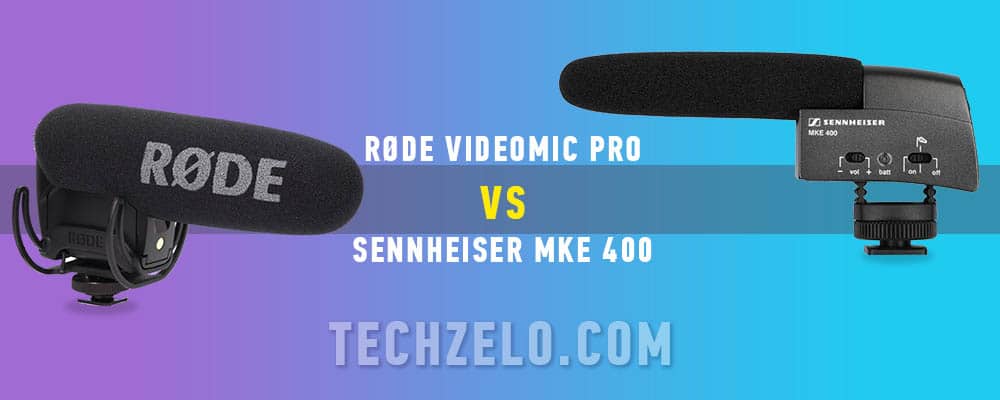
The real decider here is how you power and mount the mic. The Sennheiser MKE 400 is a compact plug-and-play shotgun designed to sit on a mirrorless or DSLR (and, with the right cable, a phone) — it draws power from the camera or its own internal battery and keeps the rig small. The older Rode VideoMic Pro is a larger camera-top shotgun that runs on a 9V battery and gives you switchable gain, favoured by shooters who want a bit more reach and manual control.
If you want the lightest, most travel-friendly setup with headphone monitoring and minimal fuss, get the Sennheiser MKE 400. If you specifically want a proven, battery-powered camera-top shotgun with onboard gain switching and don’t mind the extra bulk, the Rode VideoMic Pro still does the job.
Quick comparison
| Product | Type | Best for | Power / Connection |
|---|---|---|---|
| Sennheiser MKE 400 | Compact camera-mount shotgun | Run-and-gun vlogging and hybrid shooters who want a tiny, plug-and-play rig with monitoring | Camera plug-in or internal battery; 3.5mm TRS/TRRS out |
| Rode VideoMic Pro | Camera-top shotgun | Shooters wanting a classic battery-powered shotgun with switchable gain and a bit more directionality | 9V battery; 3.5mm TRS out |
It can be hard to compare two mics the article devoted to as both deserved attention from the audience. Both of them have their funs who consider it the best gear on earth. Still, those who haven’t joined some group rack their brain and don’t know if Sennheiser model should be chosen or some other mic? This comparison survey is reviewing both models to determine which one is better for voice recording.
Sennheiser MKE 400 Shotgun microphone

The mic is an industry standard that effectively deals with noise. It includes an inbuilt shock mount that copes with vibration and noise without effort. It’s first of all chosen thanks to this property. It’s a good option to be used with cameras. The reviews of customers also point out superb quality of external mic and lightning shoe mount. They also like that it’s tiny and compact. These parameters make the mic stand out. Build quality is outstanding. It refers to the quality of its components as well.
MKE 400 is solid and can tolerate even active use for a long time.
The length of work that is promised is also impressive – 300 hours. The user just needs one battery to make it function. There special cable for connection with the camera.
The mic is excellent when portability is a priority. Its lightness makes it a wonderful option for videographers working in the field. No matter at what distance the user is recording, the audio obtained is always excellent.
It picks up noise from all directions and mutes unwanted noise, doesn’t reject it completely. As a result, clarity of sound is superb.
Other features of the Sennheiser MKE 400
It’s great to acquire the foam shield to be used with MKE 400. This is a good remedy against the plosives and noise created by wind.
The user is protected with a 2year warranty when buying the mic.
Cost
MKE 400 is an affordable mic. With cost about 200 bucks it delivers a fantastic results. This is a marvelous product for its price.
Rode Videomic Pro
Being a universal device, it’s used for various goals. This is also a shotgun to be used with camcorder. It’s an excellent alternative for recording videos and audios. It’s possible to carry it in the backpack – it’s not heavy at all. However, it isn’t that small as Sennheiser model. It functions for 70 hours without problems and only then it needs power to start functioning again. Like the previous mic, it also includes inbuilt shockmount and it’s less subjected to vibrations.
The pickup differs considerably depending upon the settings. Captured lowend noises are removed from the recording when 80Hz filter is involved.
Select -10dB level attenuation for close-up capturing, while +20dB setting is great for camera recording.
It features a standard shoemount to be used with other standard devices.
When pro-level consumers get the device, they always try to compare its work with the way MKE 400 functions. Those who used both mics say that both have problems with wind handling. If the wind is strong than professional mic should be used.
Both microphones reviewed here differ in size and build and in both categories the Sennheiser model is better as this device is made of plastic, consequently, less durable.
More features of the Rode Videomic Pro
In contrast to MKE 400, this one has a 10-year warranty. The technically-savvy folks assert that the device has a wonderful suspension system. It’s actually the best among the devices. Sennheiser MKE 400 is also considered more rigorous in comparison with Rode reviewed model.
Recommendation
Both are microphones of high quality and both devices feature great capacity. They both sound well, however, MKE 400 should be selected for a more natural voice.
Cost
Videomicpro differs just a little in price from the Sennheiser MKE 400 but isn’t less powerful than the first model. It’s recommended to try both mics before selecting. It’s hard to determine which suits better without trying. The cost is not the factor to base upon.
FAQ
Which one is better for a mirrorless camera and vlogging? The MKE 400 is the easier fit: it’s smaller, lighter, and powers off the camera or its own battery, so there’s no external 9V to manage. Its compact size keeps a gimbal or handheld vlogging rig balanced, and it includes a headphone jack for monitoring.
Can I plug either mic straight into a smartphone? The MKE 400 ships with (or supports) a TRRS cable, so it can connect to many phones for cleaner audio than the built-in mic. The original VideoMic Pro uses a standard TRS output aimed at cameras, so phone use typically needs a TRS-to-TRRS adapter and isn’t as seamless.
Do these mics need batteries? The MKE 400 can run on its internal battery or draw power from the camera’s mic input, giving you a fallback. The VideoMic Pro relies on a single 9V battery, so it’s worth carrying a spare on longer shoots.
Will either replace a proper boom mic for interviews? Both are directional shotgun mics that reduce off-axis noise, which helps for talking-head and run-and-gun work. For controlled interviews, a boomed mic placed close to the subject will still sound better than any camera-top mic, since distance from the mouth matters most.
Conclusion
Choose on size and power first: pick the Sennheiser MKE 400 if you want the most compact, plug-and-play camera-top mic with headphone monitoring and easy phone/mirrorless use — the best all-rounder for vloggers and hybrid shooters. Reach for the Rode VideoMic Pro if you prefer a proven battery-powered shotgun with switchable onboard gain and don’t mind the extra bulk on your rig.
You’ve got a tough decision ahead: Sennheiser MKE 400 or Rode Videomic Pro? Both are top-notch, but if you want clarity without breaking the bank, go with the MKE 400. Whether you’re a budding YouTuber or a seasoned filmmaker, these mics will elevate your audio game. So, get ready to shoot your shot with confidence, knowing you’ve got the perfect microphone by your side!