
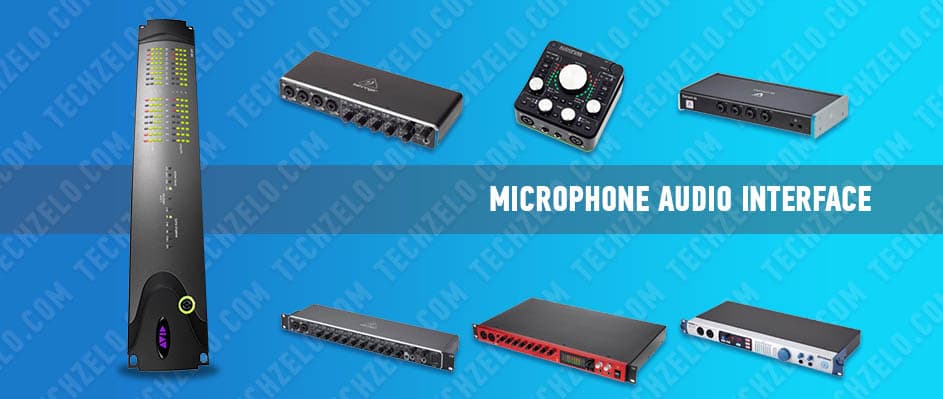
As an Amazon Associate we earn from qualifying purchases. This post contains affiliate links.
What decides a mic audio interface is honestly simple: how many mics you record at once and how you plan to grow. Count your simultaneous inputs, then match the preamp count and connection type — USB, Thunderbolt, or a dedicated HD/PCIe card — to your computer and your latency needs. DSP effects, monitor control, and ADAT expansion only matter after those two questions are settled.
One-line rule of thumb: a solo vocalist or podcaster wants a clean 2-in USB box; a home studio tracking a couple of mics wants a 4-in unit with room to expand; and anyone recording a full band or drum kit needs eight preamps plus ADAT, moving to Thunderbolt or an HD rig once low latency and onboard processing become the priority.
Quick comparison
| Interface | I/O tier | Connection | Best for |
|---|---|---|---|
| Behringer UMC404HD | 4-in / 4-out | USB | Budget multi-mic recording and small podcasts |
| Arturia AudioFuse | Compact desktop | USB | Portable pro setups wanting lots of I/O in a small box |
| Apogee Element 46 | Mid I/O | Thunderbolt (Mac) | Mac users chasing low latency and clean conversion |
| Behringer UMC1820 | 18-in / 20-out | USB + ADAT | Expandable home studios tracking full bands on a budget |
| Focusrite Clarett 8Pre | 8 preamps + ADAT | USB / Thunderbolt | Project studios recording drums and full bands |
| Focusrite Scarlett 18i8 | Higher-count Scarlett | USB | Growing home studios needing several mics plus expansion |
| Universal Audio Apollo 16 | 16-in / 16-out | Thunderbolt | Pro studios wanting UAD plugin processing while tracking |
| PreSonus Studio 192 | High I/O + monitor control | USB | Studio One users wanting integrated monitor and preamp control |
| Avid Pro Tools HD I/O | Modular HD I/O | HD / DigiLink | Pro Tools HDX rigs and commercial facilities |
| PreSonus AudioBox USB 96 | 2-in / 2-out | USB | First-time recordists and solo vocal/guitar setups |
| M-Audio M-Track 2X2 | 2-in / 2-out | USB | Simple home recording of vocals plus one instrument |
| M-Audio Fast Track | Single-input basic | USB | Absolute beginners tracking one mic at a time |
4 mic audio interface
The number of outputs is the basic thing to regard when choosing the product. It can have from 2 channels to 18 and even more than that. Recording drums usually requires more microphones than recording an acoustic guitar. If you plan to work with drums, you will need an interface with at least four inputs. This will be the best microphone audio interface for the situation. The list below will include the soundcards of this type.
Behringer UMC404HD

It’s an excellent solution for recording instruments and microphones that enables pro quality.
- Compatible with AvidPro Tools, AbletonLive, SteinbergCubase.
- USB connectivity.
- It includes 4 inputs and 4 outputs.
- Rackmounted option.
Arturia AudioFuse
The device is available in three colors: black, grey and silver. The item is compact and looks stylish.
Features:
- Compatibility with Mac, iOS and PC.
- It has combo inputs, 2 headphone feeds.
- It has USB hub with three USB ports.
- It’s advisable to get the Control Center program that alleviates work with the DAW chosen by user.
As for the price tag, it’s a bit higher than that of its counterparts with similar characteristics.
Apogee Element 46
Usually, products that prioritize functionality over form receive higher value, so the model under consideration also falls into this type of devices. Apogee products are superb in this respect.
It serves as a microphone interface for Mac. Many consider it one of the best among similar products for Mac. The users praise flexibility of the model. It’s simple to use and loved by studio owners for its efficacy.
Features:
- Features easy frontmounted mic connections.
- Though it looks plain enough, it presents program control over the device.
- Thunderbolt connectivity.
- ADAT, SMUX and S/PDIF I/O
- 4 analogue inputs, 6 analogue outputs
8 mic pre interface
Specialists in the studio utilize the 8 mic preamp interface as the primary gear for audio conversion and achieving microphone pre-amplification, giving excellent sound at a low cost. You don’t need to acquire pricey external preamp devices for recording multitrack performances any more. So, which 8 mic device should we recommend for pre-amplification instead of buying external preamps? Below, we present a list of devices worth considering.
Behringer U-Phoria UMC1820
Behringer U-PHORIA UMC1820 Review
The Behringer U-PHORIA UMC1820 audio interface is great for professional…
The company showed the device with new design and better components, for example MIDASpreamps.
Features:
- No proprietary programs is offered for sophisticated monitoring.
- The interface is provided with 18 inputs and 20 outputs.
- Each input channel is provided with mic / line switch, gain knobs / pad.
- It’s easy to use the buttons as all of them are available on the front panel.
- 2 headphone outputs with volume control.
Focusrite Clarett 8Pre
It’s a solid choice that offers quality conversion. The interfaces two times more expensive offers the same features.
Features:
- Powered by hardware interface Thunderbolt that connects external peripherals to computer.
- Wonderful sound of mic The sound is clear.
- Low level of noise and distorting.
- 2 headphone inputs allow to record a singer or guitar player not using one output.
Focusrite Scarlett 18i8 (2nd Gen) USB
This is a magnificent device that has solid built and delivers low noise recording.
- It has splendid instrument preamps.
- Provided with 48V phantom power to connect XLRmics.
- Though x has only 8 analogue inputs, it includes ADAT-port meaning that it’s possible to connect extra 8 mics. In this way, it’s possible to capture 16 mics at the same time. But one will have to buy extra external preamp unit for that.
- It’s a great choice for the beginning band.
16 mic input audio interface
Sometimes it’s needed to acquire the interface for recording a band so the device should have multiple channels and inputs to connect mics. Which gear is needed when you need to connect 16 mics or even more? Let us offer some options for such cases.
Apollo 16 Thunderbolt audio interface with QUAD DSP processing
Those who want to achieve almost zero-latency, should try this device. It has all necessary features required for recording system, including big number of analogue or digital headphone i/o, preamps etc.
This is the device for high-end customers. The quality of performance is great.
Features:
- Console 2.0 program, Bundled with RealtimeAnalog Classics Plus suite.
- Thunderbolt connectivity.
- MIDI interface.
- Its 16x16 analog inputs and outputs enabling pairing with mixing consoles and other gear. The example is mic input. The interface can be expanded to 32 channels if it’s necessary for audio.
PreSonus Studio 192 26×32 USB 3.0 Audio Interface and Studio Command Center
It’s a remarkable option for the price offered.
- Integration with StudioOne 3 ArtistDAW program.
- USB
- 8XMAX mic preamps, 2 instrument, 6 line level inputs.
- Desktop solution.
- 18 digital inputs and outputs with possibility of expanding
The sound is clear, detailed, without distortion. the customers like the universal control application and simple operation.
Avid 99005867040 Pro Tools HD I/O 16X16 Analog
Avid 99005867040 Pro Tools HD I/O 16X16 Analog Review
The Avid 99005867040 Pro Tools HD I/O 16X16 Analog is…
The device is known for lack of latency and comes in different configurations depending upon users’ needs. Its features:
- Full integration with ProTools HD.
- Rackmountable
- The installation of extra I/O ports is easy by adding a card to an empty bay.
Though the device is rather expensive, it’s a studio staple delivering unparalleled quality.
Audio interfaces for beginners – top 3
The experienced users are aware that with USB microphone, interface for computer audio is not necessary. The mic has the one already but the quality is not as good as audio track obtained with help of interface. These are the devices for novices in the sphere:
PreSonus AudioBox USB
The users will be pleased with the price of the model. It offers a good quality for its price. The features of the model:
- Studio Magic Plug-In Suit, Studio One Artist or other 6GB+ programs.
- 0
- Midi
- 2 combo inputs with preamps.
M-Audio M-Track 2X2 C-Series
Enjoy the studio quality, intuitive interface with this entry-level model .
- C-Series Software Suite, Touch Loops sample library.
- USB, USB-C
- 5-Pin MIDI
- Rackmounted device.
- XLR combo input, instrument input.
It’s one of the most enticing offerings available on the market.
M-Audio Fast Track US44010 USB
Those who are looking form audio guitar mic recording interface, should try this option. It’s excellent for this instrument as well as the vocals, the keyboards, etc.
- Pro tools SE, GT-Player Express Software, Ableton Live Lite, inTone|Express Bundle.
- USB
- 1/4-inch instrument/line input, XLR mic input.
The users are able to connect the instruments in this guitar and microphone USB interface to get excellent result fast. The benefits are its low price and fantastic performance.
FAQ
How many inputs do I actually need? Count the sources you record at the same time, not in total. A solo vocalist or podcaster is well served by a 2-in interface, while a couple of mics for vocals and guitar calls for a 4-in unit. Only full bands or a miked drum kit truly need eight preamps or more.
Do I need Thunderbolt, or is USB fine? For most home and project studios, modern USB gives you plenty of channels with low enough latency to record comfortably. Thunderbolt matters when you want the tightest possible monitoring latency or run heavy real-time processing, as on the UA Apollo. Also check that the connection matches your computer’s ports.
What is ADAT and why does it appear on some of these? ADAT is an optical connection that adds eight more inputs by hooking up an external preamp unit. Interfaces like the UMC1820 and Clarett 8Pre use it so you can start with the onboard preamps and expand later without replacing the whole interface. It is the cheapest path to a larger channel count.
Will these interfaces power a condenser microphone? Yes. Every interface here supplies 48V phantom power, which is what condenser mics require. Dynamic and ribbon mics generally do not need it, so leave phantom power off unless your mic’s manual asks for it.
Is an Avid Pro Tools HD I/O worth it for a home studio? For most home users, no. HD I/O is a modular converter designed for Pro Tools HDX systems in commercial facilities, and it needs that dedicated hardware to run. Home and project studios get far better value from a USB or Thunderbolt interface off this list.
Conclusion
Choose by simultaneous inputs first, then connection and room to grow. Beginners and podcasters should start with the PreSonus AudioBox USB 96 or a 2-in M-Audio; growing home studios get the most flexibility from the Behringer UMC1820 or Focusrite Scarlett 18i8 thanks to ADAT expansion; and pro rooms tracking full bands lean to the Focusrite Clarett 8Pre or, for onboard processing and lowest latency, the Universal Audio Apollo 16.
Choosing the right audio interface can greatly enhance your music recording experience. Whether you’re a beginner or a seasoned pro, having the right tools at your disposal is essential for capturing high-quality sound. The products mentioned in the text offer a range of features catering to different needs and budgets.